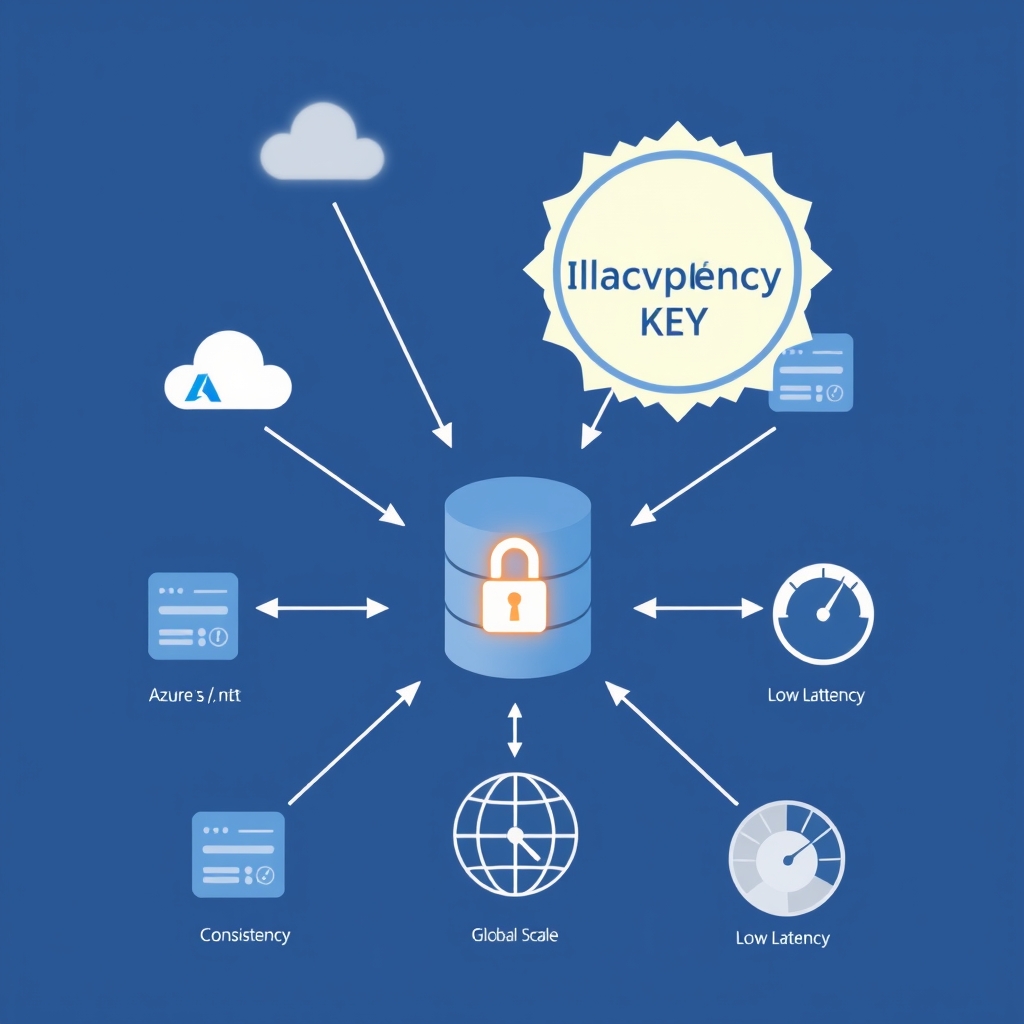
Payment Processing Idempotency: Why Redis Cache Can Fail in Production
Quick Answer
Design a payment platform that guarantees exactly‑once semantics with database‑level idempotency keys, outbox decoupling, and sharding to handle millions of transactions under 200 ms latency.
Payment Processing Idempotency: Designing Consistent, Scalable Transactions at Scale
Quick Answer
payment processing idempotency: Design a payment platform that guarantees exactly‑once semantics with database‑level idempotency keys, outbox decoupling, and sharding to handle millions of transactions under 200 ms latency.
Preventing Double Charges with Idempotency
When a customer sees two identical debits, the fallout is immediate: trust erodes, support tickets surge, and auditors start asking questions. In a high‑throughput payment platform, the root cause is almost always a missing idempotency guard, not a flaky network. The engineering challenge is to design a system that guarantees *exact‑once* semantics across a distributed stack while still delivering sub‑200 ms latency at millions of transactions per day.
Real‑World Example: 10M+ Transactions, 0.1 s Latency
Consider a global marketplace that processes 10 M payments daily. The core ledger runs on a single‑node PostgreSQL cluster with a unique index on idempotency_key. Every transaction is first written to an outbox table, then a background worker calls the external gateway and flips the status. The worker processes up to 500 Messages per batch, achieving avg 95 ms end‑to‑end latency. A FinTech startup, on the other hand, uses Azure SQL Managed Instance with active‑geo‑replication and a 202 Accepted flow that returns the idempotency key immediately, allowing the client to poll for status. Both systems share the same idempotency patterns but differ in scale and resilience trade‑offs.
Trade‑offs: ACID vs. BASE, Sync vs. Async, Single vs. Multi‑Shard
- ACID for the ledger: Guarantees that a debit is either fully committed or not at all. The cost is row‑level locks that can serialize high‑volume writes.
- BASE for downstream services: Allows fraud scoring, analytics, and notifications to run on eventual consistency, keeping the critical path lean.
- Synchronous vs. Asynchronous: A synchronous flow gives instant confirmation but ties the client to the external gateway’s latency; asynchronous decouples the client from the gateway, at the expense of a polling or webhook mechanism.
- Single‑node vs. Sharded: A monolithic table is a hotspot; sharding by merchant or region distributes write load but introduces cross‑shard coordination overhead.
- Unique constraint vs. Application‑level guard: Relying on application logic is brittle under concurrency; a database‑level unique index is the single source of truth.
Scenario‑Based Idempotency Pattern Choice
| Scenario | Pattern | Why It Works |
|---|---|---|
| Low latency, single‑region | Sync with INSERT … ON CONFLICT DO NOTHING | Zero round‑trips to the gateway; duplicate inserts are caught by the DB. |
| High throughput, multi‑region | Async outbox + worker pool | Decouples gateway latency, allows back‑pressure, and survives region failover. |
| Complex saga across services | Saga with per‑service idempotency keys | Each participant can recover independently; compensations are explicit. |
| Immutable audit trail required | Event sourcing with idempotent events | Every state change is a write‑once event; replay never duplicates. |
| Need to limit index size | TTL + archiving strategy | Keeps the unique index lean; old keys can be purged safely. |
When This Fails in Production
- Missing unique constraint: Under 10 k concurrent retries, two workers can insert the same key before the DB enforces uniqueness, leading to duplicate debits.
- Key lost in serialization: A JSON serializer that omits null fields can strip the idempotency key from the outbox payload, causing the worker to treat it as a brand new request.
- Outbox not processed: A worker crash after the external call but before marking
processed = truecan lead to a second worker re‑processing the same transaction. - Shard migration race: Moving a merchant’s data to a new shard without a coordinated migration can produce duplicate keys if the same merchant ID lands in two shards temporarily.
Common Mistakes Engineers Make
- Relying solely on application‑level idempotency checks.
- Choosing a
VARCHARcolumn for the key and not enforcing uniqueness. - Ignoring key expiration; the index grows unbounded, slowing down inserts.
- Not namespacing keys across services, leading to accidental cross‑service replay.
- Assuming a single worker per queue is sufficient; under load, parallel workers can still race on the same key.
Better Approach Based on Experience
In production, I follow a minimal, defensible stack:
- Generate a UUIDv4 on the client and include it in every request. The server validates the format and rejects duplicates from the same IP in a short window.
- Persist the request with a unique constraint on
idempotency_keyinside a transaction. Wrap the insert in atry…catchthat capturesduplicate keyerrors and fetches the existing row. - Use an outbox table that records the external call payload and a
processedflag. The worker readsunprocessedrows, calls the gateway, and atomically updates the status andprocessedflag in the same transaction. - Batch outbox processing up to 500 messages per worker; use a
PrefetchCountthat matches the queue depth to avoid thrashing. - Shard by merchant ID for a marketplace; keep shard count between 8–16 for 10 M tx/day. Use a hash ring that allows adding shards without downtime.
- Implement TTL on the idempotency key (e.g., 90 days) and a nightly job that archives old records to cold storage, keeping the index lean.
Performance Considerations
- Index on
idempotency_keymust beUNIQUEandNOT NULL; this is the only thing that guarantees exactly‑once under concurrency. - Batching outbox messages reduces round‑trips to the external gateway and amortizes database I/O.
- Use
INSERT … ON CONFLICT DO NOTHINGfor idempotent inserts; avoid explicitSELECTbeforeINSERTto eliminate race conditions. - Keep the
Paymentstable partitioned by month to speed up scans for old data and to allow fast drops. - Measure
latency_budget = 200 msand instrument each step; a 5 ms write to the database + 10 ms queue ack + 80 ms gateway call + 50 ms status update typically meets the budget.
Scaling Notes
- For > 10 M tx/day, use a distributed SQL engine (Azure Cosmos DB with SQL API, CockroachDB, or Aurora Serverless v2) that supports global replication and sharding out of the box.
- Leverage
Azure Service BusorKafkafor the outbox queue; setmaxConcurrentCallsto match the worker pool size. - Auto‑scale workers based on queue depth:
threshold 10k → +2 workers,threshold 50k → +4 workers. - When adding a new shard, perform a rolling migration: copy a hash range, update the routing layer, then delete the old range.
- For multi‑region failover, keep the outbox and payments tables in read‑replica sync; the worker can run in any region and pull from the local replica to reduce latency.
What does "exact‑once semantics" mean in payment idempotency?
It ensures each unique transaction request is processed only once, preventing duplicate debits even under retries or concurrent submissions.
How can a payment platform maintain <200 ms latency while handling millions of transactions?
Use an outbox table to decouple external gateway calls, batch workers up to 500 messages, and rely on INSERT … ON CONFLICT DO NOTHING to avoid extra round‑trips.
Why is a database‑level unique constraint preferred over application‑level checks?
The DB guarantees atomic enforcement under concurrency, eliminating race conditions that can allow duplicate inserts when many workers retry the same key.
What sharding strategy prevents write hotspots in a global marketplace?
Shard payments by merchant ID (or region) using a hash ring, keeping 8–16 shards, and perform rolling migrations to avoid duplicate keys during re‑allocation.
What are the most common pitfalls that lead to double charges?
Missing unique constraints, key loss in serialization, unprocessed outbox records, shard migration races, and relying solely on application logic.
What to Ship
- Add an
Idempotency-Keyheader to every payment request and enforce a unique constraint on that key in a dedicatedpayment_idempotencytable before any business logic runs. - Persist the key with a status column (e.g.,
PENDING,COMPLETED,FAILED) inside a single database transaction that also writes the initial payment record, ensuring the key is stored atomically with the request. - Wrap the entire external‑gateway call inside the same transaction and commit only after the gateway returns success; on failure, roll back and set status to
FAILEDso a retry with the same key is safe. - Implement a background worker that deletes idempotency records older than a configurable window (e.g., 30 days) to keep the table size bounded and avoid stale locks.
- Use a lightweight distributed lock (e.g., Redis or a database advisory lock) keyed on the idempotency key to serialize concurrent requests and avoid race conditions when the same key is submitted twice in rapid succession.
- Expose a health‑check endpoint that verifies the idempotency table’s unique constraint and the lock mechanism are functioning, and fail the service if either check fails, preventing silent double‑charge bugs in production.
Conclusion
Idempotency is not a luxury; it’s a contractual guarantee with customers and auditors. The key to a resilient payment platform is to make the idempotency guard a database‑level fact, decouple external calls via an outbox, and design for scale with sharding and replication. Avoid the common pitfalls of missing unique constraints and key loss, and always keep the index size in check. With these patterns in place, you can ship a payment system that scales to millions of transactions while keeping double charges to a statistically negligible rate.
Related Articles
- Securing Multi-Agent Systems with .NET and Azure AI Foundry: Threats, Vulnerabilities, and Mitigation Strategies
- I Kept Two Job Providers, Then Deleted Them Nineteen Minutes Later: A Job-Matching API Integration Reversal
- Cloudflare Workers vs AWS Lambda: Real-World Performance Benchmarking
- Capacity Estimation in System Design: A Kubernetes Autoscaling Case
- Message Queues and Eventual Consistency: A Comprehensive Guide
Frequently Asked Questions
What does "exact‑once semantics" mean in payment idempotency?
It ensures each unique transaction request is processed only once, preventing duplicate debits even under retries or concurrent submissions.
How can a payment platform maintain <200 ms latency while handling millions of transactions?
Use an outbox table to decouple external gateway calls, batch workers up to 500 messages, and rely on INSERT … ON CONFLICT DO NOTHING to avoid extra round‑trips.
Why is a database‑level unique constraint preferred over application‑level checks?
The DB guarantees atomic enforcement under concurrency, eliminating race conditions that can allow duplicate inserts when many workers retry the same key.
What sharding strategy prevents write hotspots in a global marketplace?
Shard payments by merchant ID (or region) using a hash ring, keeping 8–16 shards, and perform rolling migrations to avoid duplicate keys during re‑allocation.
What are the most common pitfalls that lead to double charges?
Missing unique constraints, key loss in serialization, unprocessed outbox records, shard migration races, and relying solely on application logic.