Message Queues and Eventual Consistency: A Comprehensive Guide
Quick Answer
Mastering message queues and eventual consistency is crucial for building scalable and reliable distributed systems.
Message Queues and Eventual Consistency: A Comprehensive Guide
Quick Answer
Mastering message queues and eventual consistency is crucial for building scalable and reliable distributed systems.
Mastering Message Queues and Eventual Consistency: A Comprehensive Guide
In the realm of distributed systems, message queues and eventual consistency are the unsung heroes that enable scalability, reliability, and performance. However, implementing these concepts correctly requires a deep understanding of their intricacies and trade-offs. In this guide, we'll delve into the world of message queues and eventual consistency, exploring their fundamentals, design decisions, and practical applications.
The Problem: When Consistency Meets Scalability
In a distributed system, consistency and scalability are often at odds. As the system grows, the need for consistency increases, but so does the complexity of achieving it. This is where message queues and eventual consistency come into play. By embracing eventual consistency, developers can build systems that are more scalable, flexible, and fault-tolerant.
When I'd choose eventual consistency over strong consistency is when the system requires high availability and scalability, and the cost of achieving strong consistency is too high. For example, in a social media platform, eventual consistency is often preferred over strong consistency to ensure that the system remains available and scalable during high traffic periods.
A Real-World Example: Implementing Message Queues and Eventual Consistency
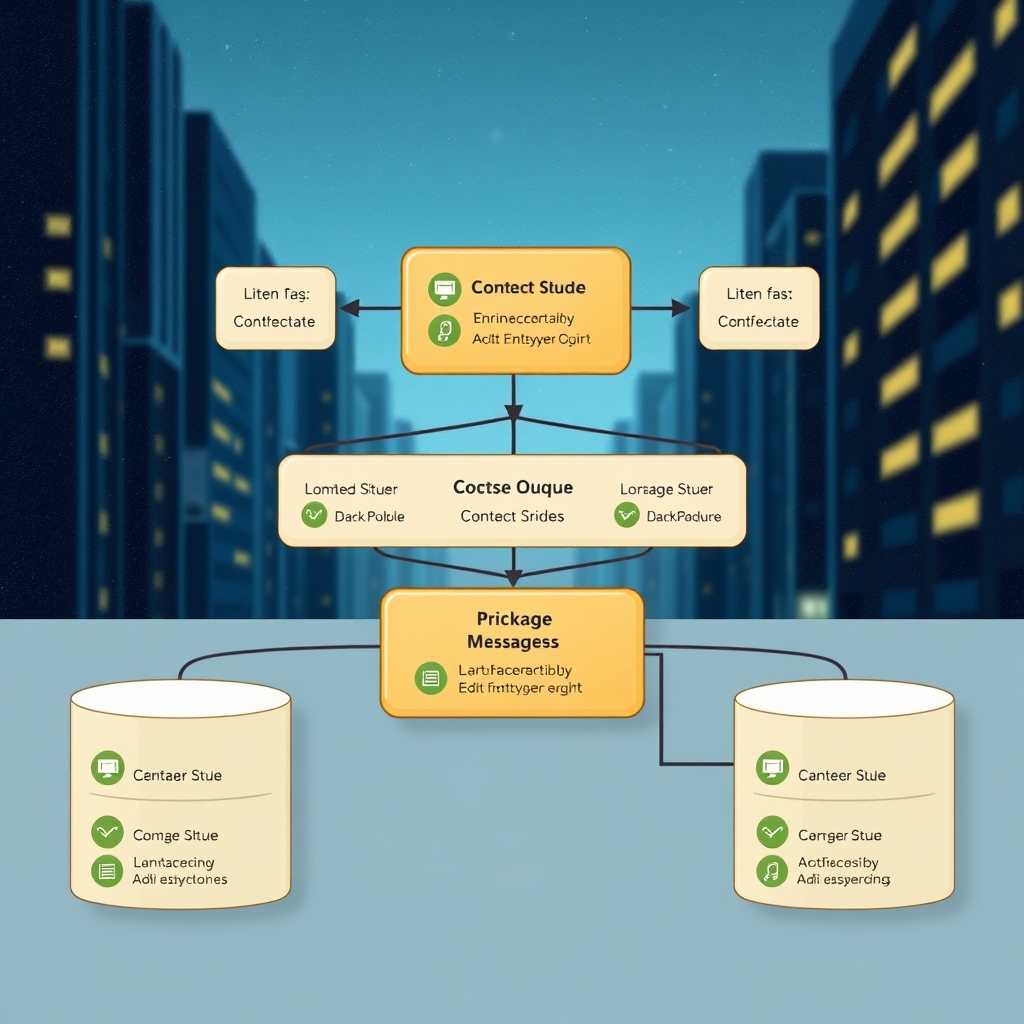
Let's consider a real-world example of a microservices-based e-commerce system. The system consists of multiple services, including a payment gateway, a product catalog, and an order management system. To ensure scalability and reliability, the system uses a message queue architecture, where each service communicates with others through a common message queue.
When a customer places an order, the order management system sends a message to the payment gateway service, which then sends a payment request to a payment processor. The payment processor sends a confirmation message back to the payment gateway service, which then updates the order status in the order management system. This process involves multiple services, each with its own consistency model, and relies heavily on eventual consistency to ensure that the system remains scalable and fault-tolerant.
Trade-Offs: Balancing Consistency and Scalability
When designing a message queue architecture, developers must balance consistency and scalability. The CAP theorem states that a distributed system can have at most two out of the following three properties: consistency, availability, and partition tolerance. In our example, we chose to sacrifice some consistency for scalability and availability. By doing so, we ensured that the system remains fault-tolerant and can handle a high volume of messages.
What I'd avoid when implementing message queues and eventual consistency is using a simple, naive queue design that doesn't account for the complexities of distributed systems. A well-designed message queue architecture should consider factors such as data replication, conflict resolution, consistency models, and distributed transaction protocols to ensure that the system remains scalable and fault-tolerant.
A Decision Guide: Designing for Eventual Consistency
When designing a message queue architecture for eventual consistency, consider the following factors:
- Data Replication: Ensure that data is replicated across multiple nodes to ensure availability and fault-tolerance.
- Conflict Resolution: Implement a conflict resolution mechanism to handle conflicts that arise due to concurrent updates.
- Consistency Models: Choose a consistency model that balances consistency, availability, and performance. In our example, we used eventual consistency to ensure that the system remains scalable and fault-tolerant.
- Distributed Transaction Protocols: Use distributed transaction protocols to ensure that multiple services can participate in a single transaction.
Performance Considerations: Optimizing Message Queue Architectures
When designing a message queue architecture, performance considerations are crucial. Consider the following factors to optimize performance:
- Queue Size: Optimize queue size to ensure that messages are processed efficiently.
- Message Routing: Implement efficient message routing mechanisms to reduce latency and increase throughput.
- Component Interaction: Design component interaction to minimize conflicts and ensure consistency.
Scaling Notes: Horizontal Scaling and Load Balancing
When scaling a message queue architecture, consider the following factors:
- Horizontal Scaling: Scale horizontally to increase capacity and ensure availability.
- Load Balancing: Implement load balancing mechanisms to distribute traffic evenly across multiple nodes.
Common Mistakes: Pitfalls to Avoid in Message Queue Design
When designing a message queue architecture, avoid the following common pitfalls:
- Using Inadequate Queue Designs: Avoid using queue designs that are not scalable or fault-tolerant.
- Neglecting Fault Tolerance: Ensure that the system is fault-tolerant and can handle failures and errors.
- Failing to Consider Consistency Models: Choose a consistency model that balances consistency, availability, and performance.
Real-World Insights
One important consideration when implementing message queues and eventual consistency is the need to monitor and analyze system performance. This includes metrics such as message latency, throughput, and error rates, as well as system availability and fault tolerance. By monitoring these metrics, developers can identify performance bottlenecks and make data-driven decisions to optimize system performance.
What Breaks in Production
In production environments, message queue architectures can break due to various reasons. For example, a sudden increase in message volume can cause the queue to become overwhelmed, leading to message loss or delay. Similarly, a failure in one of the services can cause the entire system to become unavailable. Teams often discuss similar failures on GitHub or Stack Overflow, highlighting the importance of designing for fault tolerance and scalability.
A realistic scenario is when a message queue is not designed to handle a high volume of messages, causing the queue to become a bottleneck in the system. This can lead to a cascade of failures, where the system becomes unavailable due to the queue's inability to process messages. To mitigate this, developers can implement load balancing mechanisms, scale the queue horizontally, or optimize the queue's configuration to handle the increased message volume.
Security Considerations: Protecting Message Queues
When designing a message queue architecture, security considerations are crucial. Consider the following factors to protect message queues:
- Authentication and Authorization: Implement authentication and authorization mechanisms to ensure that only authorized services can access the queue.
- Encryption: Use encryption to protect messages in transit and at rest.
- Access Control: Implement access control mechanisms to restrict access to the queue and its contents.
Cost Analysis: Evaluating the Cost of Message Queues
When designing a message queue architecture, cost considerations are important. Consider the following factors to evaluate the cost of message queues:
- Infrastructure Costs: Evaluate the cost of infrastructure, including servers, storage, and network resources.
- Operational Costs: Consider the cost of operational tasks, including maintenance, monitoring, and troubleshooting.
- Scalability Costs: Evaluate the cost of scaling the queue, including the cost of adding new nodes or increasing capacity.
Conclusion: Mastering Message Queues and Eventual Consistency
In conclusion, mastering message queues and eventual consistency is crucial for building scalable and reliable distributed systems. By understanding the fundamentals, design decisions, and trade-offs of message queues and eventual consistency, developers can build systems that are more resilient, maintainable, and performant. By applying the lessons learned from this comprehensive guide, developers can create more effective and efficient distributed systems.
When I'd choose to use a message queue over a traditional API is when the system requires high scalability and fault-tolerance, and the cost of implementing a traditional API is too high. For example, in a social media platform, a message queue is often preferred over a traditional API to ensure that the system remains available and scalable during high traffic periods.
Design Patterns for Message Queues
When designing message queues, several design patterns can be applied to ensure scalability, reliability, and performance. Some common design patterns include:
- Publisher-Subscriber Pattern: This pattern involves a publisher sending messages to a topic, and multiple subscribers consuming messages from the topic.
- Request-Response Pattern: This pattern involves a client sending a request message to a service, and the service responding with a response message.
- Message Fan-out Pattern: This pattern involves a single message being sent to multiple recipients, such as a notification being sent to multiple users.
Anti-Patterns to Avoid
When designing message queues, several anti-patterns should be avoided to ensure scalability, reliability, and performance. Some common anti-patterns include:
- Tight Coupling: Avoid tightly coupling services together, as this can lead to a single point of failure and reduce scalability.
- Over-Reliance on a Single Queue: Avoid relying on a single queue for all message processing, as this can lead to a bottleneck and reduce performance.
- Insufficient Error Handling: Avoid insufficient error handling, as this can lead to message loss and reduce reliability.
Best Practices for Implementing Message Queues
When implementing message queues, several best practices should be followed to ensure scalability, reliability, and performance. Some common best practices include:
- Use a Robust Queueing System: Use a robust queueing system that can handle high volumes of messages and provide reliable delivery.
- Implement Message Acknowledgments: Implement message acknowledgments to ensure that messages are processed correctly and reduce the risk of message loss.
- Monitor Queue Performance: Monitor queue performance to identify bottlenecks and optimize system performance.
What is the CAP theorem and how does it relate to message queues and eventual consistency?
The CAP theorem states that a distributed system can have at most two out of the following three properties: consistency, availability, and partition tolerance. Message queues and eventual consistency often involve sacrificing some consistency for scalability and availability.
What are the key factors to consider when designing a message queue architecture for eventual consistency?
Data replication, conflict resolution, consistency models, and distributed transaction protocols are essential factors to consider when designing a message queue architecture for eventual consistency.
How can developers optimize performance in message queue architectures?
Optimizing queue size, implementing efficient message routing mechanisms, and designing component interaction to minimize conflicts and ensure consistency can help improve performance in message queue architectures.
What are some common pitfalls to avoid when designing message queue architectures?
Using inadequate queue designs, neglecting fault tolerance, and failing to consider consistency models are common pitfalls to avoid when designing message queue architectures.
What is horizontal scaling and how does it relate to message queue architectures?
Horizontal scaling involves increasing capacity by adding more nodes or resources to a system, which can be applied to message queue architectures to improve availability and scalability.
Related Articles
- Mastering AI Agents in .NET: A Comprehensive Guide
- Boost Business Growth with Agentic AI in .NET and C#: A Comprehensive Guide
- Agentic AI Courses and Training for Developers: What You Need to Know
- Unlock the Power of Agentic AI: A Beginner's Guide to Debugging and Performance Optimization
- Benchmarking .NET vs Alternatives for AI Development: A Comprehensive Guide
Frequently Asked Questions
What is the CAP theorem and how does it relate to message queues and eventual consistency?
The CAP theorem states that a distributed system can have at most two out of the following three properties: consistency, availability, and partition tolerance. Message queues and eventual consistency often involve sacrificing some consistency for scalability and availability.
What are the key factors to consider when designing a message queue architecture for eventual consistency?
Data replication, conflict resolution, consistency models, and distributed transaction protocols are essential factors to consider when designing a message queue architecture for eventual consistency.
How can developers optimize performance in message queue architectures?
Optimizing queue size, implementing efficient message routing mechanisms, and designing component interaction to minimize conflicts and ensure consistency can help improve performance in message queue architectures.
What are some common pitfalls to avoid when designing message queue architectures?
Using inadequate queue designs, neglecting fault tolerance, and failing to consider consistency models are common pitfalls to avoid when designing message queue architectures.
What is horizontal scaling and how does it relate to message queue architectures?
Horizontal scaling involves increasing capacity by adding more nodes or resources to a system, which can be applied to message queue architectures to improve availability and scalability.