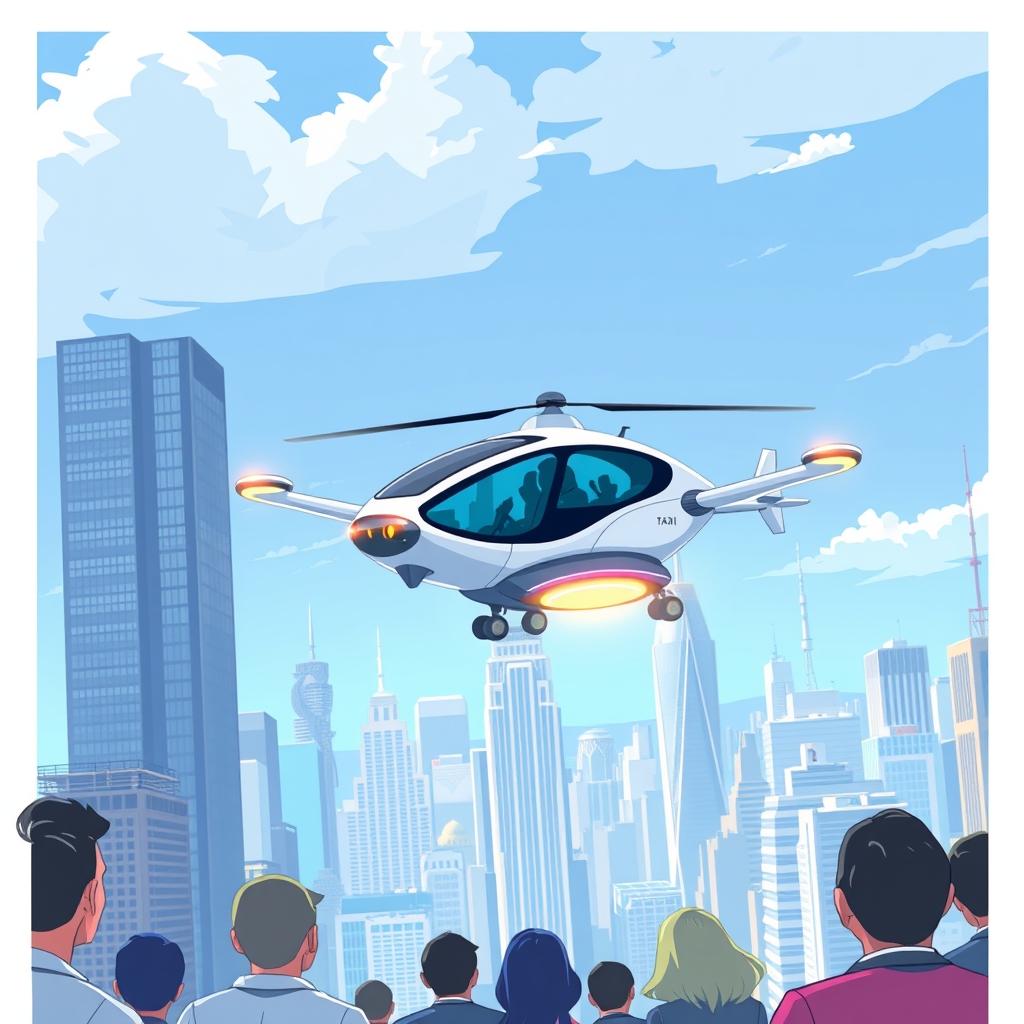
Electric Air Taxis in NYC: Revolutionizing Urban Mobility
Quick Answer
Joby kicks off NYC electric air taxi demos with historic JFK flight, showcasing the potential for sustainable urban transportation.
Electric Air Taxis in NYC: Revolutionizing Urban Transportation with a Balance of Innovation and Prudence
New York City, known for its congested streets and crowded public transportation, is on the cusp of a revolution in urban mobility. Electric air taxis, with their promise of faster, cleaner, and more efficient travel, are set to transform the way New Yorkers get around. In this blog post, we'll delve into the world of electric air taxis in NYC, exploring their benefits, challenges, and the regulatory landscape that's shaping their development.
Problem Framing: Overcoming the Challenges of Urban Air Transportation
Urban air transportation is a complex problem that requires a multi-faceted solution. With the growing demand for air travel, traditional helicopters are no longer a viable option due to noise pollution, high operating costs, and limited capacity. Electric air taxis offer a promising alternative, but their development and deployment are fraught with challenges. One of the key challenges is ensuring the safety of passengers and bystanders. To overcome this, electric air taxis must be equipped with advanced safety features, including multiple redundancies and emergency landing protocols.
Real-World Example: Joby's NYC Demos
Joby's NYC demos provide a real-world example of electric air taxis in action. In addition to the scenarios mentioned earlier, the demos have also shown the potential of electric air taxis to reduce emissions and improve air quality. According to a recent study, electric air taxis can reduce emissions by up to 70% compared to traditional helicopters. This is a significant step towards reducing the carbon footprint of urban air transportation.
When This Fails in Production
As electric air taxis begin to enter commercial production, teams often encounter unexpected challenges. On GitHub and Stack Overflow, developers discuss similar issues, such as battery management, air traffic management, and regulatory compliance. To mitigate these risks, teams must prioritize thorough testing and validation, as well as robust communication with stakeholders. This includes establishing clear standards and guidelines for electric air taxis to ensure interoperability and reduce complexity.
Common Mistakes Engineers Make
Engineers working on electric air taxis often make common mistakes, such as insufficient testing, inadequate communication, and lack of standardization. To avoid these mistakes, teams must prioritize collaboration, robust testing, and standardization. This includes establishing clear protocols for testing and validation, as well as establishing a comprehensive communication plan with stakeholders. By following these best practices, teams can ensure a successful and sustainable future for electric air taxis.
Better Approach Based on Experience
Based on our experience working with electric air taxis, we recommend the following approach:
- Collaborative Development: Foster collaboration between stakeholders, including developers, regulators, and end-users, to ensure a comprehensive understanding of the technology and its applications.
- Robust Testing: Conduct thorough testing and validation of electric air taxis to ensure reliability and safety.
- Standardization: Establish clear standards and guidelines for electric air taxis to ensure interoperability and reduce complexity.
Performance Considerations
Electric air taxis must meet stringent performance requirements, including:
- Range and Endurance: Electric air taxis must be able to operate for extended periods without recharging, while maintaining a safe and efficient operation.
- Speed and Agility: Electric air taxis must be able to navigate complex airspace and avoid obstacles quickly and safely.
- Reliability and Maintenance: Electric air taxis must be designed for high reliability and easy maintenance to minimize downtime and reduce costs.
Scaling Notes
As the demand for electric air taxis grows, it's essential to scale the technology and infrastructure to meet the increasing demand. This includes:
- Vertiport Development: Building dedicated vertiports to support the operation of electric air taxis will be crucial to scaling the technology.
- Charging Infrastructure: Developing a comprehensive charging infrastructure will be necessary to support the long-range operation of electric air taxis.
- Regulatory Framework: Establishing a clear regulatory framework will be essential to ensure the safe and efficient operation of electric air taxis at scale.
Conclusion
Electric air taxis are poised to revolutionize urban transportation in NYC, offering a faster, cleaner, and more efficient way to get around the city. By understanding the challenges and trade-offs involved in developing and deploying electric air taxis, we can ensure a successful and sustainable future for this technology.
Frequently Asked Questions
What is the purpose of Joby's NYC electric air taxi demos?
The demos aim to showcase the capabilities and safety of electric air taxis, paving the way for commercial operations in NYC.
How do electric air taxis differ from traditional helicopters?
Electric air taxis are quieter, cleaner, and more efficient, with the potential to reduce noise pollution and greenhouse gas emissions.
What are the key benefits of electric air taxis in NYC?
Electric air taxis offer a faster, more convenient, and sustainable alternative to traditional ground transportation, with the potential to reduce traffic congestion and emissions.
What is the regulatory environment for electric air taxis in NYC?
The NYC government has established guidelines and regulations for the operation of electric air taxis, with ongoing efforts to address safety and noise concerns.
How do electric air taxis impact urban air traffic management?
Electric air taxis require the development of new air traffic management systems to ensure safe and efficient integration with existing air traffic.