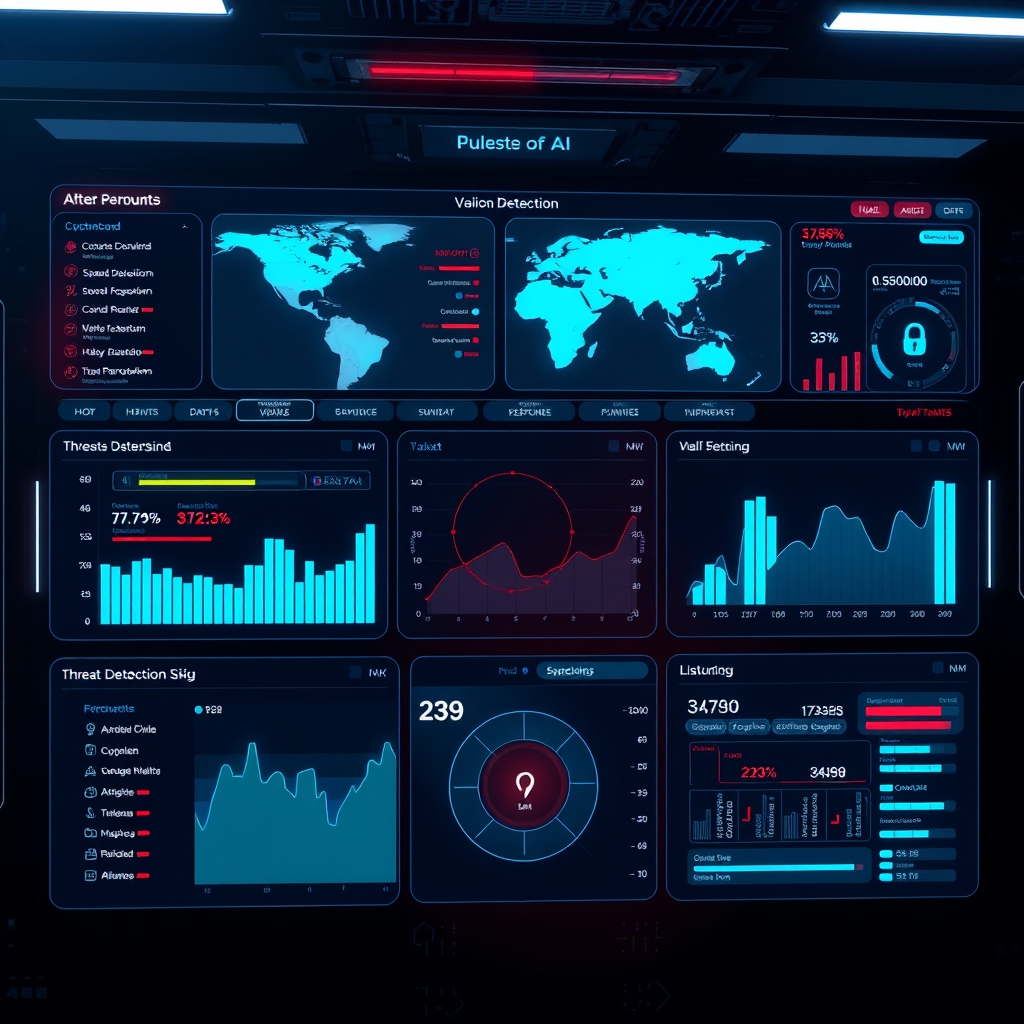
Unlocking the Power of AI in Cybersecurity: Opportunities and Threats
Introduction: Exploring the Intersection of AI and Cybersecurity
The role of AI in cybersecurity is a rapidly AWS cloud platform evolving landscape, filled with opportunities and threats. As AI continues to transform various industries, its impact on cybersecurity is becoming increasingly significant. In this article, we will delve into the world of AI-driven cybersecurity, exploring its potential benefits and risks. We will examine how AI can enhance threat detection, improve incident response, and drive cybersecurity solutions.
Section 1: Opportunities in AI-Driven Cybersecurity
Subsection 1.1: Enhancing Threat Detection and Prevention
A key area where AI excels is in threat detection and prevention. Machine learning algorithms can analyze vast amounts of data to identify patterns and anomalies that may indicate a potential threat. This enables organizations to respond proactively, reducing the risk of a cyber attack.
Example of a machine learning-based threat detection system:
   import pandas as pd
   from sklearn.ensemble import RandomForestClassifier
   from sklearn.model_selection import train_test_split

   # Load dataset
   df = pd.read_csv('threat_data.csv')
   X = df.drop('label', axis=1)
   y = df['label']

   # Split data into training and testing sets
   X_train, X_test, y_train, y_test = train_test_split(X, y, test_size=0.2, random_state=42)

   # Train a random forest classifier
   clf = RandomForestClassifier(n_estimators=100, random_state=42)
   clf.fit(X_train, y_train)

   # Evaluate the model on the testing set
   accuracy = clf.score(X_test, y_test)
   print(f'Accuracy: {accuracy:.3f}')
Subsection 1.2: Improving Incident Response and Recovery
AI can also play a critical role in incident response and recovery. By analyzing data from previous incidents, organizations can identify patterns and develop more effective response strategies. This enables them to minimize downtime and reduce the impact of a cyber attack.
Section 2: Threats to Cybersecurity in the Age of AI
Subsection 2.1: The Risks of AI-Generated Malware
One of the most significant threats to cybersecurity in the age of AI is the risk of AI-generated malware. As AI becomes more sophisticated, it can create complex and sophisticated malware that is difficult to detect and remove.
Subsection 2.2: The Challenges of AI-Powered Cyber Attacks
AI-powered cyber attacks pose a significant challenge to organizations. These attacks can be highly targeted and tailored to specific vulnerabilities, making them difficult to detect and respond to.
Section 3: Best Practices for Implementing AI in Cybersecurity
Subsection 3.1: Selecting the Right AI Tools and Technologies
To get the most out of AI in cybersecurity, organizations need to select the right tools and technologies. This includes choosing AI platforms that are specifically designed for cybersecurity, as well as selecting algorithms and models that are tailored to specific use cases.
Subsection 3.2: Integrating AI with Existing Cybersecurity Infrastructure
AI can be integrated with existing cybersecurity infrastructure to enhance threat detection, improve incident response, and drive cybersecurity solutions. This includes integrating AI with security information and event management (SIEM) systems, intrusion detection systems, and other security tools.
Section 4: Case Studies and Real-World Examples
There are many real-world examples of AI being used in cybersecurity. For instance, the US Department of Defense has implemented an AI-powered cybersecurity system to detect and respond to threats. In India, the government has launched a national AI-powered cybersecurity initiative to enhance the country's cybersecurity posture.
What are the primary benefits of AI in cybersecurity?
AI in cybersecurity offers enhanced threat detection, improved incident response, and increased efficiency in security operations. By leveraging machine learning algorithms, AI can analyze vast amounts of data to identify patterns and anomalies that may indicate potential security threats. This enables cybersecurity professionals to respond more effectively to emerging threats.
How does AI improve threat detection in cybersecurity?
AI-powered threat detection utilizes machine learning to analyze network traffic, system logs, and other data sources to identify potential security threats. AI can detect subtle patterns and anomalies that may indicate a potential attack, enabling cybersecurity professionals to respond more effectively. This proactive approach can help prevent cyber attacks from occurring in the first place.
What are the potential risks associated with AI in cybersecurity?
One of the primary risks associated with AI in cybersecurity is the potential for AI-powered attacks. As AI becomes more prevalent in cybersecurity, attackers may leverage AI-powered tools to launch sophisticated cyber attacks. Additionally, AI can also amplify existing biases in security systems, exacerbating existing security issues.
How does AI impact the role of human cybersecurity professionals?
AI in cybersecurity can augment the capabilities of human cybersecurity professionals, freeing them to focus on higher-level tasks such as incident response and strategic planning. However, AI also requires human oversight and validation to ensure that AI-driven decisions are accurate and effective.
What are the key challenges in implementing AI in cybersecurity?
Implementing AI in cybersecurity requires significant investment in infrastructure, talent, and training. Additionally, AI systems can be complex and difficult to integrate with existing security systems, requiring careful planning and execution to ensure a smooth rollout.
Can AI replace human cybersecurity professionals?
No, AI is not a replacement for human cybersecurity professionals. AI can augment and support human capabilities, but it requires human oversight, validation, and decision-making to ensure effective cybersecurity.
How does the Role of AI in Cybersecurity impact the broader cybersecurity landscape?
The Role of AI in Cybersecurity is transforming the broader cybersecurity landscape by introducing new technologies, tools, and strategies to detect, prevent, and respond to cyber threats. This requires a fundamental shift in the way organizations approach cybersecurity, from reactive to proactive, and from manual to automated.
Conclusion: Navigating the Complex Landscape of AI and Cybersecurity
The role of AI in cybersecurity is a complex and rapidly evolving landscape. As AI continues to transform various industries, its impact on cybersecurity is becoming increasingly significant. By understanding the opportunities and threats that come with AI-driven cybersecurity, organizations can develop effective strategies to enhance their cybersecurity posture and stay ahead of emerging threats.