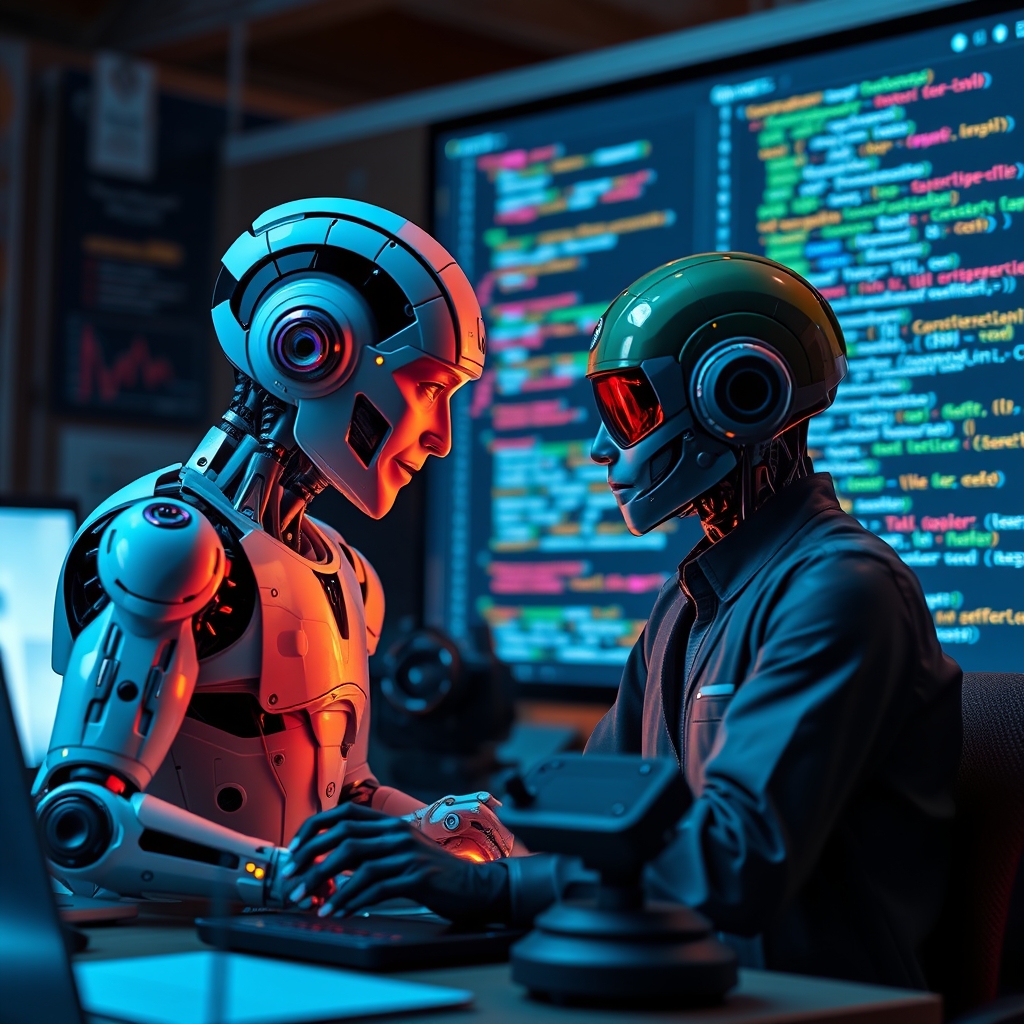
Unlocking Human Potential: AI and Creativity
The Future of Human Creativity in the Age of AI
In today's rapidly evolving OpenAI's AI technology tech landscape, the relationship between humans and AI is transforming the way we create, innovate, and solve complex problems. As AI technologies continue to advance, humans and machines are increasingly collaborating to drive innovation. The role of AI in fostering creativity is a topic of growing interest, with many experts debating the potential benefits and challenges of human-AI collaboration.
Thriving in the Evolving Tech Landscape: Understanding the Current State
The tech industry is undergoing a profound transformation, driven by the rise of AI and machine learning. According to a report by Gartner, AI will create 2.3 million new jobs by 2025 while also displacing 1.8 million jobs. To thrive in this evolving landscape, software engineers and developers need to adapt to new technologies and workflows.
The Rise of AI-Driven Innovation: Benefits and Challenges
AI-driven innovation has the potential to revolutionize industries such as healthcare, finance, and education. AI-powered tools can analyze vast amounts of data, identify patterns, and make predictions, freeing humans to focus on high-level creative tasks. However, the adoption of AI also raises challenges such as job displacement, bias, and accountability.
The Role of Human Creativity in AI Development
While AI can perform repetitive tasks, human creativity is essential for developing AI systems that can learn, adapt, and innovate. Human-AI collaboration involves leveraging the strengths of both humans and machines to drive innovation. By combining the creativity of humans with the analytical capabilities of AI, we can create more effective and efficient solutions.
Human Machine Collaboration: Best Practices for Success
Effective human-AI collaboration requires a deep understanding of the strengths and limitations of both humans and machines. By combining the analytical capabilities of AI with the creativity of humans, we can create more effective and efficient solutions. For instance, companies like IBM and Google have successfully implemented human-AI collaboration to develop AI-powered tools and systems. In addition, the use of AI in content creation has become increasingly popular, with AI-generated content being used in various industries such as marketing, advertising, and entertainment. However, human-AI collaboration also raises challenges such as job displacement, bias, and accountability. To overcome these challenges, organizations must implement strategies such as upskilling and reskilling employees, implementing AI ethics and bias mitigation practices, and establishing clear accountability and governance frameworks.
Real-World Examples and Case Studies: AI-Driven Innovation in Action
Here are some real-world examples of successful human-AI collaborations in the industry:
- Amazon's AI-powered chatbot, which helps customers with product recommendations and support.
- Facebook's AI-powered image recognition system, which helps identify and remove objectionable content from the platform.
- Microsoft's AI-powered Azure Machine Learning, which enables businesses to build, deploy, and manage machine learning models.
Conclusion: The Future of Creativity in the AI-Driven Tech Industry
In conclusion, the role of AI in fostering creativity is a complex and multifaceted topic. While AI has the potential to revolutionize industries, it also raises challenges such as job displacement, bias, and accountability. By understanding the strengths and limitations of both humans and machines, we can leverage the benefits of human-AI collaboration to drive innovation and creativity.
Key Takeaways and Next Steps
Here are some key takeaways and next steps for software engineers and developers:
- Stay up-to-date with the latest AI trends and technologies.
- Develop skills in AI programming, such as Python and TensorFlow.
- Explore AI-powered tools and platforms, such as Google Cloud AI Platform and AWS SageMaker.
Future Directions for Human-AI Collaboration
The future of human-AI collaboration holds much promise, but also raises several challenges. As we move forward, it's essential to prioritize the development of AI ethics and bias mitigation practices, establish clear accountability and governance frameworks, and continue to upskill and reskill employees.