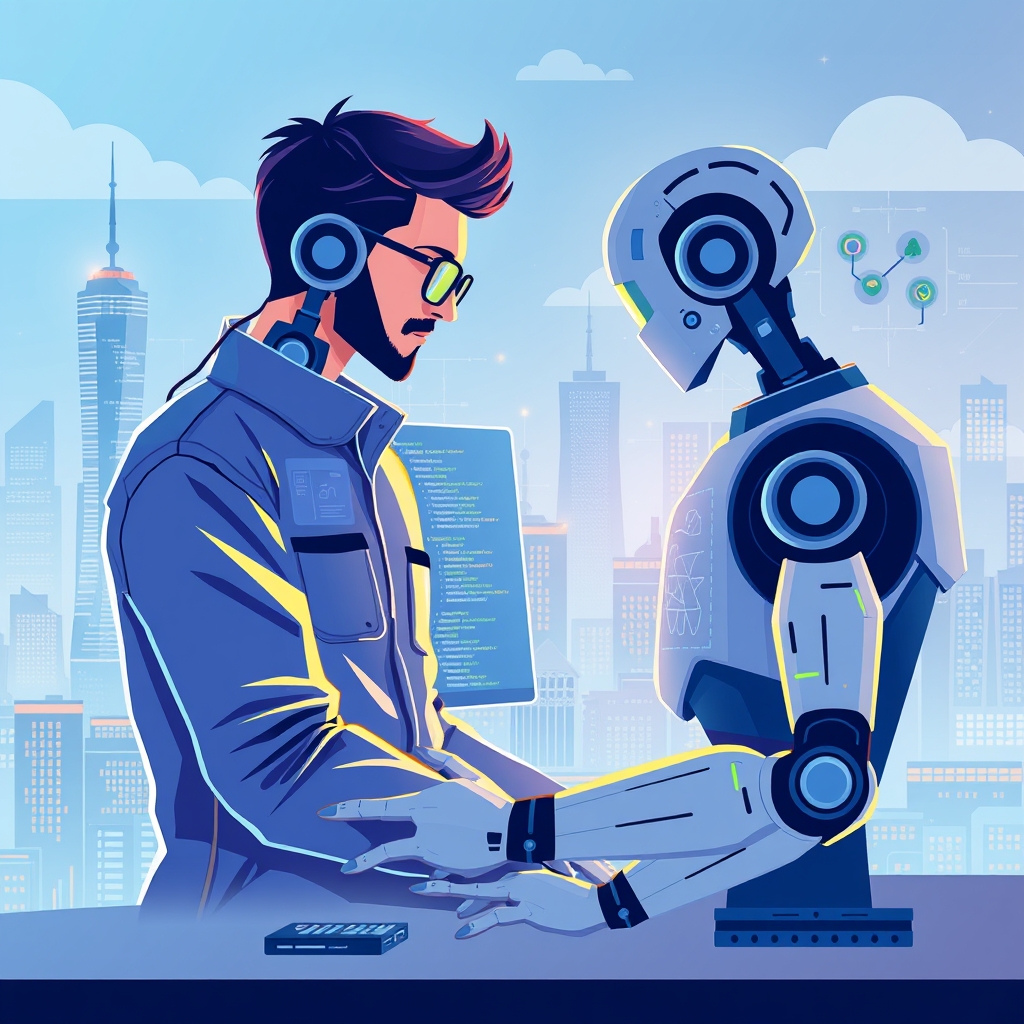
Unlocking Human Potential in AI-Augmented Workplace
Introduction: Exploring the Future of Work with AI
The integration of artificial intelligence AWS cloud platform (AI) in the workplace is transforming the way we work, creating new opportunities for growth and development. As AI continues to advance, it's essential to understand its impact on human potential in the AI-augmented workplace. In this article, we'll explore the future of work with AI, the impact of AI on human potential, and how to leverage AI to unlock human potential in the tech industry.
The primary keyword for this article is Human Potential in AI-Augmented Workplace, which will be discussed throughout the content. We'll also touch on LSI keywords such as AI Tools for Software Engineers, Artificial Intelligence in US Tech Industry, and Machine Learning Development.
Understanding the Impact of AI on Human Potential
AI-Induced Tech Layoffs: Causes and Consequences
The increasing use of AI in the tech industry has led to concerns about job security. While AI has the potential to automate repetitive tasks, it also poses a risk to certain jobs, particularly those that involve routine and repetitive tasks. However, it's essential to note that AI is not a replacement for human workers, but rather a tool to augment their capabilities.
The Rise of AI-Augmented Roles in Software Development
The integration of AI in software development has given rise to new roles and opportunities for software engineers. AI-augmented software engineering involves using AI tools to enhance the development process, making it more efficient and productive. This includes using AI-powered tools for code review, testing, and debugging.
Leveraging AI to Unlock Human Potential
AI Tools for Enhanced Productivity and Efficiency
AI tools can significantly enhance productivity and efficiency in the workplace. For instance, AI-powered project management tools can help software engineers prioritize tasks, manage timelines, and collaborate with team members more effectively. Additionally, AI-powered code editors can provide real-time feedback and suggestions, improving the overall quality of the code.
import pandas as pd
   # Using AI-powered libraries for data analysis
   from sklearn.model_selection import train_test_split
   from sklearn.ensemble import RandomForestClassifier
   # Training a machine learning model
   X_train, X_test, y_train, y_test = train_test_split(X, y, test_size=0.2, random_state=42)
   model = RandomForestClassifier(n_estimators=100, random_state=42)
   model.fit(X_train, y_train)
AI-Driven Software Development Methodologies
AI-driven software development methodologies involve using AI to improve the development process. This includes using AI-powered tools for requirements gathering, design, and testing. For instance, AI-powered tools can help software engineers identify potential bugs and errors, reducing the overall development time and improving the quality of the software.
Navigating the AI-Driven Tech Landscape
Staying Relevant in the US and India Software Job Markets
To stay relevant in the US and India software job markets, software engineers need to develop skills that complement AI. This includes skills such as data science, machine learning, and natural language processing. Additionally, software engineers need to stay up-to-date with the latest trends and technologies in the industry, including AI-Augmented Software Engineering and Software Development with AI.
Best Practices for AI-Augmented Software Engineering
To get the most out of AI-augmented software engineering, software engineers need to follow best practices such as using AI-powered tools for code review and testing, and collaborating with AI engineers to develop AI-powered software solutions. Additionally, software engineers need to ensure that AI-powered tools are used responsibly and ethically, with consideration for potential biases and errors.
Real-World Examples and Case Studies
AI-Augmented Software Development in the US
In the US, companies such as Google and Microsoft are using AI-augmented software engineering to develop innovative software solutions. For instance, Google's AI-powered code editor can provide real-time feedback and suggestions, improving the overall quality of the code. Similarly, Microsoft's AI-powered project management tool can help software engineers prioritize tasks and manage timelines more effectively.
AI Adoption in the India Tech Industry
In India, companies such as Infosys and Wipro are adopting AI-powered tools to improve software development processes. For instance, Infosys's AI-powered testing tool can help software engineers identify potential bugs and errors, reducing the overall development time and improving the quality of the software. Similarly, Wipro's AI-powered code review tool can provide real-time feedback and suggestions, improving the overall quality of the code.
What is the role of AI in unlocking human potential in the workplace?
AI can enhance human capabilities by automating routine tasks, freeing up time for more strategic and creative work. This, in turn, allows employees to focus on high-level tasks that require human skills and expertise, such as problem-solving and decision-making. By augmenting human work with AI, organizations can unlock their employees' full potential.
How can leaders foster a culture that supports human potential in an AI-augmented workplace?
Leaders can create a culture that values human potential by investing in employee development, encouraging continuous learning, and providing opportunities for growth and advancement. By doing so, they can create an environment where employees feel empowered to take on new challenges and strive for excellence. This, in turn, can lead to increased job satisfaction and engagement.
What skills will be most valuable in an AI-augmented workplace, and how can employees develop them?
Skills such as critical thinking, creativity, and emotional intelligence will be increasingly valuable in an AI-augmented workplace. Employees can develop these skills through continuous learning, such as taking online courses, attending workshops, or pursuing higher education. By investing in their own development, employees can stay relevant and adapt to the changing job market.
How can organizations measure the impact of AI on human potential in the workplace?
Organizations can measure the impact of AI on human potential by tracking metrics such as employee engagement, job satisfaction, and productivity. They can also conduct regular surveys to gauge employees' perceptions of the AI-augmented workplace and identify areas for improvement. By regularly assessing the impact of AI, organizations can make data-driven decisions to support their employees' growth and development.
What are the potential risks and challenges associated with AI in the workplace, and how can they be mitigated?
Potential risks and challenges associated with AI in the workplace include job displacement, bias, and cybersecurity threats. To mitigate these risks, organizations can implement measures such as upskilling and reskilling programs, bias detection tools, and robust cybersecurity protocols. By proactively addressing these challenges, organizations can ensure that AI is used to augment human capabilities rather than replace them.
How can employees adapt to the changing job market and remain relevant in an AI-augmented workplace?
Employees can adapt to the changing job market by developing skills that are complementary to AI, such as creativity, problem-solving, and communication. They can also stay up-to-date with industry trends and developments, and be open to new opportunities and challenges. By being proactive and flexible, employees can remain relevant and thrive in an AI-augmented workplace.
What role can AI play in addressing the skills gap in the workplace, and how can organizations leverage it?
AI can play a significant role in addressing the skills gap in the workplace by providing training and development opportunities, identifying skills gaps, and recommending relevant courses or programs. Organizations can leverage AI by investing in AI-powered skills development platforms, partnering with AI-powered talent acquisition platforms, and using AI to analyze skills data and inform talent development strategies.
Conclusion: Embracing AI to Unlock Human Potential in the Tech Industry
In conclusion, unlocking human potential in the AI-augmented workplace requires embracing AI and machine learning. By leveraging AI tools and methodologies, software engineers can enhance productivity and efficiency, and develop innovative software solutions. As discussed in our guide to Thriving in the AI-Driven Tech Landscape, it's essential to stay relevant in the US and India software job markets by developing skills that complement AI. By following best practices for AI-augmented software engineering and using AI-powered tools responsibly and ethically, software engineers can unlock human potential in the tech industry and drive growth and development.