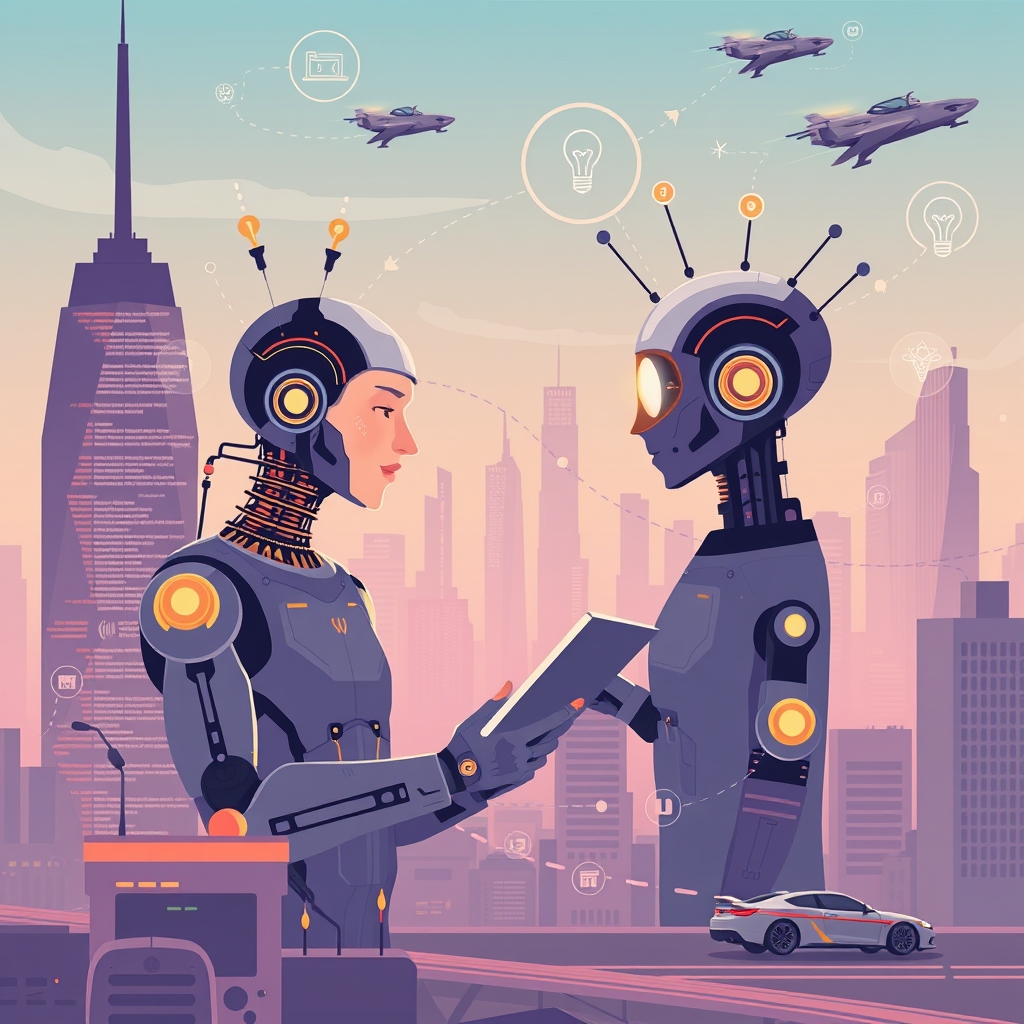
The Role of Creativity in an AI-Driven World: Nurturing Human Ingenuity
Navigating the Intersection of AI and Human Ingenuity
Artificial intelligence (AI) OpenAI AI technology has become an integral part of our daily lives, transforming industries and revolutionizing the way we live, work, and interact. From virtual assistants and chatbots to intelligent systems and predictive analytics, AI has enabled unprecedented levels of automation, efficiency, and innovation. However, as AI continues to advance, the role of human creativity has become a subject of increasing interest and debate.
The relationship between AI and human creativity is complex and multifaceted. On one hand, AI has the potential to augment human creativity, freeing us from mundane tasks and enabling us to focus on higher-level thinking and problem-solving. On the other hand, AI can also displace human creativity, as machines and algorithms take over routine and repetitive tasks. In this blog post, we'll explore the impact of AI on human creativity, the opportunities and challenges presented by AI-driven software development, and practical applications of AI in software development.
The Impact of AI on Human Creativity: A Multifaceted Analysis
AI has the potential to both augment and displace human creativity. On the one hand, AI can enable human creativity by providing new tools, techniques, and platforms for artistic expression, design, and innovation. For example, AI-powered creative tools can help artists and designers generate new ideas, explore new styles, and collaborate with others in real-time. On the other hand, AI can also displace human creativity by automating routine and repetitive tasks, such as data entry, bookkeeping, and customer service.
A study by the McKinsey Global Institute found that while AI has the potential to augment human creativity, it also risks displacing human creativity in certain industries and sectors. The study found that while AI can enable human creativity in areas such as creative writing, music, and visual arts, it can also displace human creativity in areas such as data entry, bookkeeping, and customer service.
AI-Driven Software Development: Opportunities and Challenges
AI-driven software development has the potential to transform the way we build, deploy, and maintain software applications. AI can enable software development by providing new tools, techniques, and platforms for building intelligent systems, predictive analytics, and machine learning models. AI can also help software developers automate routine and repetitive tasks, such as testing, debugging, and deployment.
However, AI-driven software development also presents several challenges, including the need for new skills, training, and expertise. As AI takes over routine and repetitive tasks, software developers will need to focus on higher-level thinking and problem-solving, which requires new skills, training, and expertise. Additionally, AI-driven software development raises concerns about bias, fairness, and accountability, as AI systems can perpetuate existing biases and inequalities.
Practical Applications of AI in Software Development: An Implementation Example
AI has a wide range of practical applications in software development, including:
- Intelligent systems and predictive analytics
- Machine learning models and deep learning
- Natural language processing and text analysis
- Computer vision and image recognition
- Robotics and autonomous systems
One example of AI in software development is the use of machine learning models to predict customer churn. Machine learning models can analyze customer data, behavior, and interactions to predict which customers are most likely to churn. This enables businesses to proactively engage with customers, offering targeted promotions, discounts, and support to prevent churn.
Common Mistakes to Avoid When Implementing AI in Software Engineering
Implementing AI in software engineering can be challenging, and several common mistakes can lead to failure. Some common mistakes to avoid include:
- Lack of clear goals and objectives
- Insufficient data and analytics
- Lack of expertise and training
- Inadequate testing and validation
- Failure to address bias and fairness concerns
Another common mistake is to focus solely on the technical aspects of AI implementation, neglecting the human and organizational aspects. AI implementation requires a comprehensive approach that takes into account the needs, skills, and expertise of software developers, data scientists, and other stakeholders.
Performance and Architecture Considerations for AI-Driven Software Development
AI-driven software development requires careful consideration of performance and architecture. Some key considerations include:
- Scalability and high availability
- Data management and storage
- Security and access control
- Monitoring and logging
- DevOps and continuous integration
AI-driven software development also requires a cloud-based architecture, enabling flexible and scalable deployment, testing, and maintenance. Cloud-based architecture also enables real-time analytics, monitoring, and logging, which is essential for AI-driven software development.
FAQs: Addressing Common Questions about AI and Human Ingenuity
Q: What is the impact of AI on human creativity?
A: AI has the potential to both augment and displace human creativity. On the one hand, AI can enable human creativity by providing new tools, techniques, and platforms for artistic expression, design, and innovation. On the other hand, AI can also displace human creativity by automating routine and repetitive tasks.
Q: What are the opportunities and challenges presented by AI-driven software development?
A: AI-driven software development has the potential to transform the way we build, deploy, and maintain software applications. AI can enable software development by providing new tools, techniques, and platforms for building intelligent systems, predictive analytics, and machine learning models. However, AI-driven software development also presents several challenges, including the need for new skills, training, and expertise.
How can we ensure that AI doesn't replace human creativity in the workplace?
While AI can automate routine tasks, human creativity remains essential for innovation and problem-solving. By focusing on tasks that require empathy, critical thinking, and imagination, we can leverage AI to augment our creative abilities and stay ahead in an AI-driven world.
What role does creativity play in the development of AI itself?
Creativity plays a crucial role in AI development, as researchers and engineers need to design and implement novel algorithms, models, and applications that can learn from data and adapt to new situations. The creativity involved in AI development has led to breakthroughs in areas like natural language processing and computer vision.
How can we balance human ingenuity with the efficiency of AI-driven processes?
By understanding the strengths and weaknesses of both human and AI systems, we can create hybrid workflows that leverage AI for routine tasks and human creativity for complex problems that require empathy, critical thinking, and innovation. This balance enables us to work smarter, not harder.
What are the key differences between human creativity and AI-driven innovation?
Human creativity is often characterized by its subjective, emotional, and intuitive nature, whereas AI-driven innovation tends to be more objective, data-driven, and algorithmic. While AI can generate new ideas, human creativity is essential for refining and iterating on those ideas to create truly innovative solutions.
How can we nurture human ingenuity in an AI-driven world?
To nurture human ingenuity, we need to prioritize education, training, and development programs that foster creativity, critical thinking, and problem-solving skills. We also need to create work environments that encourage experimentation, risk-taking, and collaboration, and provide opportunities for continuous learning and growth.
What are some potential risks associated with relying too heavily on AI-driven creativity?
Relying too heavily on AI-driven creativity can lead to a homogenization of ideas, a lack of diversity and originality, and a diminished capacity for human innovation. It can also perpetuate biases and inequalities present in the data used to train AI models.
How can we ensure that AI is used as a tool to augment human creativity, rather than replace it?
By understanding the limitations and potential biases of AI systems, we can design and implement AI tools that augment human creativity, rather than replace it. We also need to prioritize human-centered design and development practices that prioritize creativity, empathy, and social responsibility.
Conclusion: Nurturing Human Ingenuity in an AI-Driven World
As AI continues to transform industries and revolutionize the way we live, work, and interact, the role of human creativity has become a subject of increasing interest and debate. In this blog post, we've explored the impact of AI on human creativity, the opportunities and challenges presented by AI-driven software development, and practical applications of AI in software development. We've also discussed common mistakes to avoid, performance and architecture considerations, and provided actionable insights and best practices.
Nurturing human ingenuity in an AI-driven world requires a comprehensive approach that takes into account the needs, skills, and expertise of software developers, data scientists, and other stakeholders. By embracing AI and human creativity, we can unlock new levels of innovation, efficiency, and productivity, enabling us to build a brighter, more sustainable future.
References:
- Mckinsey Global Institute. (2020). A Future That Works: Automation, Employment, and Productivity. Retrieved from https://www.mckinsey.com/~/media/McKinsey/Global%20Themes/A%20Future%20that%20works/A%20Future%20that%20Works%20Executive%20Summary.ashx
- Deloitte. (2020). The Future of Work: How AI and Automation Will Change the Job Market. Retrieved from https://www2.deloitte.com/us/en/pages/consumer-and-industrial-products/articles/future-of-work-artificial-intelligence-ai-automation.html
Related resources: