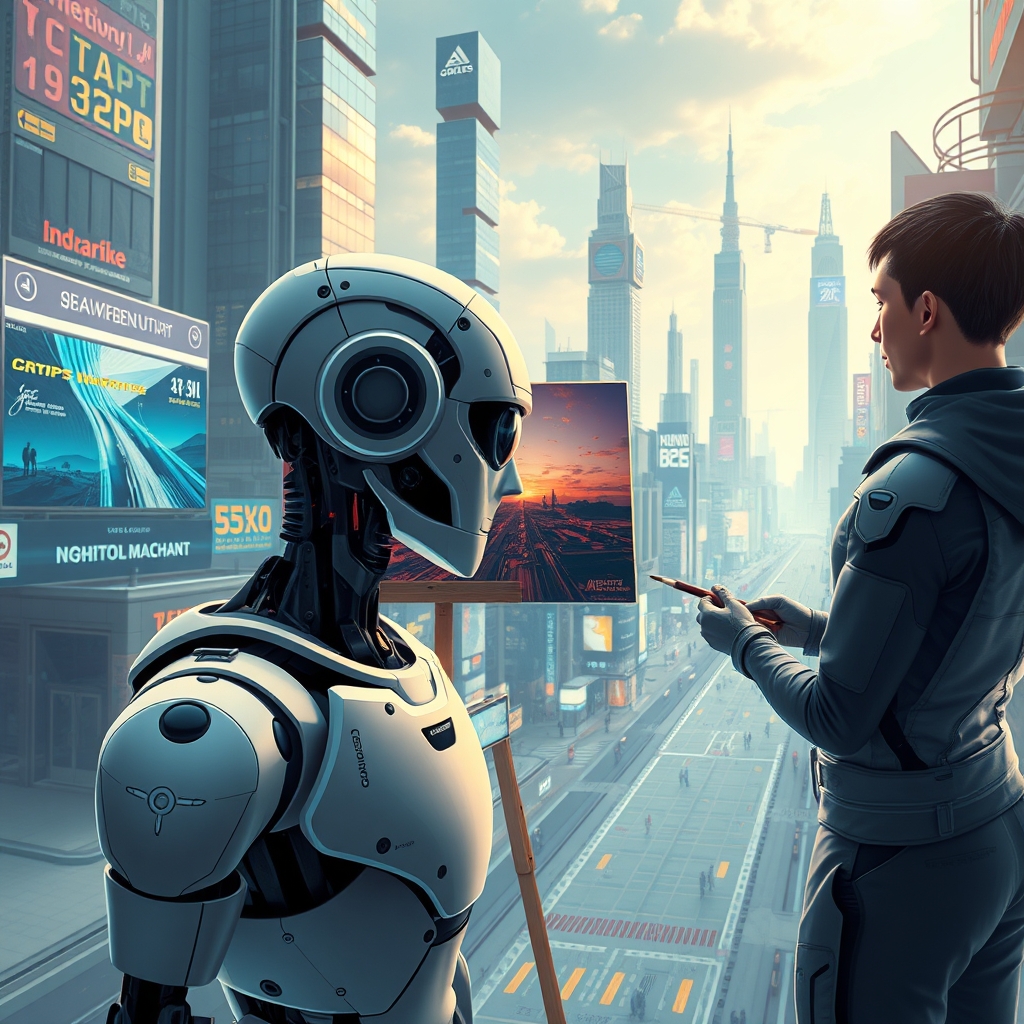
The Intersection of AI and Creativity: Unlocking New Possibilities in Art, Music, and Design
The Revolution of AI in Creative Industries
The intersection of AI and creativity has given OpenAI AI technology rise to a new era of innovation, as machines and humans collaborate to produce groundbreaking art, music, and designs. This convergence has opened up fresh possibilities for creatives, enabling them to push boundaries and explore new frontiers.
From AI-generated art and music to machine learning-powered design tools, the lines between human and artificial creativity are blurring. As AI continues to advance, we can expect even more impressive and innovative creations to emerge.
Thriving in the Evolving Tech Landscape
The AI-driven tech industry is rapidly expanding, creating new opportunities and challenges for software engineers, artists, musicians, and designers. To thrive in this landscape, it's essential to stay informed about the latest trends, tools, and job market insights.
This blog post will delve into the intersection of AI and creativity, exploring the applications, opportunities, and challenges of this emerging field. We'll also provide actionable insights and best practices for success in the AI-driven tech industry.
Challenges and Opportunities in the AI Era
The rise of AI has created both opportunities and challenges for creatives. On one hand, AI-powered tools have democratized access to creative resources, enabling more people to produce high-quality art, music, and designs. On the other hand, the increasing reliance on AI has raised concerns about the role of human creativity and the potential for job displacement.
To navigate this complex landscape, it's crucial to understand the opportunities and challenges presented by AI. By embracing this technology, creatives can unlock new possibilities and stay ahead of the curve.
Best Practices for Success in AI-driven Industries
To succeed in the AI-driven tech industry, it's essential to stay adaptable, curious, and open-minded. Here are some best practices to help you thrive in this landscape:
- Stay up-to-date with the latest trends and tools: Continuously educate yourself about the latest developments in AI, machine learning, and creative technologies.
- Experiment and take risks: Don't be afraid to try new approaches and techniques, even if they may not yield immediate results.
- Collaborate with others: AI is a team sport, and successful projects often involve collaboration between humans and machines.
- Focus on human-centered design: As AI takes over routine tasks, focus on creating experiences that are intuitive, engaging, and meaningful to humans.
AI in Art: Transforming Traditional Creative Processes
AI has revolutionized the art world, enabling artists to create new and innovative works that were previously impossible to produce. From AI-generated portraits to machine learning-powered sculptures, the possibilities are endless.
One of the most significant benefits of AI in art is its ability to automate repetitive tasks, freeing up artists to focus on high-level creative decisions. This has led to a surge in productivity and creativity, as artists can experiment with new styles and techniques without worrying about the technical aspects.
Ai-generated Art: Opportunities and Challenges
Ai-generated art has sparked intense debate about the role of human creativity and the potential for job displacement. While some argue that AI art is a threat to human artists, others see it as a valuable tool for creative expression.
The opportunities presented by AI-generated art are vast, including:
- Increased productivity: AI can automate routine tasks, freeing up artists to focus on high-level creative decisions.
- New creative possibilities: AI can generate novel and innovative works that were previously impossible to produce.
- Democratization of art: AI-powered tools have made it possible for more people to create high-quality art, regardless of their technical skills.
Real-world Examples of AI-powered Art
Several artists have already leveraged AI to create stunning and innovative works. Here are a few examples:
- Amper Music: This AI-powered music composition platform enables users to create custom music tracks in minutes.
- Prisma: This AI-powered art app transforms photos into works of art in the style of famous artists.
- Adobe Fresco: This AI-powered drawing app enables users to create realistic brushstrokes and textures.
AI in Music: Revolutionizing Composition and Performance
AI has transformed the music industry, enabling composers to create new and innovative works that were previously impossible to produce. From AI-generated songs to machine learning-powered music production, the possibilities are endless.
One of the most significant benefits of AI in music is its ability to automate repetitive tasks, freeing up composers to focus on high-level creative decisions. This has led to a surge in productivity and creativity, as composers can experiment with new styles and techniques without worrying about the technical aspects.
Ai-generated Music: The Future of Sound
Ai-generated music has sparked intense debate about the role of human creativity and the potential for job displacement. While some argue that AI music is a threat to human composers, others see it as a valuable tool for creative expression.
The opportunities presented by AI-generated music are vast, including:
- Increased productivity: AI can automate routine tasks, freeing up composers to focus on high-level creative decisions.
- New creative possibilities: AI can generate novel and innovative works that were previously impossible to produce.
- Democratization of music: AI-powered tools have made it possible for more people to create high-quality music, regardless of their technical skills.
The Role of AI in Music Production and Composition
Ai has transformed the music production and composition process, enabling musicians to create new and innovative works that were previously impossible to produce. From AI-powered music composition platforms to machine learning-powered music production tools, the possibilities are endless.
Some of the key benefits of AI in music production and composition include:
- Increased productivity: AI can automate routine tasks, freeing up musicians to focus on high-level creative decisions.
- New creative possibilities: AI can generate novel and innovative works that were previously impossible to produce.
- Improved collaboration: AI-powered tools can facilitate collaboration between musicians, producers, and other stakeholders.
AI in Design: Enhancing Human Creativity
Ai has transformed the design industry, enabling designers to create new and innovative works that were previously impossible to produce. From AI-powered design tools to machine learning-powered design platforms, the possibilities are endless.
One of the most significant benefits of AI in design is its ability to automate repetitive tasks, freeing up designers to focus on high-level creative decisions. This has led to a surge in productivity and creativity, as designers can experiment with new styles and techniques without worrying about the technical aspects.
Ai-powered Design Tools: The Future of Visual Arts
Ai-powered design tools have revolutionized the design industry, enabling designers to create new and innovative works that were previously impossible to produce. From AI-powered graphic design tools to machine learning-powered interior design platforms, the possibilities are endless.
Some of the key benefits of AI-powered design tools include:
- Increased productivity: AI can automate routine tasks, freeing up designers to focus on high-level creative decisions.
- New creative possibilities: AI can generate novel and innovative works that were previously impossible to produce.
- Improved collaboration: AI-powered tools can facilitate collaboration between designers, clients, and other stakeholders.
The Impact of AI on Design Trends and Styles
Ai has had a profound impact on design trends and styles, enabling designers to create new and innovative works that were previously impossible to produce. From AI-powered typography to machine learning-powered color schemes, the possibilities are endless.
Some of the key ways AI has impacted design trends and styles include:
- Increased experimentation: AI has enabled designers to experiment with new styles and techniques, leading to a surge in creativity and innovation.
- New design languages: AI has given rise to new design languages, enabling designers to create works that were previously impossible to produce.
- Improved accessibility: AI-powered design tools have made it possible for more people to create high-quality designs, regardless of their technical skills.
What is the intersection of AI and creativity, and how is it changing the art world?
The intersection of AI and creativity refers to the integration of artificial intelligence (AI) capabilities with human creativity, leading to innovative art forms, such as AI-generated music, art, and designs. This fusion is transforming the art world by expanding creative possibilities and pushing boundaries.
How is AI influencing the music industry, particularly in terms of creativity and artistic expression?
AI is revolutionizing the music industry by enabling the creation of new sounds, melodies, and compositions. AI algorithms can analyze and generate music, collaborate with human artists, and even assist in music production, thereby expanding creative possibilities.
What are some potential benefits of the AI and creativity intersection in the design field?
The intersection of AI and creativity in design can lead to increased efficiency, improved accuracy, and enhanced creativity. AI can assist designers with tasks such as color palette selection, typography, and layout, freeing up time for more complex and creative tasks.
How can artists and designers balance human creativity with AI-generated content to maintain originality and authenticity?
Artists and designers can strike a balance between human creativity and AI-generated content by using AI as a tool, rather than a replacement, for their creative process. This involves understanding the capabilities and limitations of AI and leveraging it to augment and enhance their work.
What are some potential risks or challenges associated with the AI and creativity intersection in creative industries?
Some potential risks include job displacement, homogenization of artistic styles, and the loss of human touch. However, many experts believe that the benefits of AI and creativity intersection far outweigh these risks, leading to innovation and growth in creative industries.
How is the AI and creativity intersection impacting the future of artistic expression and creativity?
The intersection of AI and creativity is expected to continue transforming artistic expression and creativity, enabling new forms of art, music, and design that were previously unimaginable. As AI capabilities advance, we can expect to see even more innovative and boundary-pushing creative works.
Conclusion: The Intersection of AI and Creativity
The intersection of AI and creativity has given rise to a new era of innovation, as machines and humans collaborate to produce groundbreaking art, music, and designs. This convergence has opened up fresh possibilities for creatives, enabling them to push boundaries and explore new frontiers.
As AI continues to advance, we can expect even more impressive and innovative creations to emerge. By embracing this technology, creatives can unlock new possibilities and stay ahead of the curve.
This blog post has explored the intersection of AI and creativity, highlighting the opportunities, challenges, and best practices for success in the AI-driven tech industry. Whether you're an artist, musician, designer, or software engineer, it's essential to understand the role of AI in creative industries and how to leverage this technology to achieve your goals.
By following the best practices outlined in this post, you can stay ahead of the curve and thrive in the AI-driven tech industry. Remember to stay adaptable, curious, and open-minded, and to focus on human-centered design and collaboration. With AI on your side, the possibilities are endless, and the future of creativity has never been brighter.
Key Takeaways and Next Steps
This blog post has provided a comprehensive overview of the intersection of AI and creativity, highlighting the opportunities, challenges, and best practices for success in the AI-driven tech industry. Here are some key takeaways and next steps to consider:
- Stay up-to-date with the latest trends and tools: Continuously educate yourself about the latest developments in AI, machine learning, and creative technologies.
- Experiment and take risks: Don't be afraid to try new approaches and techniques, even if they may not yield immediate results.
- Collaborate with others: AI is a team sport, and successful projects often involve collaboration between humans and machines.
- Focus on human-centered design: As AI takes over routine tasks, focus on creating experiences that are intuitive, engaging, and meaningful to humans.
The Future of AI-driven Creative Industries
The future of AI-driven creative industries is bright, with endless possibilities for innovation and creativity. As AI continues to advance, we can expect even more impressive and innovative creations to emerge.
Some of the key trends and developments to watch in the future of AI-driven creative industries include:
- Increased adoption of AI-powered tools: As AI-powered tools become more accessible and affordable, we can expect to see increased adoption across creative industries.
- More emphasis on human-centered design: As AI takes over routine tasks, we can expect to see more emphasis on human-centered design and experiences that are intuitive, engaging, and meaningful to humans.
- New business models and revenue streams: AI-driven creative industries will give rise to new business models and revenue streams, enabling creatives to monetize their work in innovative and exciting ways.
Featured Image Prompt
Suggest a featured image that showcases the intersection of AI and creativity. The image could depict a person using an AI-powered tool to create a work of art, music, or design. Alternatively, it could show a futuristic cityscape with AI-powered robots and machines collaborating with humans to create innovative and creative works.