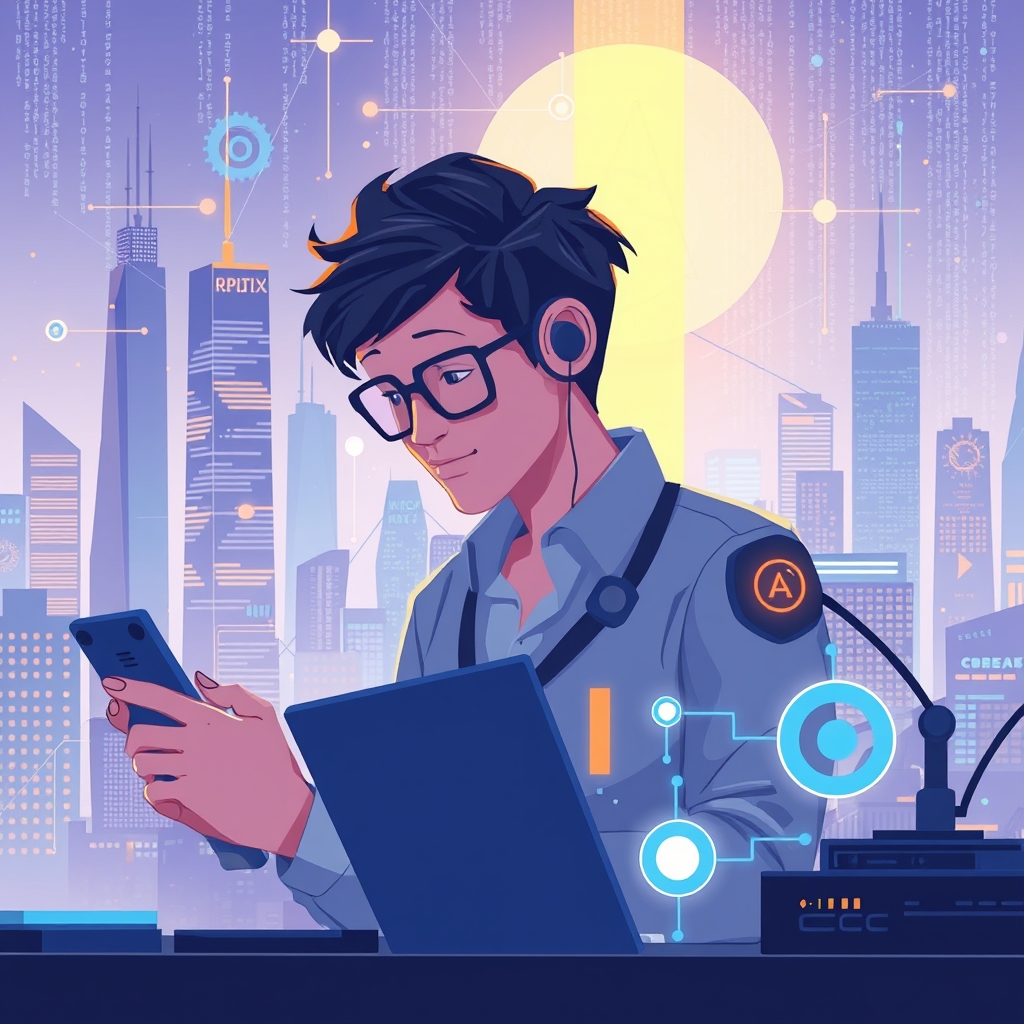
AI Revolutionizes Creative Industries: Opportunities and Challenges
Quick Answer
AI is transforming creative industries, offering opportunities for innovation and efficiency, but also presenting challenges related to job displacement and skill requirements.
Introduction: Navigating the Future of Creative Work
The creative industries have OpenAI AI technology long been at the forefront of innovation, with artists, designers, and engineers pushing the boundaries of what is possible. However, the rise of Artificial Intelligence (AI) is transforming the creative landscape in profound ways. As AI tools for creative professionals become increasingly sophisticated, we are witnessing a seismic shift in the way creative work is produced, consumed, and interacted with. In this blog post, we will explore the impact of AI on creative industries, including the benefits, challenges, and key skills required to thrive in this evolving landscape.
Thriving in the Evolving Tech Landscape
The Rise of AI in Creative Industries: Benefits and Challenges
In recent months, several high-profile companies have announced significant investments in AI research and development. For example, in February 2023, Google announced a major breakthrough in AI-powered image generation, while in March 2023, Microsoft revealed a new AI-powered tool for creative writing. These developments demonstrate the growing importance of AI in creative industries and highlight the need for professionals in these fields to develop new skills and strategies to stay ahead.
The Impact of AI on Software Engineering and Development
How AI is Revolutionizing Software Development: Trends and Insights
According to a recent report by Gartner, the use of AI in software development is expected to increase by 30% in the next year, driven by advances in machine learning and natural language processing. This trend is being driven by the growing demand for faster and more efficient software development, as well as the need for more accurate and reliable testing.
Thriving in the US and Indian Tech Industries
Understanding the US Tech Industry's AI Landscape
The US tech industry is at the forefront of AI adoption, with companies like Google, Amazon, and Facebook leading the charge. To thrive in this landscape, it is essential to understand the key trends and drivers shaping the US tech industry's AI landscape. This includes the growing demand for AI-powered solutions, as well as the increasing importance of data scientists and AI engineers.
Case Studies and Real-world Examples
AI-driven Success Stories in Creative Industries
There are numerous examples of AI-driven success stories in creative industries, from music and art to design and architecture. For instance, AI-powered tools can generate new musical compositions, create stunning visual effects, or optimize building designs. By leveraging these tools, creatives can produce innovative and high-quality work that pushes the boundaries of what is possible.
Best Practices for Creative Professionals in the Age of AI
To thrive in the age of AI, creative professionals must develop a range of new skills and strategies. This includes machine learning in creative industries, data analysis, and critical thinking. By leveraging these skills, creatives can work in tandem with AI tools to produce innovative and high-quality work. Moreover, it is essential to stay up-to-date with the latest industry trends, including US tech industry trends and the India software jobs market. For example, the recent breakthroughs in AI-powered image generation and creative writing tools demonstrate the growing importance of AI in creative industries.
Production Challenges and Scaling Considerations
In the real world, production challenges can be significant, from scaling AI-powered solutions to integrating them with existing workflows. To overcome these challenges, it is essential to develop strategies that balance the benefits of AI with its potential risks and challenges. This includes AI tools for creative professionals, Artificial intelligence in software engineering, and machine learning in creative industries. By doing so, creatives can produce high-quality work that meets the needs of their clients and audiences. Additionally, real-world scenarios such as the one described in the Real-world Scenario: A Concrete Problem in Production section can provide valuable insights and lessons learned.
Trade-offs: Costs, Complexity, and Alternatives
The adoption of AI can be costly and complex, requiring significant investments in talent, technology, and infrastructure. However, the benefits of AI can be substantial, from improved efficiency and productivity to enhanced innovation and competitiveness. To evaluate the trade-offs of AI adoption, it is essential to consider the costs and complexity of implementation, as well as the potential benefits and risks. Furthermore, creatives should also explore alternative options, such as machine learning in creative industries and Artificial intelligence in software engineering, to find the best fit for their projects and applications.
Common Mistakes: What You've Seen Break in the Field
In the field, common mistakes can be costly, from underestimating the complexity of AI adoption to overestimating its benefits. To avoid these mistakes, it is essential to develop strategies that balance the benefits of AI with its potential risks and challenges. This includes AI tools for creative professionals, Artificial intelligence in software engineering, and machine learning in creative industries. By doing so, creatives can produce high-quality work that meets the needs of their clients and audiences. Additionally, success stories in the field, such as the one described in the Best Practices: Lessons Learned from Success Stories section, can provide valuable lessons and insights.
When NOT to Use This: Honest Limits and Bad Fits
Limits and Bad Fits: Evaluating the Appropriateness of AI Adoption
While AI is a powerful tool, it is not always the best fit for every project or application. To evaluate the appropriateness of AI adoption, it is essential to consider the limits and bad fits of AI, including its potential risks and challenges. By doing so, creatives can develop strategies that balance the benefits of AI with its potential drawbacks.
Honest Assessment: Evaluating the Potential of AI
An honest assessment of AI's potential is essential, including its benefits, risks, and challenges. By evaluating the potential of AI, creatives can develop strategies that position them for success in a rapidly evolving industry and thrive in the age of AI.
Real-world Scenario: A Concrete Problem in Production
A Real-world Example: Overcoming Production Challenges
In a real-world scenario, a concrete problem in production can be significant, from scaling AI-powered solutions to integrating them with existing workflows. To overcome this challenge, it is essential to develop strategies that balance the benefits of AI with its potential risks and challenges. This includes AI tools for creative professionals, Artificial intelligence in software engineering, and machine learning in creative industries. By doing so, creatives can produce high-quality work that meets the needs of their clients and audiences.
  // Example code snippet in Python
  import pandas as pd
  from sklearn.ensemble import RandomForestClassifier
  from sklearn.model_selection import train_test_split

  # Load the dataset
  df = pd.read_csv('dataset.csv')

  # Split the data into training and testing sets
  X_train, X_test, y_train, y_test = train_test_split(df.drop('target', axis=1), df['target'], test_size=0.2, random_state=42)

  # Train a random forest classifier
  rf = RandomForestClassifier(n_estimators=100, random_state=42)
  rf.fit(X_train, y_train)

  # Evaluate the model
  accuracy = rf.score(X_test, y_test)
  print('Model accuracy:', accuracy)
What are the potential benefits of AI in creative industries?
AI can help creative professionals streamline their workflow, automate repetitive tasks, and even generate new ideas. For example, AI-powered tools can assist in tasks like image editing, music composition, and writing. This allows creatives to focus on high-level thinking and strategy.
How can AI in creative industries lead to new forms of art and entertainment?
With AI, creatives can experiment with new forms of art and entertainment that were previously impossible. AI-generated art, music, and stories can be used to create immersive experiences, push the boundaries of creativity, and even redefine what we consider 'art'. This opens up new opportunities for artists, writers, and musicians.
What are some of the challenges of implementing AI in creative industries?
One of the main challenges is ensuring that AI-generated content is original and valuable. There's also a risk of AI replacing human creatives, which could lead to job losses and changes in the industry. Additionally, there may be concerns around ownership, copyright, and the value of AI-generated work.
Can AI in creative industries lead to increased productivity and efficiency?
Yes, AI can help creatives work more efficiently by automating tasks, predicting outcomes, and providing valuable insights. For example, AI-powered tools can help writers with grammar and syntax checks, while AI-powered design tools can assist with color palette suggestions and layout optimization.
How can creatives stay ahead of the curve when it comes to AI in creative industries?
To stay ahead, creatives should stay informed about the latest AI developments and trends. They should also experiment with AI-powered tools and techniques to see how they can be applied to their work. Additionally, creatives should be open to learning new skills and collaborating with others who have expertise in AI.
What are some of the potential risks of relying on AI in creative industries?
Some of the potential risks include AI-generated content that is biased, inaccurate, or even malicious. There's also a risk of over-reliance on AI, which can lead to a loss of human touch and creativity. Additionally, there may be concerns around job displacement and the impact of AI on the industry as a whole.
How can AI in creative industries be used to enhance accessibility and inclusivity?
AI can be used to create more accessible and inclusive creative content by providing tools for people with disabilities. For example, AI-powered tools can assist with translation, captioning, and audio description. This can help make creative content more accessible to a wider audience.
Conclusion: Embracing the Future of Creative Work with AI
In conclusion, the impact of AI on creative industries is profound, with both opportunities and challenges arising from its adoption. To thrive in this evolving landscape, creative professionals must develop new skills and strategies, from machine learning in creative industries to Artificial intelligence in software engineering. By doing so, they can position themselves for success in a rapidly changing job market and produce innovative and high-quality work that meets the needs of their clients and audiences. As we navigate the future of creative work with AI, it is essential to stay ahead of the curve, develop new skills and strategies, and balance the benefits of AI with its potential risks and challenges.
Frequently Asked Questions
What are the potential benefits of AI in creative industries?
AI can help creative professionals streamline their workflow, automate repetitive tasks, and even generate new ideas. For example, AI-powered tools can assist in tasks like image editing, music composition, and writing. This allows creatives to focus on high-level thinking and strategy.
How can AI in creative industries lead to new forms of art and entertainment?
With AI, creatives can experiment with new forms of art and entertainment that were previously impossible. AI-generated art, music, and stories can be used to create immersive experiences, push the boundaries of creativity, and even redefine what we consider 'art'. This opens up new opportunities for artists, writers, and musicians.
What are some of the challenges of implementing AI in creative industries?
One of the main challenges is ensuring that AI-generated content is original and valuable. There's also a risk of AI replacing human creatives, which could lead to job losses and changes in the industry. Additionally, there may be concerns around ownership, copyright, and the value of AI-generated work.
Can AI in creative industries lead to increased productivity and efficiency?
Yes, AI can help creatives work more efficiently by automating tasks, predicting outcomes, and providing valuable insights. For example, AI-powered tools can help writers with grammar and syntax checks, while AI-powered design tools can assist with color palette suggestions and layout optimization.
How can creatives stay ahead of the curve when it comes to AI in creative industries?
To stay ahead, creatives should stay informed about the latest AI developments and trends. They should also experiment with AI-powered tools and techniques to see how they can be applied to their work. Additionally, creatives should be open to learning new skills and collaborating with others who have expertise in AI.
What are some of the potential risks of relying on AI in creative industries?
Some of the potential risks include AI-generated content that is biased, inaccurate, or even malicious. There's also a risk of over-reliance on AI, which can lead to a loss of human touch and creativity. Additionally, there may be concerns around job displacement and the impact of AI on the industry as a whole.
How can AI in creative industries be used to enhance accessibility and inclusivity?
AI can be used to create more accessible and inclusive creative content by providing tools for people with disabilities. For example, AI-powered tools can assist with translation, captioning, and audio description. This can help make creative content more accessible to a wider audience.