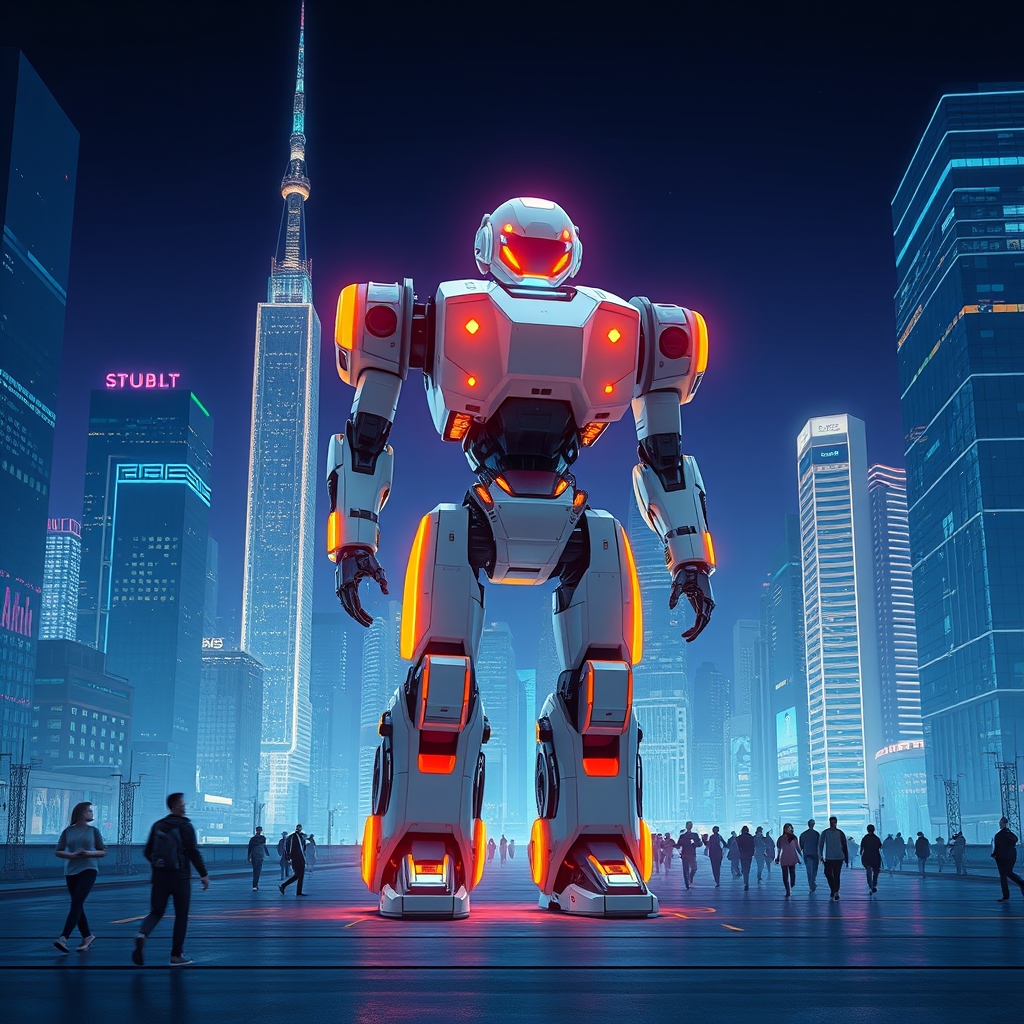
The AI Future of Work: Redefining Job Roles and Responsibilities
Quick Answer
AI is transforming the workforce, creating new job opportunities and challenges, and redefining traditional job roles and responsibilities.
The Introduction of AI and Its Impact on the Workforce
The rapid advancement of artificial OpenAI AI technology intelligence (AI) has led to a significant transformation in the workforce. As AI technologies continue to evolve and become more sophisticated, they are increasingly being used to automate tasks, improve efficiency, and enhance decision-making. This has led to a shift in the way work is done, with many traditional job roles and responsibilities being redefined or even eliminated.
The impact of AI on the workforce is multifaceted. On the one hand, AI has created new job opportunities in areas such as AI development, deployment, and management. On the other hand, AI has also led to job displacement, particularly in sectors where tasks are repetitive or can be easily automated. According to a report by the McKinsey Global Institute, up to 800 million jobs could be lost worldwide due to automation by 2030.
Thriving in the Evolving Tech Landscape
To thrive in the evolving tech landscape, it's essential to stay ahead of the curve and adapt to changing job market trends. This involves developing new skills, staying up-to-date with the latest technologies, and being open to new opportunities and challenges.
Understanding AI Job Market Trends and Forecasts
The AI job market is rapidly evolving, with new job opportunities emerging in areas such as AI development, deployment, and management. According to a report by Gartner, the global AI market is expected to reach $190 billion by 2025, with AI-related job postings increasing by 300% between 2019 and 2025.
However, the AI job market also presents significant challenges. As AI technologies continue to advance, there is a growing concern about job displacement and the need for workers to develop new skills to remain employable.
The Impact of AI on Traditional Job Roles and Responsibilities
The impact of AI on traditional job roles and responsibilities is significant. Many jobs that were previously considered stable and secure are now being automated or redefined. For example, the use of AI-powered chatbots has led to a decline in the number of customer service representatives, while the increasing use of AI-powered machines has led to a decline in the number of manufacturing workers.
However, AI has also created new job opportunities in areas such as AI development, deployment, and management. For example, the increasing demand for AI-powered solutions has led to a surge in demand for AI developers, data scientists, and AI engineers.
Emerging Job Opportunities in AI and Machine Learning
The rise of AI has led to the emergence of new job opportunities in areas such as AI development, deployment, and management. Some of the most in-demand jobs in AI and machine learning include:
- AI Developer: An AI developer is responsible for designing, developing, and deploying AI-powered solutions.
- Data Scientist: A data scientist is responsible for collecting, analyzing, and interpreting data to inform business decisions.
- AI Engineer: An AI engineer is responsible for designing, developing, and deploying AI-powered systems.
- Machine Learning Engineer: A machine learning engineer is responsible for designing, developing, and deploying machine learning models.
Redefining Job Roles and Responsibilities in the AI Era
The rise of AI has led to a significant shift in the way work is done. Many traditional job roles and responsibilities are being redefined or even eliminated, while new job opportunities are emerging in areas such as AI development, deployment, and management.
The Role of Software Engineers in the AI-Driven Tech Industry
Software engineers play a critical role in the AI-driven tech industry. They are responsible for designing, developing, and deploying AI-powered solutions, as well as ensuring that these solutions are safe, secure, and effective.
To thrive in the AI-driven tech industry, software engineers need to develop new skills, such as AI development, deployment, and management. They also need to stay up-to-date with the latest technologies and be open to new opportunities and challenges.
Best Practices for Success in the AI-Driven Workforce
To succeed in the AI-driven workforce, it's essential to develop new skills, stay up-to-date with the latest technologies, and be open to new opportunities and challenges. Some best practices for success in the AI-driven workforce include:
- Developing new skills, such as AI development, deployment, and management.
- Staying up-to-date with the latest technologies and trends.
- Being open to new opportunities and challenges.
- Continuously learning and upskilling.
The Future of Work: Real-World Examples and Case Studies
The future of work is rapidly evolving, with AI technologies continuing to advance and new job opportunities emerging in areas such as AI development, deployment, and management. Some real-world examples and case studies of AI in the workforce include:
Case Study: How Companies Are Adapting to the AI-Driven Workforce
Companies such as Amazon, Google, and Microsoft are adapting to the AI-driven workforce by investing in AI research and development, as well as retraining their employees to work with AI technologies.
For example, Amazon has invested heavily in AI research and development, with a focus on areas such as natural language processing and computer vision. The company has also established a number of AI-focused teams, including an AI-powered customer service team.
Success Stories of Professionals Thriving in the AI Era
Many professionals are thriving in the AI era by developing new skills, staying up-to-date with the latest technologies, and being open to new opportunities and challenges. Some success stories include:
- A software engineer who transitioned from a traditional job role to a role in AI development and deployment.
- A data scientist who developed a machine learning model that improved the accuracy of a company's predictions by 20%.
- An AI engineer who designed and developed an AI-powered chatbot that improved customer satisfaction by 30%.
What role will AI play in shaping the future of work?
AI is expected to augment human capabilities, automating routine tasks and freeing up time for more strategic and creative work. This shift will lead to a more efficient and productive workforce, with AI future of work transformations being a key driver of economic growth.
Will AI replace human workers, or will it create new job opportunities?
While AI may automate some jobs, it will also create new ones, such as AI developer, data scientist, and AI ethicist. As AI future of work evolves, the job market will adapt, and new opportunities will emerge.
How will AI impact the skills required for job roles?
AI will require workers to develop new skills, such as programming, data analysis, and critical thinking. As AI future of work becomes more prevalent, workers will need to be adaptable and willing to upskill and reskill to remain relevant.
Can AI be used to improve work-life balance?
Yes, AI can help improve work-life balance by automating routine tasks, allowing workers to focus on more meaningful and creative work. This shift can lead to increased productivity, reduced stress, and a better overall quality of life.
What are the potential benefits of AI in the workplace?
The benefits of AI in the workplace include increased efficiency, improved accuracy, and enhanced decision-making capabilities. As AI future of work becomes more prevalent, businesses will reap the rewards of these benefits, leading to increased competitiveness and profitability.
How can workers prepare themselves for an AI-driven future of work?
To prepare for an AI-driven future of work, workers should focus on developing skills that complement AI, such as creativity, empathy, and complex problem-solving. They should also stay adaptable, embrace lifelong learning, and be open to new opportunities.
What are the potential challenges of AI in the workplace?
The potential challenges of AI in the workplace include job displacement, bias in AI decision-making, and the need for significant investments in AI infrastructure and talent. As AI future of work evolves, businesses and governments will need to address these challenges to ensure a smooth transition.
Conclusion
The future of work is rapidly evolving, with AI technologies continuing to advance and new job opportunities emerging in areas such as AI development, deployment, and management. To thrive in the AI-driven workforce, it's essential to develop new skills, stay up-to-date with the latest technologies, and be open to new opportunities and challenges.
Some actionable insights and recommendations for professionals and career seekers include:
- Developing new skills, such as AI development, deployment, and management.
- Staying up-to-date with the latest technologies and trends.
- Being open to new opportunities and challenges.
- Continuously learning and upskilling.
This article has provided an overview of the impact of AI on the workforce, emerging job opportunities, and best practices for success in the AI-driven workforce. It has also highlighted the importance of developing new skills, staying up-to-date with the latest technologies, and being open to new opportunities and challenges.
As discussed in our guide to thriving in the AI-driven tech industry, it's essential to stay ahead of the curve and adapt to changing job market trends. By developing new skills, staying up-to-date with the latest technologies, and being open to new opportunities and challenges, professionals and career seekers can thrive in the AI-driven workforce.
Frequently Asked Questions
What role will AI play in shaping the future of work?
AI is expected to augment human capabilities, automating routine tasks and freeing up time for more strategic and creative work. This shift will lead to a more efficient and productive workforce, with AI future of work transformations being a key driver of economic growth.
Will AI replace human workers, or will it create new job opportunities?
While AI may automate some jobs, it will also create new ones, such as AI developer, data scientist, and AI ethicist. As AI future of work evolves, the job market will adapt, and new opportunities will emerge.
How will AI impact the skills required for job roles?
AI will require workers to develop new skills, such as programming, data analysis, and critical thinking. As AI future of work becomes more prevalent, workers will need to be adaptable and willing to upskill and reskill to remain relevant.
Can AI be used to improve work-life balance?
Yes, AI can help improve work-life balance by automating routine tasks, allowing workers to focus on more meaningful and creative work. This shift can lead to increased productivity, reduced stress, and a better overall quality of life.
What are the potential benefits of AI in the workplace?
The benefits of AI in the workplace include increased efficiency, improved accuracy, and enhanced decision-making capabilities. As AI future of work becomes more prevalent, businesses will reap the rewards of these benefits, leading to increased competitiveness and profitability.
How can workers prepare themselves for an AI-driven future of work?
To prepare for an AI-driven future of work, workers should focus on developing skills that complement AI, such as creativity, empathy, and complex problem-solving. They should also stay adaptable, embrace lifelong learning, and be open to new opportunities.
What are the potential challenges of AI in the workplace?
The potential challenges of AI in the workplace include job displacement, bias in AI decision-making, and the need for significant investments in AI infrastructure and talent. As AI future of work evolves, businesses and governments will need to address these challenges to ensure a smooth transition.