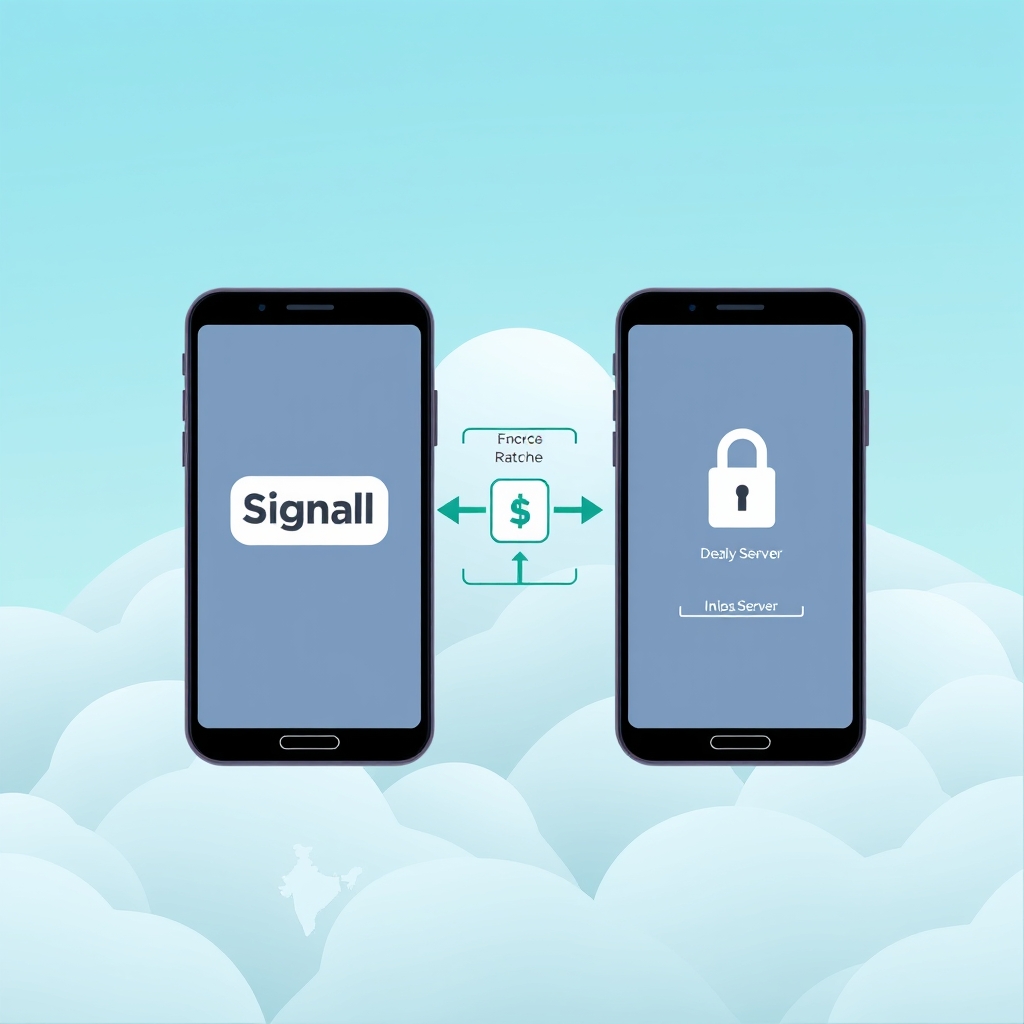
Signal vs custom end-to-end encryption protocols: When Scale Exposes the Weakest Link
Quick Answer
Explore a deep Signal vs custom end‑to‑end encryption protocols analysis, architecture, and production pitfalls for building a secure, scalable chat system.
Signal vs custom end-to-end encryption protocols: When Scale Exposes the Weakest Link
Quick Answer
Signal vs custom end-to-end encryption protocols: Explore a deep Signal vs custom end‑to‑end encryption protocols analysis, architecture, and production pitfalls for building a secure, scalable chat system.
Problem Framing: Why the Signal vs. Custom E2E Debate Matters at Scale
When you’re shipping a chat feature to 10‑plus million users, the encryption stack is not a side‑kick; it’s a core service that can become a single point of failure. The choice between the battle‑tested Signal protocol and a custom end‑to‑end design isn’t about novelty; it’s about operational risk, compliance, and future‑proofing. In a regulated fintech, a breach of a single message can trigger a 5‑million‑rupee audit fine. In a global collaboration tool, a mis‑rolled DH key can expose an entire company’s internal discussions for months.
Real‑World Example: Building a Cross‑Border Enterprise Chat
Consider a SaaS platform that powers internal chat for a multinational bank. The service must support:
- 10M active users, 5B messages/month.
- Multi‑device sync: each user owns up to 4 devices.
- GDPR & PDPB compliance: forward secrecy, no data retention on the relay.
- High availability: 99.99% uptime across US, EU, India.
- Latency target: ≤ 50 ms per message round‑trip for a smooth UX.
In this scenario, a custom protocol that neglects one‑time pre‑keys or reuses session keys will fail in production within the first week of deployment – either through a replay attack or a key‑rotation race that silently drops messages.
Trade‑offs Between Signal and Custom E2E
- Implementation effort: Signal’s
Signal.ProtocolNuGet abstracts 200+ lines of cryptographic glue; a custom stack requires writing and vetting each primitive, which is a 3‑month effort for a senior engineer. - Audit & compliance: Signal has 4 independent open‑source audits (2022, 2024) and a bounty program; a custom design forces an internal audit that costs > $200k and can uncover subtle side‑channel leaks.
- Feature set: Signal supports sealed‑sender, per‑device pre‑keys, and multi‑device sync out of the box. Custom designs must re‑implement these, often with fragile state machines.
- Performance: Signal’s X3DH + Double Ratchet costs ~1.2 ms on a mid‑range Android device. A naïve RSA‑based handshake can exceed 10 ms, and when multiplied by 4 devices per user, the latency balloon is unacceptable.
- Future‑proofing: Signal’s codebase evolves with the latest crypto research; a custom stack risks becoming obsolete when new attacks surface.
Decision Guide: When to Adopt Signal, When to Roll Your Own
| Criteria | Signal Preferred | Custom Preferred |
|---|---|---|
| Compliance & audit readiness | ✓ | ✗ |
| Need for sealed‑sender or per‑message metadata hiding | ✓ | ✗ |
| Unique feature not in Signal (e.g., per‑message encryption key rotation policy) | ✗ | ✓ |
| Performance envelope < 2 ms per message on low‑end devices | ✓ | ✗ (unless highly optimized) |
| Internal crypto expertise & budget for audits | ✗ | ✓ (if you can afford > $200k audit) |
| Rapid time‑to‑market | ✓ | ✗ |
Rule of thumb: if you need compliance, multi‑device sync, or sealed‑sender, start with Signal. Only consider a custom stack if you have a unique threat model that Signal cannot satisfy and you’re ready to invest heavily in crypto engineering and audits.
When This Fails in Production
- Key‑Sync Race Conditions: Simultaneous pre‑key uploads from two devices can overwrite each other, leaving the other device with a stale bundle that never gets refreshed. The result is a silent message drop for 30 minutes until the next bundle fetch.
- Replay Window Exploits: If your key‑rotation job is delayed by > 5 min due to a batch job slowdown, an attacker who captured a pre‑key can replay it and force a deterministic DH, breaking forward secrecy.
- Server‑Side State Bloat: Storing one‑time pre‑keys for 10M users at 10 KB each consumes 100 GB. Without sharding or TTL, the identity service becomes a hot spot and a single node failure brings the entire relay down.
Common Mistakes Engineers Make
- Reusing the same DH key across sessions – assumes forward secrecy but actually creates a single shared secret that, once compromised, leaks all messages.
- Ignoring AEAD nonces – reusing a 12‑byte nonce with AES‑GCM on a hot path leads to plaintext XOR leakage.
- Storing pre‑keys in plaintext DB – a compromised KMS can reconstruct all past session keys.
- Not zeroing temporary buffers – on a shared‑core VM, old data can bleed into new keys, giving an attacker side‑channel clues.
- Skipping static analysis – missing out on
memcpyoverrun that leaks session keys.
Better Approach Based on Experience
In production, the most robust path is to embed the Signal protocol in your stack and layer your business logic on top:
- Use
Signal.Protocolfor all cryptographic primitives. It handles X3DH, Double Ratchet, and sealed‑sender. - Implement a lightweight Identity Service that publishes signed pre‑key bundles via a CDN‑edge cache to reduce latency for global users.
- Run a background job that rotates one‑time pre‑keys every 24 h and invalidates stale bundles after 30 days. Use a distributed lock (e.g., Redis RedLock) to avoid race conditions.
- Persist chain keys in a device‑bound secure enclave (Android Keystore, iOS Secure Enclave, or Windows DPAPI). This protects keys even if the device is compromised.
- Integrate static analysis (CodeQL) and a third‑party audit into your CI pipeline. Treat crypto code as a critical security boundary.
- For forward secrecy at the message level, enforce a nonce counter per session that never wraps. Store it in the same secure enclave as the chain key.
- If you need post‑quantum readiness, hybridize X25519 with Kyber in the X3DH step and keep the Double Ratchet unchanged.
Performance Considerations & Scaling Notes
- Per‑message CPU: On a 2‑core Android 6.0 device, Signal’s AEAD + ratchet costs < 1 ms. Avoid per‑message cryptographic heavy ops on the server; keep the relay a pure pass‑through.
- Key Storage Sharding: Partition pre‑keys by user hash to avoid hot spots. Use a key‑value store with TTL (e.g., Redis Cluster) for one‑time keys.
- Cache Identity Bundles: Cache signed bundles at edge nodes for 5 minutes to reduce latency for global users. Invalidate on key rotation.
- Batch Rotation Jobs: Process 1M users per batch; use async/await and a worker pool to keep CPU utilization < 70%.
- Observability: Instrument key‑rotation success/failure, ratchet sync lag, and replay counter drift. Alert if any metric deviates by > 5% from baseline.
Conclusion
Choosing Signal over a custom protocol is not about laziness; it’s a conscious trade‑off that saves you from catastrophic compliance failures, audit costs, and hidden bugs that surface only at scale. If you decide to roll your own, treat every line of crypto code as a security boundary, audit relentlessly, and design for failure. At the end of the day, the right choice is the one that keeps your users’ messages confidential without turning your infrastructure into a liability.
Related Articles
- Cloudflare Workers vs AWS Lambda: Real-World Performance Benchmarking
- Benchmarking .NET vs Node.js for Building Scalable AI Agents
- Securing Multi-Agent Systems with .NET and Azure AI Foundry: Threats, Vulnerabilities, and Mitigation Strategies
- Unlocking Agentic AI's Full Potential: Real-World Examples and Best Practices
- Why Agentic AI in .NET Fails in Production: A Comprehensive Guide