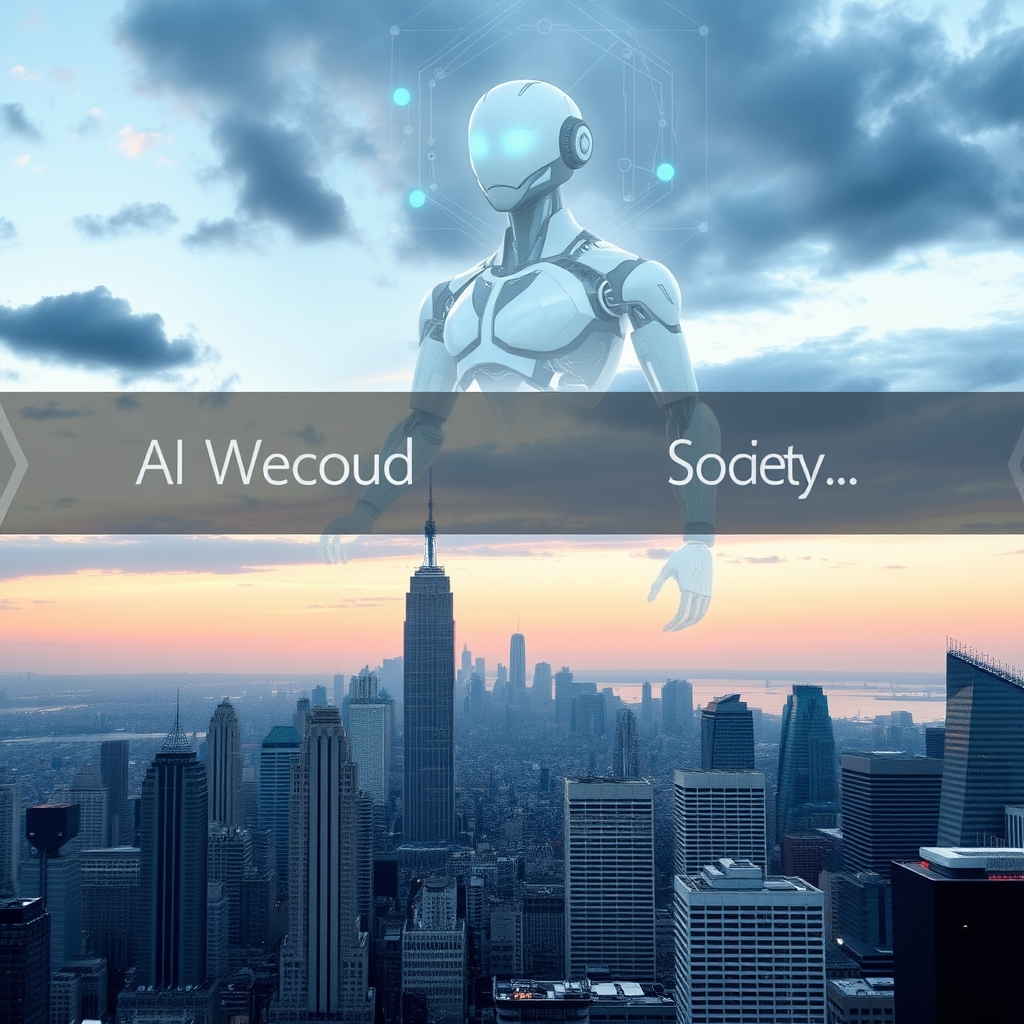
Navigating the Intersection of AI and Society: Opportunities and Challenges in the Tech Landscape
Introduction: Navigating the Convergence of Technology and Society
The world is witnessing an unprecedented AWS Cloud Services convergence of technology and society, with Artificial Intelligence (AI) at the forefront. As AI continues to transform industries and workplaces, understanding its impact on society is crucial for businesses and policymakers. This article will delve into the benefits and drawbacks of AI adoption, its influence on the job market, and policy implications.
The Rise of AI and its Impact on Society
Benefits and Drawbacks of AI Adoption
AI has revolutionized the way businesses operate, from customer service to data analysis. However, its adoption also raises concerns about job displacement, bias in decision-making, and increased dependence on technology.
Benefits: AI has improved efficiency, accuracy, and speed in various industries, such as healthcare, finance, and transportation. It has also enabled personalized experiences for customers, leading to increased customer satisfaction and loyalty.
Drawbacks: AI adoption has led to significant job displacement, particularly in sectors where tasks are repetitive or can be easily automated. Additionally, AI systems can perpetuate biases present in the data used to train them, leading to unfair outcomes.
AI's Influence on the Job Market and Tech Industry
The impact of AI on the job market is a topic of much debate. While some argue that AI will create new job opportunities, others believe that it will lead to widespread unemployment. In reality, AI is likely to augment human capabilities, making certain tasks more efficient but also creating new challenges for workers.
The tech industry is at the forefront of AI development, with companies like Google, Amazon, and Microsoft investing heavily in AI research and development. However, this has also led to concerns about the concentration of power and the potential for AI to be used for malicious purposes.
The Future of Work in the Age of AI
Implications for Software Engineers and Developers
As AI continues to transform the job market, software engineers and developers must adapt to new technologies and tools. This includes learning about machine learning frameworks, natural language processing, and computer vision.
Key Skills: To thrive in the age of AI, software engineers and developers need to develop skills such as:
- Programming languages like Python, Java, and C++
- Machine learning frameworks like TensorFlow and PyTorch
- Cloud computing platforms like AWS and Azure
Emerging Opportunities in AI-Driven Industries
AI is driving innovation in various industries, creating new opportunities for entrepreneurs and businesses. Some of the emerging opportunities include:
- AI-powered healthcare: Developing AI systems for disease diagnosis, patient monitoring, and personalized medicine.
- AI-driven finance: Creating AI systems for risk assessment, portfolio management, and automated trading.
- AI-powered transportation: Developing AI systems for autonomous vehicles, route optimization, and traffic management.
Policy and Regulatory Implications of AI
Balancing Innovation with Social Responsibility
As AI continues to transform society, policymakers must balance innovation with social responsibility. This includes developing regulations to prevent job displacement, ensuring AI systems are transparent and explainable, and addressing concerns about bias and fairness.
Key Regulations: Some of the key regulations that policymakers must consider include:
- Data protection and privacy laws
- AI transparency and explainability laws
- Job displacement and retraining laws
Global Perspectives on AI Regulation
AI regulation is a global issue, with different countries and regions developing their own approaches. Some of the key global perspectives on AI regulation include:
- EU's General Data Protection Regulation (GDPR)
- US's AI Now Institute
- China's AI Development Plan
Thriving in a Rapidly Evolving Tech Landscape
Staying Relevant in a World of Automation
To thrive in a world of automation, software engineers and developers must continuously update their skills and adapt to new technologies. This includes staying up-to-date with the latest AI trends and innovations, attending conferences and workshops, and participating in online communities.
Key Takeaways: Some of the key takeaways for software engineers and developers include:
- Continuously update your skills and adapt to new technologies
- Stay up-to-date with the latest AI trends and innovations
- Attend conferences and workshops to network and learn
Building a Resilient Career in Tech
To build a resilient career in tech, software engineers and developers must focus on developing skills that are in high demand, networking with industry professionals, and continuously learning and adapting to new technologies.
Key Skills: Some of the key skills that software engineers and developers need to develop to build a resilient career in tech include:
- Cloud computing platforms like AWS and Azure
- Machine learning frameworks like TensorFlow and PyTorch
- Programming languages like Python, Java, and C++
Real-World Examples and Case Studies
AI is being used in various industries and applications, providing real-world examples of its potential and limitations. Some of the key real-world examples and case studies include:
- Google's AI-powered self-driving cars
- Amazon's AI-powered customer service
- IBM's AI-powered healthcare analytics
What are the implications of AI on society?
The integration of AI into various aspects of society, such as healthcare, education, and employment, raises concerns about the impact on human relationships, job security, and decision-making processes. As AI becomes more prevalent, it's essential to consider the consequences of its increasing influence. The AI and Society dynamic is a complex one, requiring ongoing evaluation and discussion.
How can businesses adapt to the changing landscape of AI and society?
To stay competitive, businesses must invest in AI education and training for their employees, fostering a culture of innovation and adaptability. They should also prioritize transparency and accountability in AI decision-making processes, ensuring that human values and societal norms are respected.
What role does policy play in shaping the future of AI and society?
Effective policy-making is crucial in regulating AI development and deployment, ensuring that its benefits are equitably distributed and its risks are mitigated. Governments should establish clear guidelines and standards for AI adoption, promoting a balance between technological progress and societal well-being.
How can we ensure that AI systems are designed with human values in mind?
Developing AI systems that align with human values requires a multidisciplinary approach, involving experts from fields like ethics, sociology, and psychology. By incorporating human-centered design principles and conducting thorough impact assessments, we can create AI systems that respect and promote human dignity.
What are the potential benefits of AI and Society convergence?
The integration of AI and society holds significant potential for improving healthcare outcomes, enhancing education, and increasing productivity. By leveraging AI's capabilities, we can address complex societal challenges, such as climate change, inequality, and access to basic services.
How can we mitigate the potential risks associated with AI and Society convergence?
To mitigate risks, it's essential to implement robust safety measures, such as AI governance frameworks, transparency requirements, and accountability mechanisms. We should also invest in AI education and training, ensuring that individuals have the skills to navigate the changing landscape.
What is the future of work in an AI-driven society?
The future of work will likely involve a shift towards more skilled, creative, and adaptable roles, as AI takes over routine and repetitive tasks. To thrive in this environment, workers will need to develop skills like critical thinking, problem-solving, and emotional intelligence, enabling them to work effectively alongside AI systems.
Conclusion: Embracing Change and Navigating the Future of Tech
As AI continues to transform society, it is essential to understand its impact on society and the job market. By developing regulations to prevent job displacement, ensuring AI systems are transparent and explainable, and addressing concerns about bias and fairness, we can ensure that AI benefits society as a whole. As software engineers and developers, it is crucial to continuously update our skills and adapt to new technologies, focusing on developing skills that are in high demand and building a resilient career in tech.