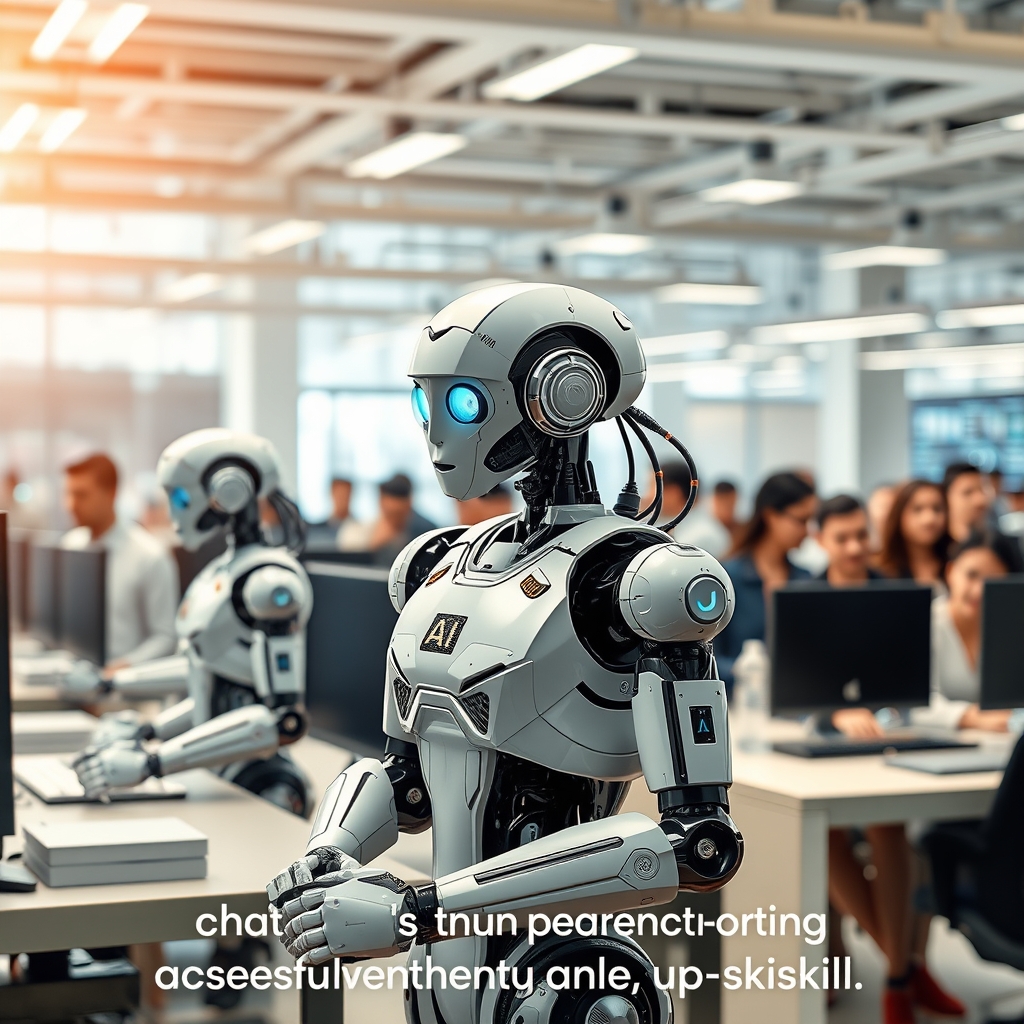
Navigating AI in the Workplace: Ethics, Challenges, and Solutions
Quick Answer
As AI technologies advance in the workplace, organizations must navigate complex AI ethics by addressing challenges and implementing responsible AI adoption and up-skilling solutions.
Navigating the Uncharted Territory of AI in the Workplace
The rapid proliferation of AI technologies Open AI technology in the workplace has brought about unprecedented opportunities for improved productivity, efficiency, and innovation. However, it has also introduced a multitude of challenges and concerns, particularly around AI ethics, job displacement, and bias. In this comprehensive guide, we will delve into the intricacies of AI in the workplace, exploring the best practices for adoption, mitigating risks, and harnessing the potential of AI for enhanced productivity and efficiency.
Thriving in the Evolving Tech Landscape: Challenges and Solutions
The US tech industry has witnessed a significant surge in AI adoption, with 71% of companies investing in AI technologies. Similarly, in India, AI adoption is gaining momentum, with 64% of companies planning to invest in AI in the next two years. As AI becomes increasingly integral to the workplace, organizations must confront the challenges it poses and implement solutions that prioritize responsible AI adoption and up-skilling.
Best Practices for AI Adoption in the Workplace
A successful AI adoption strategy begins with a clear understanding of the organization's goals and objectives. This involves identifying the specific pain points and areas where AI can bring the most value. For instance, predictive maintenance and quality control are areas where AI can significantly enhance productivity and efficiency. By leveraging AI tools and technologies, organizations can streamline processes, reduce costs, and improve overall performance.
Another critical aspect of AI adoption is ensuring that the technology is developed and deployed in a responsible and transparent manner. This involves implementing diversity and inclusivity in AI development, ensuring that the technology is free from bias and discrimination. Moreover, organizations must prioritize transparency and explainability in AI decision-making, providing users with a clear understanding of how AI-driven decisions are made.
Addressing AI-Related Job Displacement and Up-skilling
Here is the continuation of the blog post: ""`html
Addressing AI-Related Job Displacement and Up-skilling
As AI increasingly displaces human jobs, organizations must prioritize up-skilling and re-skilling of their workforce. This involves identifying areas where AI can augment human capabilities, rather than replace them. For instance, AI can be used to automate routine tasks, freeing up human resources to focus on higher-value tasks that require creativity, empathy, and critical thinking.
Software engineers, in particular, must stay ahead of the curve by acquiring new skills and competencies that complement AI technologies. This includes developing skills in areas such as data science, machine learning, and cloud computing. By up-skilling and re-skilling, software engineers can not only remain relevant in the job market but also contribute to the development of responsible AI that benefits both individuals and society.
Mitigating the Risks of AI Bias and Discrimination
AI bias and discrimination are significant concerns in the workplace, particularly when AI-driven decisions affect employment, promotions, and compensation. To mitigate these risks, organizations must implement diversity and inclusivity in AI development, ensuring that the technology is free from bias and discrimination.
One way to achieve this is by using techniques such as data curation, which involves selecting and preprocessing data to remove bias and ensure representativeness. Additionally, organizations can use fairness metrics to assess the fairness of AI-driven decisions and make adjustments as needed.
Implementing Diversity and Inclusivity in AI Development
Diversity and inclusivity in AI development are critical to ensuring that AI systems are fair, transparent, and accountable. This involves creating an environment where diverse perspectives and ideas are valued and respected.
Organizations can implement diversity and inclusivity in AI development by establishing diverse teams with representatives from different backgrounds, cultures, and experiences. This includes hiring data scientists and engineers from underrepresented groups, as well as using techniques such as blind hiring to remove bias from the hiring process.
Ensuring Transparency and Explainability in AI Decision-Making
Transparency and explainability in AI decision-making are essential to ensuring that AI-driven decisions are trusted and accountable. This involves providing users with a clear understanding of how AI-driven decisions are made, including the data used, the algorithms employed, and the decision-making process.
Organizations can ensure transparency and explainability in AI decision-making by using techniques such as model interpretability, which involves developing AI systems that provide insights into their decision-making processes. Additionally, organizations can use explainability methods such as feature importance and SHAP values to provide users with a clear understanding of how AI-driven decisions are made.
Harnessing the Potential of AI for Enhanced Productivity and Efficiency
AI has the potential to significantly enhance productivity and efficiency in the workplace, particularly when used to automate routine tasks, predict maintenance needs, and improve quality control. However, this requires organizations to prioritize responsible AI adoption, up-skilling, and transparency.
By leveraging AI tools and technologies, organizations can streamline processes, reduce costs, and improve overall performance. For instance, AI-powered predictive maintenance can help organizations predict and prevent equipment failures, reducing downtime and improving overall efficiency.
Leveraging AI for Predictive Maintenance and Quality Control
Predictive maintenance and quality control are areas where AI can significantly enhance productivity and efficiency. By leveraging AI tools and technologies, organizations can predict and prevent equipment failures, reduce downtime, and improve overall quality.
For instance, AI-powered predictive maintenance can help organizations predict and prevent equipment failures by analyzing sensor data and identifying patterns and anomalies. Additionally, AI-powered quality control can help organizations improve quality by analyzing data from sensors and cameras, identifying defects and anomalies, and making recommendations for improvement.
Streamlining Processes with AI-Driven Automation
AI-driven automation can help organizations streamline processes, reduce costs, and improve overall efficiency. By leveraging AI tools and technologies, organizations can automate routine tasks, reduce manual errors, and improve overall productivity.
For instance, AI-powered automation can help organizations automate tasks such as data entry, bookkeeping, and customer service. Additionally, AI-powered automation can help organizations improve supply chain management by analyzing data from sensors and cameras, identifying patterns and anomalies, and making recommendations for improvement.
What are the key challenges in implementing AI in the workplace?
The primary challenge lies in navigating the blurred lines between human and artificial intelligence, ensuring AI systems align with organizational values and ethics, and addressing potential biases in AI decision-making. This requires a concerted effort from both business leaders and employees to foster a culture of transparency and accountability. AI in the Workplace Ethics plays a crucial role in mitigating these risks.
How can organizations ensure AI systems are fair and unbiased?
To ensure AI systems are fair and unbiased, organizations must implement robust testing and validation processes, leverage diverse datasets to train AI models, and establish clear guidelines for AI decision-making. This helps prevent AI systems from perpetuating existing biases and ensures they are designed with fairness and transparency in mind.
What are the ethical implications of using AI for decision-making in the workplace?
The use of AI for decision-making raises several ethical concerns, including the potential for AI systems to displace human jobs, exacerbate existing biases, and create new forms of inequality. Organizations must carefully consider these implications and develop policies that balance the benefits of AI with the need to protect human rights and dignity.
How can employees effectively work alongside AI systems in the workplace?
To work effectively with AI systems, employees need training and education on how to use AI tools, understand AI decision-making processes, and identify potential biases. This helps build trust in AI systems and enables employees to make the most of their capabilities while minimizing the risk of errors or unintended consequences.
What role does transparency play in AI in the Workplace Ethics?
Transparency is essential in AI in the Workplace Ethics, as it enables organizations to understand how AI systems make decisions, identify potential biases, and take corrective action when necessary. By being transparent about AI decision-making processes, organizations can build trust with employees and stakeholders, and ensure that AI systems are aligned with organizational values and ethics.
Can AI in the Workplace Ethics help organizations stay competitive in a rapidly changing job market?
Yes, AI in the Workplace Ethics can help organizations stay competitive by enabling them to harness the benefits of AI while minimizing its risks. By prioritizing ethics and fairness in AI decision-making, organizations can create a culture of innovation and excellence that attracts top talent and drives business success.
How can organizations measure the effectiveness of their AI in the Workplace Ethics initiatives?
To measure the effectiveness of AI in the Workplace Ethics initiatives, organizations can track key metrics such as employee engagement, AI system performance, and compliance with regulatory requirements. By monitoring these metrics, organizations can identify areas for improvement, adjust their AI in the Workplace Ethics strategies, and ensure that AI systems are aligned with organizational values and ethics.
Conclusion: Charting a Course for Responsible AI Adoption in the Workplace
In conclusion, AI in the workplace poses both opportunities and challenges, particularly around AI ethics, job displacement, and bias. However, by prioritizing responsible AI adoption, up-skilling, and transparency, organizations can harness the potential of AI for enhanced productivity and efficiency.
By leveraging AI tools and technologies, organizations can streamline processes, reduce costs, and improve overall performance. Additionally, by up-skilling and re-skilling their workforce, organizations can ensure that their employees are equipped to work with AI technologies and contribute to the development of responsible AI that benefits both individuals and society.
This comprehensive guide has provided an overview of the challenges and opportunities of AI in the workplace, highlighting the importance of responsible AI adoption, up-skilling, and transparency. By following the best practices outlined in this guide, organizations can chart a course for responsible AI adoption in the workplace and reap the benefits of AI-driven innovation and productivity.
As AI continues to evolve and permeate the workplace, organizations must prioritize responsible AI adoption and up-skilling to ensure that the benefits of AI are shared by all. By working together, we can create a future where AI is used to enhance human capabilities, rather than replace them.
": null, "primaryKeyword": "AI in the Workplace EthicsFrequently Asked Questions
What are the key challenges in implementing AI in the workplace?
The primary challenge lies in navigating the blurred lines between human and artificial intelligence, ensuring AI systems align with organizational values and ethics, and addressing potential biases in AI decision-making. This requires a concerted effort from both business leaders and employees to foster a culture of transparency and accountability. AI in the Workplace Ethics plays a crucial role in mitigating these risks.
How can organizations ensure AI systems are fair and unbiased?
To ensure AI systems are fair and unbiased, organizations must implement robust testing and validation processes, leverage diverse datasets to train AI models, and establish clear guidelines for AI decision-making. This helps prevent AI systems from perpetuating existing biases and ensures they are designed with fairness and transparency in mind.
What are the ethical implications of using AI for decision-making in the workplace?
The use of AI for decision-making raises several ethical concerns, including the potential for AI systems to displace human jobs, exacerbate existing biases, and create new forms of inequality. Organizations must carefully consider these implications and develop policies that balance the benefits of AI with the need to protect human rights and dignity.
How can employees effectively work alongside AI systems in the workplace?
To work effectively with AI systems, employees need training and education on how to use AI tools, understand AI decision-making processes, and identify potential biases. This helps build trust in AI systems and enables employees to make the most of their capabilities while minimizing the risk of errors or unintended consequences.
What role does transparency play in AI in the Workplace Ethics?
Transparency is essential in AI in the Workplace Ethics, as it enables organizations to understand how AI systems make decisions, identify potential biases, and take corrective action when necessary. By being transparent about AI decision-making processes, organizations can build trust with employees and stakeholders, and ensure that AI systems are aligned with organizational values and ethics.
Can AI in the Workplace Ethics help organizations stay competitive in a rapidly changing job market?
Yes, AI in the Workplace Ethics can help organizations stay competitive by enabling them to harness the benefits of AI while minimizing its risks. By prioritizing ethics and fairness in AI decision-making, organizations can create a culture of innovation and excellence that attracts top talent and drives business success.
How can organizations measure the effectiveness of their AI in the Workplace Ethics initiatives?
To measure the effectiveness of AI in the Workplace Ethics initiatives, organizations can track key metrics such as employee engagement, AI system performance, and compliance with regulatory requirements. By monitoring these metrics, organizations can identify areas for improvement, adjust their AI in the Workplace Ethics strategies, and ensure that AI systems are aligned with organizational values and ethics.