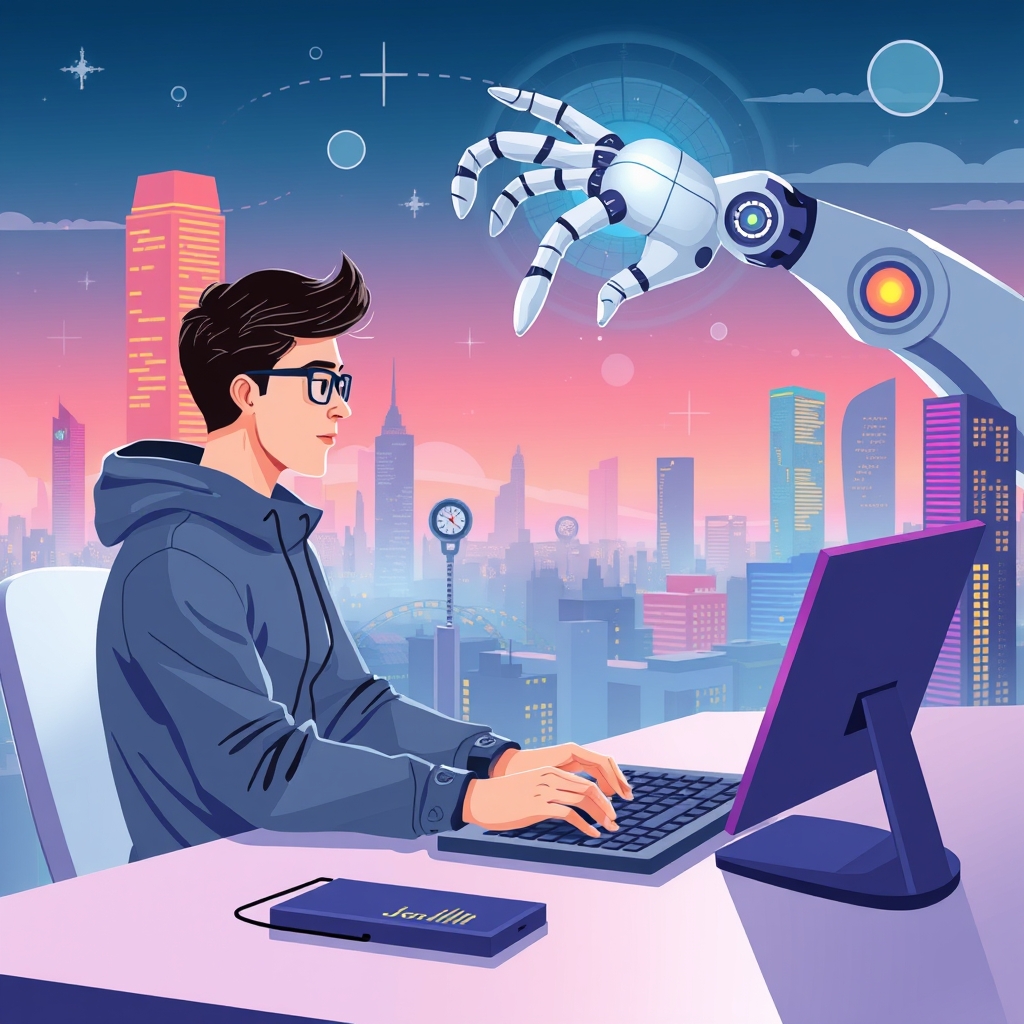
Can AI-Driven Job Displacement Be Stopped?
Quick Answer
Upskill and reskill with AI-driven strategies to stay ahead in the tech industry, focusing on software engineering skills and machine learning training to mitigate job displacement.
Introduction: The AI-Driven Job Displacement Conundrum
The rise of artificial intelligence (AI) has led to significant concerns about job displacement in the tech industry. As AI technologies continue to advance, many software engineers and developers are worried about the potential impact on their careers. However, with the right strategies for upskilling and reskilling, it is possible to mitigate AI-driven job displacement and thrive in the evolving tech landscape. In this article, we will explore the importance of mitigating AI-driven job displacement strategies for upskilling and reskilling, and provide practical insights for software engineers to stay ahead in the industry.
Thriving in the Evolving Tech Landscape
The tech industry is constantly evolving, and the rise of AI is just one of the many factors driving this change. To thrive in this landscape, software engineers need to be adaptable, willing to learn, and open to new technologies and trends. This includes staying up-to-date with the latest AI job market trends, and developing skills in areas such as machine learning training and software engineering skills. By doing so, software engineers can position themselves for success and minimize the risk of job displacement.
Best Practices for Success in an AI-Driven World
So, what are the best practices for success in an AI-driven world? First and foremost, software engineers need to develop a strong foundation in programming skills, including languages such as Python, Java, and C++. They should also have a good understanding of data structures, algorithms, and software design patterns. Additionally, software engineers should stay up-to-date with the latest AI development trends and technologies, including machine learning and deep learning. By following these best practices, software engineers can set themselves up for success and stay ahead of the curve in the tech industry.
Adapting to AI-Driven Job Market Trends
The job market for software engineers is constantly evolving, and the rise of AI is driving significant changes in the industry. To adapt to these changes, software engineers need to be aware of the latest AI job market trends and be willing to upskill and reskill as needed. This may include developing skills in areas such as natural language processing, computer vision, and robotics. By staying ahead of the curve and adapting to the latest trends and technologies, software engineers can minimize the risk of job displacement and position themselves for success in the industry.
Upskilling and Reskilling Strategies for Software Engineers
So, what are the most effective mitigating AI-driven job displacement strategies for upskilling and reskilling for software engineers? First and foremost, software engineers should focus on developing a strong foundation in programming skills, including languages such as Python, Java, and C++. They should also stay up-to-date with the latest AI development trends and technologies, including machine learning and deep learning. Additionally, software engineers should consider developing skills in areas such as data science, cloud computing, and cybersecurity. By following these strategies, software engineers can upskill and reskill effectively and minimize the risk of job displacement.
Machine Learning and AI Development Training
Machine learning and AI development are critical skills for software engineers to develop in today's tech industry. There are many resources available for machine learning training, including online courses, tutorials, and certifications. Some popular options include Coursera, Udemy, and edX. Additionally, software engineers can consider pursuing a graduate degree in AI or a related field to further develop their skills and knowledge. By investing in machine learning and AI development training, software engineers can stay ahead of the curve and position themselves for success in the industry.
Programming Skills for an AI-Driven Future
What programming skills are most in demand for an AI-driven future? First and foremost, software engineers should have a strong foundation in programming languages such as Python, Java, and C++. They should also have a good understanding of data structures, algorithms, and software design patterns. Additionally, software engineers should consider developing skills in areas such as natural language processing, computer vision, and robotics. By developing these skills, software engineers can position themselves for success in the AI-driven tech industry.
Real-World Examples and Case Studies
Let's consider a real-world example of how mitigating AI-driven job displacement strategies for upskilling and reskilling can be applied in practice. Suppose we have a software engineer who has been working in the industry for several years, but is concerned about the potential impact of AI on their job. To upskill and reskill, this software engineer could consider developing skills in areas such as machine learning and data science. They could also consider pursuing a graduate degree in AI or a related field to further develop their skills and knowledge. By following these strategies, this software engineer can minimize the risk of job displacement and position themselves for success in the industry.
Companies that have Successfully Upskilled their Workforce
There are many companies that have successfully upskilled their workforce to adapt to the changing tech industry. For example, companies such as Google, Amazon, and Microsoft have invested heavily in machine learning and AI development training for their employees. These companies have recognized the importance of developing skills in areas such as natural language processing, computer vision, and robotics, and have provided their employees with the training and resources needed to develop these skills. By upskilling their workforce, these companies have been able to stay ahead of the curve and position themselves for success in the AI-driven tech industry.
The Impact of AI on the US and India Tech Industries
The impact of AI on the US and India tech industries has been significant. In the US, there have been concerns about the potential impact of AI on jobs, particularly in areas such as manufacturing and customer service. However, the US tech industry has also seen significant investment in AI development and machine learning, with many companies such as Google, Amazon, and Microsoft leading the charge. In India, the tech industry has also seen significant growth, with many companies such as Infosys, Wipro, and Tata Consultancy Services (TCS) investing in AI development and machine learning. By investing in these technologies, these companies have been able to stay ahead of the curve and position themselves for success in the AI-driven tech industry.
Navigating the US and India Tech Job Markets
Navigating the US and India tech job markets can be challenging, particularly in the wake of AI-driven job displacement. However, by developing skills in areas such as machine learning and data science, software engineers can position themselves for success in these markets. In the US, software engineers should consider developing skills in areas such as cloud computing and cybersecurity, as these are in high demand. In India, software engineers should consider developing skills in areas such as mobile app development and digital marketing, as these are also in high demand. By developing these skills, software engineers can navigate the US and India tech job markets with confidence and position themselves for success.
US Software Jobs and the AI-Driven Economy
The US software job market is highly competitive, and the rise of AI has driven significant changes in the industry. However, by developing skills in areas such as machine learning and data science, software engineers can position themselves for success in this market. In particular, software engineers should consider developing skills in areas such as natural language processing, computer vision, and robotics, as these are in high demand. By developing these skills, software engineers can navigate the US software job market with confidence and position themselves for success in the AI-driven economy.
India Software Jobs and the Growing Demand for AI Talent
The India software job market is also highly competitive, and the rise of AI has driven significant growth in demand for AI talent. Software engineers in India should consider developing skills in areas such as machine learning and data science, as these are in high demand. In particular, software engineers should consider developing skills in areas such as mobile app development and digital marketing, as these are also in high demand. By developing these skills, software engineers in India can navigate the software job market with confidence and position themselves for success in the growing AI-driven economy.
What are the primary factors contributing to AI-driven job displacement?
The primary factors include automation, artificial intelligence, and machine learning, which can perform tasks that were previously done by humans, leading to job displacement. Additionally, the increasing use of AI-powered tools and software has made many jobs redundant, resulting in job displacement. For instance, a study by McKinsey found that up to 800 million jobs could be lost worldwide due to automation by 2030. Another report by Gartner predicted that AI will automate up to 30% of all jobs in the US by 2025. These statistics highlight the urgent need for workers to upskill and reskill to remain relevant in the job market.
How can individuals prepare themselves for potential job displacement caused by AI?
Individuals can prepare themselves for potential job displacement caused by AI by investing in education and training that focuses on emerging technologies such as data science, artificial intelligence, and machine learning. Upskilling and reskilling also involve developing soft skills such as communication, creativity, and problem-solving, which are less likely to be automated. Additionally, individuals can stay adaptable and open to new opportunities, and consider pursuing alternative careers or entrepreneurial ventures. By taking proactive steps, individuals can minimize the risk of job displacement and stay ahead in an AI-driven economy.
What role do governments and organizations play in mitigating AI-driven job displacement?
Governments and organizations can play a crucial role in mitigating AI-driven job displacement by investing in retraining programs, providing financial support for education and training, and implementing policies that encourage innovation and entrepreneurship. For example, the US government has launched initiatives such as the Workforce Innovation and Opportunity Act, which aims to improve workforce development and job training programs. Similarly, companies like Google, Amazon, and Microsoft are investing heavily in AI training and upskilling programs for their employees. By working together, governments and organizations can help workers adapt to the changing job market and minimize the negative impacts of AI-driven job displacement.
How can individuals and organizations benefit from upskilling and reskilling in the face of AI-driven job displacement?
The benefits of upskilling and reskilling in the face of AI-driven job displacement include increased adaptability, improved job security, and enhanced career prospects. Individuals who upskill and reskill can position themselves for success in an AI-driven economy and stay ahead of the curve. Organizations that invest in upskilling and reskilling their workforce can improve productivity, reduce turnover, and stay competitive in the market. By upskilling and reskilling, individuals and organizations can mitigate the negative impacts of AI-driven job displacement and thrive in a rapidly changing job market.
Are there any industries that are less likely to be affected by AI-driven job displacement?
While AI-driven job displacement is a concern across various industries, some sectors such as healthcare, education, and social work are less likely to be affected. These industries require human empathy, creativity, and complex decision-making, which are difficult to automate. However, even in these industries, automation and AI may still impact certain tasks and jobs. For instance, AI-powered chatbots may be used in healthcare to assist with routine tasks, but human healthcare professionals will still be needed to provide emotional support and complex medical care.
What are some strategies for mitigating AI-driven job displacement in the workplace?
Developing a strong foundation in programming skills, including languages such as Python, Java, and C++, is essential for software engineers to stay ahead in the tech industry. Additionally, software engineers should stay up-to-date with the latest AI development trends and technologies, including machine learning and deep learning. By following these strategies, software engineers can position themselves for success in the AI-driven tech industry. Furthermore, companies can also implement strategies such as cross-training, job rotation, and upskilling programs to help workers adapt to the changing job market.
How can AI-driven job displacement be addressed on a global scale?
Addressing AI-driven job displacement on a global scale requires international cooperation, knowledge sharing, and policy development. Governments, organizations, and individuals must work together to create a future where the benefits of technological advancements are shared by all, and the negative impacts are mitigated. This can include investing in education and training programs, implementing policies that support workers who may be displaced, and promoting the development of new industries and jobs that are less likely to be automated. By working together, we can create a more equitable and sustainable future for all.
Conclusion: Next Steps for a Thriving Tech Career
In conclusion, mitigating AI-driven job displacement strategies for upskilling and reskilling are critical for software engineers to stay ahead in the tech industry. By developing skills in areas such as machine learning and data science, software engineers can position themselves for success in the AI-driven tech industry. Additionally, software engineers should consider developing skills in areas such as cloud computing, cybersecurity, and digital marketing, as these are also in high demand. By following these strategies, software engineers can navigate the US and India tech job markets with confidence and position themselves for success in the growing AI-driven economy.
Actionable Insights for Upskilling and Reskilling
So, what are the actionable insights for upskilling and reskilling in the AI-driven tech industry? First and foremost, software engineers should develop a strong foundation in programming skills, including languages such as Python, Java, and C++. They should also stay up-to-date with the latest AI development trends and technologies, including machine learning and deep learning. Additionally, software engineers should consider developing skills in areas such as data science, cloud computing, and cybersecurity. By following these insights, software engineers can upskill and reskill effectively and minimize the risk of job displacement.
Staying Ahead of the Curve in an AI-Driven World
Finally, software engineers should prioritize staying ahead of the curve in an AI-driven world. This includes developing skills in areas such as machine learning and data science, as well as staying up-to-date with the latest AI development trends and technologies. By doing so, software engineers can position themselves for success in the AI-driven tech industry and minimize the risk of job displacement. As the tech industry continues to evolve, it is critical for software engineers to be proactive and adaptable, and to prioritize mitigating AI-driven job displacement strategies for upskilling and reskilling to stay ahead of the curve.
Real-World Scenario: Implementing Machine Learning in a Production Environment
In a real-world scenario, implementing machine learning in a production environment can be complex and challenging. However, by following best practices such as data preprocessing, model selection, and hyperparameter tuning, software engineers can ensure successful deployment of machine learning models. For example, consider a scenario where a software engineer is tasked with implementing a machine learning model to predict customer churn for a telecom company. The software engineer would need to preprocess the data, select a suitable machine learning algorithm, and tune the hyperparameters to achieve optimal results.
  # Import necessary libraries
  import pandas as pd
  from sklearn.ensemble import RandomForestClassifier
  from sklearn.model_selection import train_test_split

  # Load data
  data = pd.read_csv('customer_data.csv')

  # Preprocess data
  data = data.dropna()  # remove missing values
  data = data.scale()  # scale data

  # Split data into training and testing sets
  X_train, X_test, y_train, y_test = train_test_split(data.drop('churn', axis=1), data['churn'], test_size=0.2, random_state=42)

  # Train machine learning model
  model = RandomForestClassifier(n_estimators=100, random_state=42)
  model.fit(X_train, y_train)

  # Evaluate model performance
  accuracy = model.score(X_test, y_test)
  print('Model accuracy:', accuracy)
When NOT to Use Machine Learning
While machine learning can be a powerful tool for solving complex problems, there are scenarios where it may not be the best approach. For example, if the problem is relatively simple and can be solved using traditional programming techniques, machine learning may not be necessary. Additionally, if the data is limited or of poor quality, machine learning may not be effective. In such cases, software engineers should consider alternative approaches, such as rule-based systems or traditional statistical methods.
Common Mistakes in Machine Learning
There are several common mistakes that software engineers can make when working with machine learning. One of the most common mistakes is overfitting, where the model is too complex and performs well on the training data but poorly on new, unseen data. Another common mistake is underfitting, where the model is too simple and fails to capture the underlying patterns in the data. Software engineers should be aware of these mistakes and take steps to prevent them, such as using regularization techniques and evaluating model performance on a separate testing set.
Production Challenges and Scaling Considerations
Deploying machine learning models in a production environment can be challenging, particularly when it comes to scaling. Software engineers need to consider factors such as data volume, velocity, and variety, as well as the computational resources required to train and deploy the model. Additionally, software engineers need to ensure that the model is integrated with other systems and applications, and that it can handle real-time data streams and user interactions. By considering these production challenges and scaling considerations, software engineers can ensure successful deployment of machine learning models.
Trade-Offs in Machine Learning
There are several trade-offs that software engineers need to consider when working with machine learning. One of the most significant trade-offs is between model accuracy and interpretability. While complex models may achieve higher accuracy, they can be difficult to interpret and understand. On the other hand, simpler models may be more interpretable but may not achieve the same level of accuracy. Software engineers need to balance these trade-offs and consider the specific requirements of the problem they are trying to solve.
Frequently Asked Questions
What are the primary factors contributing to AI-driven job displacement?
The primary factors include automation, artificial intelligence, and machine learning, which can perform tasks that were previously done by humans, leading to job displacement. Mitigating AI-driven job displacement requires a strategic approach to upskilling and reskilling. By acquiring new skills, individuals can adapt to the changing job market.
How can individuals prepare themselves for potential job displacement caused by AI?
Individuals can prepare themselves by investing in education and training that focuses on emerging technologies, such as data science, artificial intelligence, and machine learning. Upskilling and reskilling also involve developing soft skills, such as communication, creativity, and problem-solving, which are less likely to be automated.
What role do governments and organizations play in mitigating AI-driven job displacement?
Governments and organizations can play a crucial role in mitigating AI-driven job displacement by investing in retraining programs, providing financial support for education and training, and implementing policies that encourage innovation and entrepreneurship. This can help create new job opportunities and reduce the impact of job displacement.
How can individuals and organizations benefit from upskilling and reskilling in the face of AI-driven job displacement?
Individuals and organizations can benefit from upskilling and reskilling by staying competitive in the job market, adapting to new technologies, and creating new opportunities for growth and innovation. This can lead to increased productivity, improved job satisfaction, and enhanced economic growth.
Are there any industries that are less likely to be affected by AI-driven job displacement?
While AI-driven job displacement is a concern across various industries, some sectors like healthcare, education, and social work are less likely to be affected, as they require human empathy, creativity, and complex decision-making. However, even in these industries, automation and AI may still impact certain tasks and jobs.
What are some strategies for mitigating AI-driven job displacement in the workplace?
Strategies for mitigating AI-driven job displacement in the workplace include investing in employee training and development, implementing flexible work arrangements, and providing support for workers who may be displaced. Organizations can also explore opportunities for automation and AI to augment human capabilities, rather than replace them.
How can AI-driven job displacement be addressed on a global scale?
Addressing AI-driven job displacement on a global scale requires international cooperation, knowledge sharing, and policy development. Governments, organizations, and individuals must work together to create a future where the benefits of technological advancements are shared by all, and the negative impacts are mitigated.