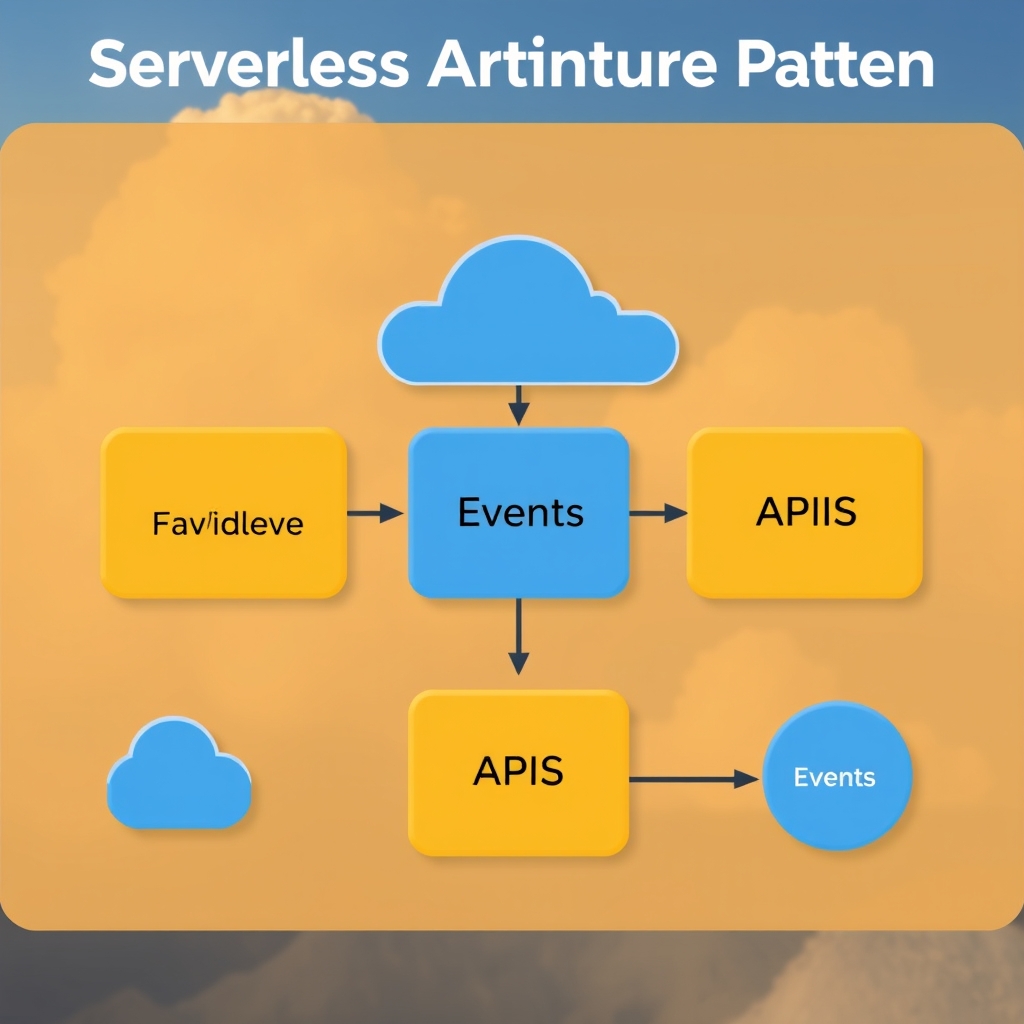
Mastering Serverless Architecture Patterns for Scalable Applications
Serverless Architecture Patterns: The Key to Scalable Applications
In today's fast-paced digital landscape, software architecture patterns for serverless systems have emerged as a game-changer, transforming the way we design, develop, and deploy applications. By harnessing the power of serverless computing, developers can focus on writing code without worrying about the underlying infrastructure, allowing for unparalleled scalability, flexibility, and cost-effectiveness. This shift from traditional server-based models to serverless architecture has far-reaching implications for businesses, enabling them to innovate and adapt quickly to changing market conditions. As we explore the intricacies of serverless architecture patterns, we'll delve into the benefits of serverless computing, design patterns, and real-world examples, including a closer look at AWS serverless architecture patterns and how they compare to microservices architecture.
Introduction to Serverless Architecture Patterns
Serverless architecture patterns are a set of design principles and best practices that guide the development and deployment of serverless applications. These patterns help developers create scalable, secure, and highly available applications that can handle unpredictable workloads and traffic.
The Benefits of Serverless Architecture Patterns
Serverless architecture patterns offer a wide range of benefits, including:
- Scalability: Serverless applications can scale up or down in real-time to match changing workloads and traffic.
- Cost-effectiveness: Serverless computing eliminates the need for provisioning and managing servers, resulting in significant cost savings.
- Flexibility: Serverless applications can be developed using a wide range of programming languages and frameworks.
- Security: Serverless applications are highly secure, as they are executed in isolated environments and have limited access to resources.
Common Serverless Architecture Patterns
There are several common serverless architecture patterns, including:
Event-Driven Architecture (EDA)
EDA is a pattern that uses events to trigger workflows and business logic. It's a popular choice for serverless applications, as it allows for loose coupling and scalability.
  // Example of an event-driven architecture in Node.js
  const AWS = require('aws-sdk');
  const eventBridge = new AWS.EventBridge();

  eventBridge.putEvents({
    Entries: [
      {
        Source: 'my-source',
        DetailType: 'my-detail-type',
        Detail: JSON.stringify({ message: 'Hello, world!' }),
      },
    ],
  }, (err, data) => {
    if (err) console.log(err);
    else console.log(data);
  });
API Gateway
API Gateway is a pattern that uses an API to expose business logic and data to external clients. It's a popular choice for serverless applications, as it allows for secure and scalable API management.
  // Example of an API Gateway in Node.js
  const AWS = require('aws-sdk');
  const apigateway = new AWS.APIGateway();

  apigateway.createRestApi({
    name: 'my-api',
    description: 'My API',
  }, (err, data) => {
    if (err) console.log(err);
    else console.log(data);
  });
Designing Serverless Architecture Patterns
Designing serverless architecture patterns requires a deep understanding of the underlying concepts, best practices, and design principles. Here are some key considerations:
Functionality
Serverless applications should be designed to perform a specific set of functions or tasks. These functions should be loosely coupled and scalable.
Event Handling
Serverless applications should be designed to handle events and triggers in a scalable and efficient manner.
API Integration
Serverless applications should be designed to integrate with external APIs and services in a secure and scalable manner.
Best Practices for Serverless Architecture Patterns
Here are some best practices for serverless architecture patterns:
Use a Serverless Framework
Serverless frameworks such as AWS Lambda, Google Cloud Functions, and Azure Functions provide a set of tools and services to simplify the development and deployment of serverless applications.
Optimize Function Code
Function code should be optimized for performance, scalability, and security.
Use Event-Driven Architecture
Event-driven architecture is a popular choice for serverless applications, as it allows for loose coupling and scalability.
Conclusion
Serverless architecture patterns offer a wide range of benefits, including scalability, cost-effectiveness, flexibility, and security. By mastering serverless architecture patterns, developers can create scalable, secure, and highly available applications that can handle unpredictable workloads and traffic.
Future of Serverless Architecture Patterns
The future of serverless architecture patterns is exciting and rapidly evolving. As more developers adopt serverless computing, we can expect to see new and innovative patterns emerge.
Serverless Architecture Patterns
...
Common Mistakes to Avoid
When designing serverless architecture patterns, it's essential to avoid some common pitfalls that can lead to inefficient, expensive, or even failed deployments. One common mistake is not clearly defining the event-driven architecture, which can result in complex and hard-to-debug systems.
Another mistake is failing to monitor and optimize serverless functions, leading to wasted resources and unexpected costs. This can be mitigated by implementing proper logging, monitoring, and performance optimization techniques.
Lastly, not considering security and compliance when designing serverless architecture patterns can expose your system to vulnerabilities and data breaches. This includes implementing proper authentication, authorization, and encryption mechanisms.