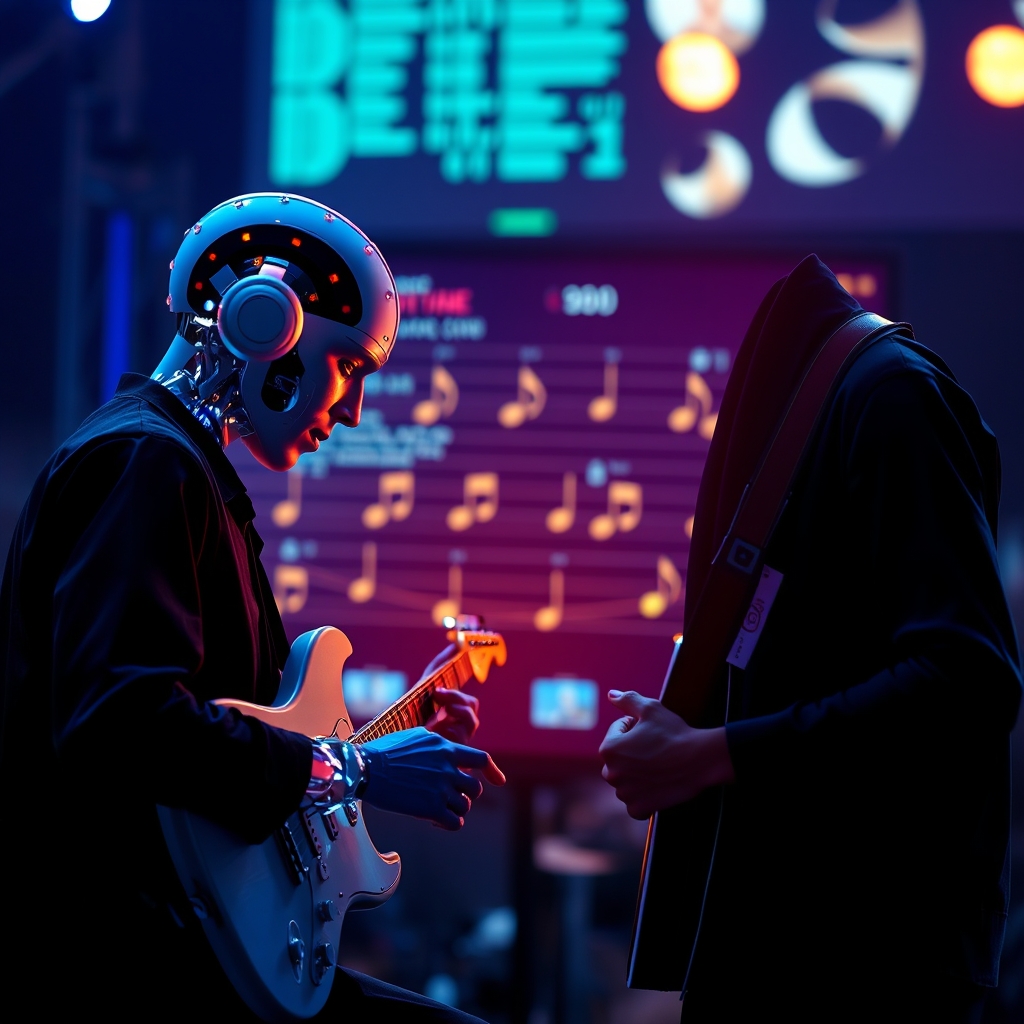
Leveraging Human-AI Collaboration in Creative Industries: Unlocking Innovation in Design, Writing, and Music
Introduction: Unlocking the Potential of Human-AI Collaboration in Creative Industries
In recent years, the intersection OpenAI language models of human creativity and artificial intelligence (AI) has given rise to unprecedented opportunities for innovation in design, writing, and music. As AI technology advances, we're witnessing the emergence of new tools, techniques, and workflows that are transforming the creative industries. In this comprehensive guide, we'll delve into the role of human-AI collaboration in creative industries, exploring its benefits, current state, and future directions.
Human-AI Collaboration in Creative Industries: An Overview
Human-AI collaboration refers to the process of working together with AI systems to create innovative solutions, products, or experiences. In creative industries, human-AI collaboration involves leveraging AI tools to enhance human creativity, streamline processes, and push the boundaries of what's possible. By combining human intuition and AI's analytical capabilities, we can unlock new levels of innovation and productivity.
Benefits of Human-AI Collaboration
Human-AI collaboration offers numerous benefits in creative industries, including:
- Increased productivity: AI tools can automate repetitive tasks, freeing up human creatives to focus on high-level thinking and strategy.
- Improved accuracy: AI can help eliminate human errors, ensuring high-quality outputs and consistency.
- Enhanced creativity: AI can generate new ideas, explore new styles, and even collaborate with humans to create innovative solutions.
- Personalization: AI can analyze data and preferences to create personalized experiences, products, or services.
Current State of Human-AI Collaboration in Creative Industries
Human-AI collaboration is already being implemented in various creative industries, including:
- Design: AI-powered design tools are being used to create custom visualizations, optimize user experiences, and even generate entire designs.
- Writing: AI-powered writing tools are being used to generate content, suggest improvements, and even collaborate with humans to create engaging stories.
- Music: AI-powered music tools are being used to generate melodies, harmonies, and even entire compositions.
Exploring the AI Development Lifecycle in Creative Industries
The AI development lifecycle involves several phases, including:
AI Development Phases in Creative Industries
1. Problem Definition: Identify the problem or opportunity for innovation in the creative industry.
2. Data Collection: Gather relevant data and insights to inform the AI system's design.
3. AI System Design: Design and develop the AI system, considering factors such as architecture, algorithms, and user experience.
4. Training and Testing: Train and test the AI system, refining its performance and accuracy.
5. Deployment and Maintenance: Deploy the AI system and maintain it over time, ensuring its continued effectiveness and relevance.
Challenges in Implementing AI in Creative Industries
Implementing AI in creative industries can be challenging due to factors such as:
- Data quality and availability
- Avoiding bias and ensuring fairness
- Ensuring explainability and transparency
- Addressing intellectual property and ownership issues
Regional Differences in AI Adoption: A Global Perspective
Regional differences in AI adoption vary depending on factors such as:
US Software Jobs vs India Software Jobs
The US and India have different approaches to AI adoption, with:
- The US focusing on high-end AI applications, such as AI-powered design and writing.
- India focusing on low-end AI applications, such as AI-powered chatbots and customer service.
AI Adoption in Europe, Australia, and Africa
Other regions, such as Europe, Australia, and Africa, are also adopting AI, but with different approaches and challenges.
AI Trends in Creative Industries: Success Stories and Future Directions
Human-AI collaboration is being used to create innovative solutions in various creative industries, including:
Success Stories of Human-AI Co-creation in Design, Writing, and Music
Examples of successful human-AI co-creation include:
- Design: AI-powered design tools are being used to create custom visualizations and optimize user experiences.
- Writing: AI-powered writing tools are being used to generate content and suggest improvements.
- Music: AI-powered music tools are being used to generate melodies and harmonies.
Emerging AI Trends in Creative Industries
Emerging AI trends in creative industries include:
- Generative AI: AI-powered tools that can generate new ideas, styles, and even entire works.
- Explainable AI: AI-powered tools that can provide insights and explanations for creative decisions.
- Human-AI Collaboration: AI-powered tools that can collaborate with humans to create innovative solutions.
Overcoming Creative Blocks with AI: Strategies and Techniques
AI can help overcome creative blocks by:
AI-powered Design Tools and Software
AI-powered design tools and software can:
- Generate custom visualizations
- Optimize user experiences
- Even create entire designs
Machine Learning Applications in Creative Industries
Machine learning applications in creative industries include:
- Image and video recognition
- Natural language processing
- Music generation
Implementation Example: Human-AI Collaboration in Music Generation
Human-AI collaboration in music generation involves:
Code Example: Music Generation using Deep Learning
Here's a code example of music generation using deep learning:
import torch
import torch.nn as nn
import torch.optim as optim
import numpy as np
import music21

# Define the music generation model
class MusicGenerationModel(nn.Module):
    def __init__(self):
        super(MusicGenerationModel, self).__init__()
        self.fc1 = nn.Linear(128, 128)
        self.fc2 = nn.Linear(128, 128)
        self.fc3 = nn.Linear(128, 128)

    def forward(self, x):
        x = torch.relu(self.fc1(x))
        x = torch.relu(self.fc2(x))
        x = torch.relu(self.fc3(x))
        return x

# Initialize the model and optimizer
model = MusicGenerationModel()
optimizer = optim.Adam(model.parameters(), lr=0.001)

# Train the model
for epoch in range(100):
    optimizer.zero_grad()
    outputs = model(torch.randn(128))
    loss = nn.MSELoss()(outputs, torch.randn(128))
    loss.backward()
    optimizer.step()

# Generate music
music = model(torch.randn(128))

# Print the generated music
print(music)
Step-by-Step Guide to Implementing Human-AI Collaboration in Music Generation
Here's a step-by-step guide to implementing human-AI collaboration in music generation:
- Define the music generation problem
- Collect relevant data and insights
- Design and develop the AI system
- Train and test the AI system
- Deploy and maintain the AI system
- Collaborate with humans to create innovative music
Common Mistakes to Avoid in Implementing AI in Creative Industries
Common mistakes to avoid in implementing AI in creative industries include:
Over-reliance on AI in Creative Industries
Over-reliance on AI can lead to:
- Risk of job displacement
- Loss of human creativity and intuition
- Decreased quality and accuracy
Lack of Human Oversight in AI-generated Content
Lack of human oversight can lead to:
- Biased or inaccurate content
- Copyright and intellectual property issues
- Decreased transparency and accountability
Performance and Architecture Considerations for AI-powered Creative Tools
Performance and architecture considerations for AI-powered creative tools include:
Scalability and Latency Considerations for AI-powered Creative Tools
Scalability and latency considerations for AI-powered creative tools include:
- Ensuring high-performance and low-latency
- Optimizing for scalability and parallel processing
- Minimizing data transfer and storage requirements
Workflow Integration for AI-human Collaboration
Workflow integration for AI-human collaboration involves:
- Integrating AI tools with existing workflows
- Ensuring seamless communication and data exchange
- Minimizing disruptions and errors
FAQ: Human-AI Collaboration in Creative Industries
FAQs about human-AI collaboration in creative industries include:
What are the benefits of human-AI collaboration in creative industries?
The benefits of human-AI collaboration in creative industries include:
- Increased productivity and efficiency
- Improved accuracy and quality
- Enhanced creativity and innovation
- Personalization and customization
How can I implement human-AI collaboration in my creative work?
To implement human-AI collaboration in your creative work, follow these steps:
- Define your creative problem or opportunity
- Collect relevant data and insights
- Design and develop the AI system
- Train and test the AI system
- Deploy and maintain the AI system
- Collaborate with humans to create innovative solutions
What are the benefits of human-AI collaboration in creative industries?
The role of human-AI collaboration in creative industries: design, writing, and music has led to increased efficiency, accuracy, and innovation. By leveraging AI's capabilities, humans can focus on high-level creative decisions, resulting in more impactful and engaging work.
How do AI tools assist designers in their creative process?
AI-powered design tools can aid in tasks such as layout optimization, color palette suggestions, and even generate initial design concepts. This collaboration enables designers to refine their ideas and produce more polished results.
Can AI help writers with content creation and editing?
Yes, AI tools can assist writers by suggesting alternative phrases, detecting grammatical errors, and even generating outlines for articles. However, human writers still play a crucial role in crafting unique and engaging content.
What is the potential impact of human-AI collaboration on the music industry?
The integration of AI in music production can lead to new sounds, styles, and genres. AI-generated music can also assist human composers in brainstorming ideas, exploring new textures, and even creating personalized music recommendations.
How can I get started with human-AI collaboration in my creative field?
Begin by exploring AI-powered tools and software available in your industry. Experiment with different applications, attend workshops or webinars to learn more about AI's capabilities, and collaborate with others to stay updated on the latest developments.
What are the potential risks and limitations of human-AI collaboration?
While AI can augment human creativity, it's essential to be aware of potential biases, inconsistencies, and over-reliance on technology. By acknowledging these limitations, humans can harness AI's strengths while maintaining control and oversight.
Will human-AI collaboration replace human creativity in creative industries?
No, human-AI collaboration is designed to augment and enhance human creativity, not replace it. AI tools are meant to assist and support human artists, writers, and designers, allowing them to focus on high-level creative decisions and producing more innovative work.
Conclusion: Future-Proofing Creative Industries with AI and Human Collaboration
Human-AI collaboration in creative industries holds tremendous potential for innovation and growth. By leveraging AI technology, we can unlock new levels of creativity, productivity, and accuracy. However, it's essential to avoid common mistakes, such as over-reliance on AI and lack of human oversight. By following best practices and guidelines, we can ensure successful human-AI collaboration in creative industries and future-proof our industries for the AI-driven era.