India's Rising Tech Hubs: Opportunities and Challenges for a Thriving US and India Tech Landscape
India's Emerging Tech Hubs: A Guide to Opportunities and Challenges
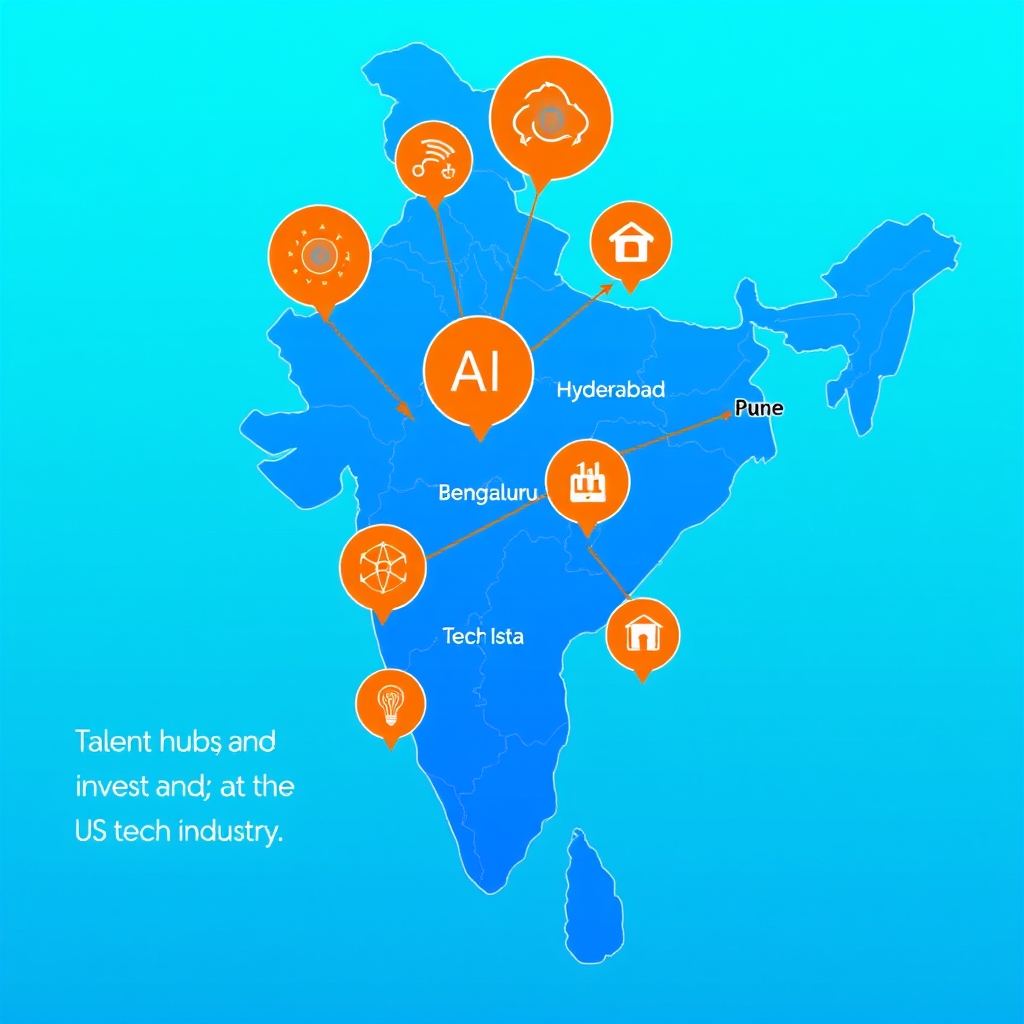
India has emerged as a significant player in the global tech industry, with several thriving tech hubs across the country. Bengaluru, Hyderabad, and Pune are among the top tech cities in India, attracting top talent and investment from around the world. In this article, we will explore the opportunities and challenges of India's rising tech hubs and compare them to the US tech industry.
Overview of India's Rising Tech Hubs: Bengaluru, Hyderabad, and Pune
Bengaluru: The Silicon Valley of India
Bengaluru, also known as the Silicon Valley of India, is the tech capital of the country. It is home to many top tech companies, including Infosys, Wipro, and IBM. Bengaluru has a thriving startup ecosystem, with many incubators and accelerators supporting new and emerging companies.
Example: Bengaluru has a large pool of skilled engineers, with many top tech companies setting up their Indian headquarters in the city. This has led to the development of a thriving tech ecosystem, with many startups and entrepreneurs emerging from the city.
Hyderabad: The City of IT Hubs
Hyderabad is another major tech hub in India, known for its IT industry. The city is home to many top IT companies, including HCL, Tech Mahindra, and Microsoft. Hyderabad has a strong focus on innovation, with many incubators and accelerators supporting new and emerging companies.
Example: Hyderabad has a strong focus on AI and machine learning, with many top researchers and companies working on projects related to these areas. This has led to the development of a thriving AI ecosystem, with many startups and entrepreneurs emerging from the city.
Pune: The Automotive Capital of India
Pune is a major tech hub in India, known for its automotive industry. The city is home to many top companies, including Tata Motors, Bajaj Auto, and Mahindra & Mahindra. Pune has a strong focus on innovation, with many incubators and accelerators supporting new and emerging companies.
Example: Pune has a strong focus on automotive technology, with many top researchers and companies working on projects related to autonomous vehicles and other areas. This has led to the development of a thriving automotive ecosystem, with many startups and entrepreneurs emerging from the city.
The US Tech Industry: Trends, Challenges, and Opportunities
The Impact of Tech Layoffs on the US Tech Industry
The US tech industry has experienced significant layoffs in recent years, with many top companies cutting jobs due to economic uncertainty. This has led to a significant shift in the tech landscape, with many companies looking to hire top talent from around the world.
Example: The layoffs in the US tech industry have led to a significant increase in the number of skilled engineers looking to relocate to other countries, including India. This has created opportunities for Indian tech companies to attract top talent and grow their businesses.
The Rise of AI and Machine Learning in the US Tech Industry
The US tech industry has seen a significant increase in the adoption of AI and machine learning technologies in recent years. Many top companies are investing heavily in these areas, with a focus on developing new products and services that leverage these technologies.
Example: The rise of AI and machine learning has led to the development of new products and services, such as chatbots and virtual assistants. This has created opportunities for Indian tech companies to develop and sell these products and services to US companies.
Comparing the US and India Tech Industries: Opportunities and Challenges
Comparison of Software Engineer Salaries in the US and India
The salaries of software engineers in the US and India vary significantly, with US engineers earning much higher salaries than their Indian counterparts. However, the cost of living in the US is also much higher than in India, making the salaries of Indian engineers comparable to those in the US when adjusted for cost of living.
Example: A software engineer in the US can earn up to $150,000 per year, while a software engineer in India can earn up to $30,000 per year. However, the cost of living in the US is much higher, with the average cost of living in the US being around $50,000 per year, compared to around $10,000 per year in India.
The Role of AI in the US and India Tech Industries
AI is playing a significant role in both the US and India tech industries, with many top companies investing heavily in AI research and development. However, the adoption of AI in India is still in its early stages, with many Indian companies looking to learn from US companies in this area.
Example: Indian companies are looking to learn from US companies in AI, with many top Indian companies partnering with US companies to develop and implement AI technologies.
Startup Ecosystem and Funding in India
The Rise of Unicorn Startups in India
India has seen a significant increase in the number of unicorn startups in recent years, with many top companies achieving unicorn status in just a few years. This has created opportunities for Indian startups to attract top talent and investment from around the world.
Example: Indian unicorn startups, such as Flipkart and Ola, have attracted significant investment from top venture capital firms and have created thousands of jobs in the country.
Funding Opportunities for Startups in India
Funding opportunities for startups in India are abundant, with many top venture capital firms and angel investors looking to invest in Indian startups. However, the competition for funding is also fierce, with many startups competing for a limited number of investment opportunities.
Example: Indian startups can access funding opportunities through top venture capital firms, such as Sequoia Capital and Accel Partners, as well as angel investors and crowdfunding platforms.
Real-World Examples and Case Studies
Success Stories of Indian Tech Companies in the US Market
Indian tech companies have achieved significant success in the US market, with many top companies partnering with US companies to develop and sell new products and services.
Example: Indian tech companies, such as Infosys and Wipro, have partnered with top US companies to develop and sell new products and services, such as cloud-based infrastructure and software development services.
Lessons Learned from US Tech Companies in India
US tech companies have learned valuable lessons from their experiences in India, including the importance of adapting to local market conditions and partnering with local companies to develop and sell new products and services.
Example: US tech companies, such as IBM and Microsoft, have learned the importance of adapting to local market conditions and partnering with local companies to develop and sell new products and services in India.
What are the key opportunities emerging in India's Rising Tech Hubs?
India's Rising Tech Hubs: Opportunities and Challenges offer a plethora of opportunities, including access to a large talent pool, government support, and a growing startup ecosystem. These factors have attracted significant investments and have enabled the growth of various industries such as IT, e-commerce, and fintech.
What are the major challenges faced by tech hubs in India?
Despite the opportunities, India's Rising Tech Hubs: Opportunities and Challenges also face several challenges, including infrastructure constraints, regulatory hurdles, and a shortage of skilled workers. These challenges can hinder the growth of the tech industry and impact the overall economic development of the region.
How can the government support the growth of tech hubs in India?
The government can play a crucial role in supporting the growth of India's Rising Tech Hubs: Opportunities and Challenges by providing necessary infrastructure, offering tax incentives, and simplifying regulatory processes. This can help attract more investments and enable the growth of the tech industry.
What role do startups play in India's Rising Tech Hubs: Opportunities and Challenges?
Startups have been instrumental in driving the growth of India's Rising Tech Hubs: Opportunities and Challenges. They have created new business models, developed innovative products, and attracted significant investments, thereby contributing to the overall economic development of the region.
How can individuals benefit from the opportunities emerging in India's Rising Tech Hubs?
Individuals can benefit from the opportunities emerging in India's Rising Tech Hubs: Opportunities and Challenges by acquiring new skills, exploring job opportunities in the tech industry, and starting their own business. This can enable them to participate in the growth of the tech industry and improve their economic prospects.
What is the potential impact of India's Rising Tech Hubs: Opportunities and Challenges on the country's economy?
India's Rising Tech Hubs: Opportunities and Challenges have the potential to significantly impact the country's economy by creating new job opportunities, attracting investments, and driving innovation. This can enable the country to achieve its goal of becoming a global tech leader and improve the overall standard of living of its citizens.
How can the challenges facing India's Rising Tech Hubs: Opportunities and Challenges be addressed?
The challenges facing India's Rising Tech Hubs: Opportunities and Challenges can be addressed by implementing policies that promote infrastructure development, simplify regulatory processes, and provide necessary support to startups. This can help attract more investments, create new jobs, and drive innovation, thereby enabling the growth of the tech industry.
Conclusion
In conclusion, India's rising tech hubs present significant opportunities for growth and development in the tech industry. The country has a large pool of skilled engineers, a thriving startup ecosystem, and a strong focus on innovation. However, the country also faces significant challenges, including a lack of infrastructure and a shortage of skilled engineers in certain areas.
Example: Indian tech companies can learn from US tech companies in areas such as AI and machine learning, and can partner with US companies to develop and sell new products and services. The country also has a strong focus on innovation, with many incubators and accelerators supporting new and emerging companies.