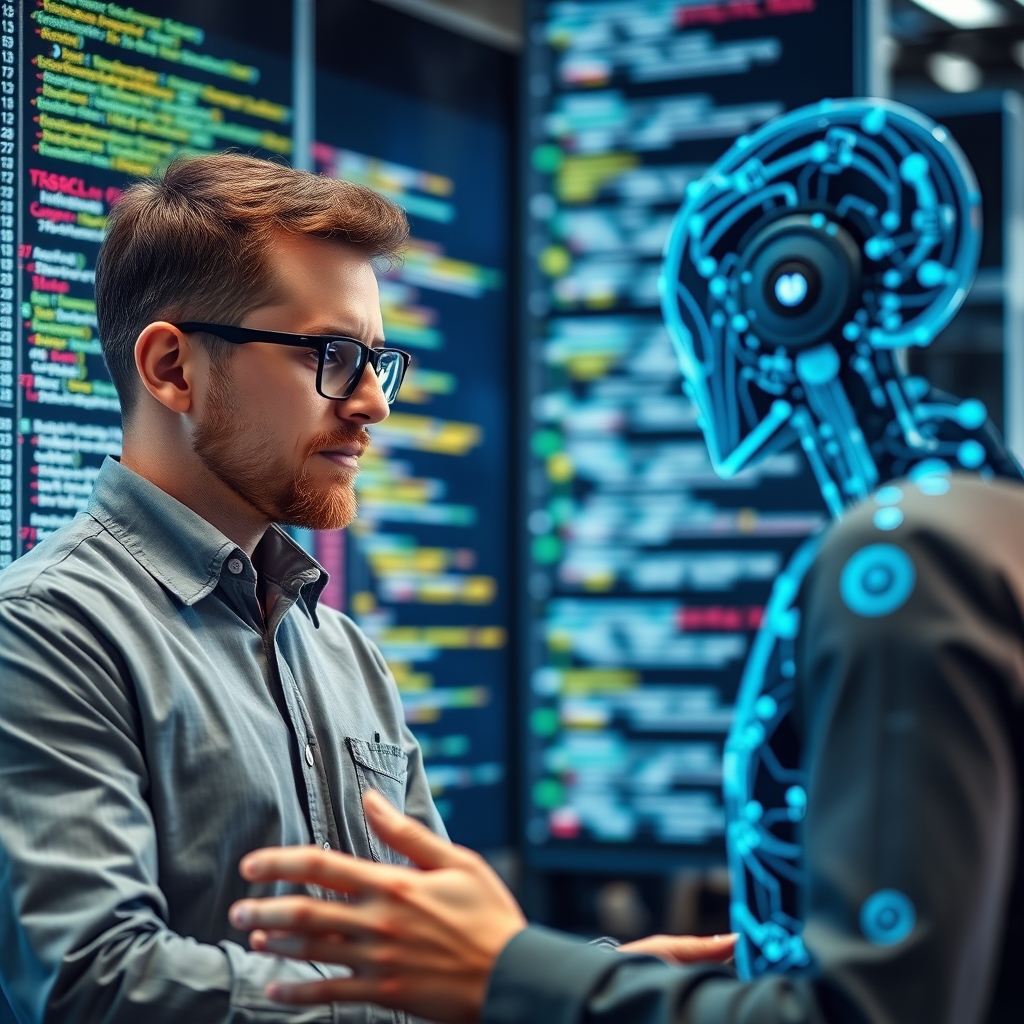
Human Collaboration in AI Development: Unlocking Accuracy and Innovation
Introduction: The Intersection of Humans and AI in Development
Artificial intelligence (AI) OpenAI AI platform has revolutionized the tech industry, transforming the way we live, work, and interact with technology. As AI continues to evolve, the role of humans in its development has become increasingly crucial. Human collaboration in AI development is no longer a nicety but a necessity, enabling developers to create more accurate, reliable, and innovative AI systems.
The Current State of AI Development and Human Involvement
The Role of Software Engineers in AI Development
Software engineers play a critical role in AI development, responsible for designing, building, and testing AI systems. To develop effective AI solutions, software engineers must possess a range of skills, including expertise in machine learning, data analysis, and software development. With the increasing complexity of AI systems, the demand for skilled software engineers has never been greater.
import numpy as np
from sklearn.model_selection import train_test_split
from sklearn.linear_model import LogisticRegression
# Load dataset
X = np.load('data.npy')
y = np.load('labels.npy')
# Split dataset into training and testing sets
X_train, X_test, y_train, y_test = train_test_split(X, y, test_size=0.2, random_state=42)
# Train logistic regression model
model = LogisticRegression()
model.fit(X_train, y_train)
# Evaluate model performance
accuracy = model.score(X_test, y_test)
print(f'Model accuracy: {accuracy:.2f}')
Challenges Faced by Humans in AI Development
Despite the importance of human collaboration in AI development, there are several challenges that humans face. One of the primary challenges is the need for specialized skills and knowledge, particularly in machine learning and data analysis. Additionally, the increasing complexity of AI systems can make it difficult for humans to understand and interpret AI decisions.
Benefits of Human Collaboration in AI Development
Enhancing AI Accuracy through Human Oversight
Human oversight is critical in ensuring the accuracy of AI systems. By reviewing and validating AI decisions, humans can identify and correct errors, improving the overall performance of the system. This is particularly important in applications such as healthcare, finance, and transportation, where AI errors can have serious consequences.
Addressing AI Bias and Ethical Considerations
AI systems can perpetuate and even exacerbate existing biases, particularly if they are trained on biased data. Human collaboration can help address these biases by ensuring that AI systems are designed and trained in a fair and transparent manner. This involves considering the ethical implications of AI decisions and ensuring that AI systems are accountable and explainable.
Real-World Examples and Case Studies
Collaborative AI Development in the US Tech Industry
The US tech industry has seen significant growth in AI adoption, driven by the increasing demand for AI-powered solutions. Companies such as Google, Amazon, and Microsoft have invested heavily in AI research and development, collaborating with humans to create innovative AI solutions.
Human-AI Collaboration in India's Tech Sector
India's tech sector has also seen significant growth in AI adoption, driven by the increasing demand for AI-powered solutions. Companies such as Infosys, Wipro, and Tata Consultancy Services have invested heavily in AI research and development, collaborating with humans to create innovative AI solutions.
Best Practices for Effective Human-AI Collaboration
Developing Essential Skills for AI Development
To effectively collaborate with AI systems, humans must possess a range of skills, including expertise in machine learning, data analysis, and software development. This involves staying up-to-date with Collaboration and Oversight Strategies the latest AI trends and technologies, as well as developing essential skills such as coding, data visualization, and communication.
import pandas as pd
import matplotlib.pyplot as plt
# Load dataset
df = pd.read_csv('data.csv')
# Visualize data
plt.scatter(df['feature1'], df['feature2'])
plt.xlabel('Feature 1')
plt.ylabel('Feature 2')
plt.title('Data Visualization')
plt.show()
Implementing Effective Human-AI Collaboration Strategies
Effective human-AI collaboration requires implementing strategies that foster collaboration and trust. This involves creating a culture of transparency and accountability, as well as establishing clear communication channels between humans and AI systems. Additionally, humans must be involved in the design and development of AI systems, ensuring that AI decisions are explainable and accountable.
What role do humans play in AI development, and why is collaboration between humans and AI crucial?
Humans play a vital role in AI development by providing the necessary context, creativity, and oversight to ensure AI systems are developed with accountability and transparency in mind. Human collaboration in AI development is essential for creating AI systems that are fair, explainable, and beneficial to society. By working together, humans and AI can drive innovation and progress.
How can humans ensure that AI systems are aligned with human values and ethics?
Humans can ensure that AI systems are aligned with human values and ethics by designing and implementing AI systems that are transparent, explainable, and accountable. This involves incorporating human oversight and review processes into AI development, as well as ensuring that AI systems are designed to respect human rights and dignity. By prioritizing human values and ethics, humans can create AI systems that are trustworthy and beneficial.
What are the benefits of human collaboration in AI development, and how can it improve AI performance?
Human collaboration in AI development can improve AI performance by providing AI systems with the necessary context, creativity, and oversight to make better decisions. By working together, humans and AI can leverage the strengths of both to drive innovation and progress. The benefits of human collaboration in AI development include improved accuracy, increased transparency, and enhanced accountability.
Can AI systems truly think and learn like humans, or is it simply a matter of complex algorithms?
While AI systems can process and analyze vast amounts of data, they do not truly think and learn like humans. AI systems are based on complex algorithms and statistical models that enable them to make predictions and recommendations. However, the creativity, intuition, and contextual understanding that humans take for granted are still unique to humans and are essential for developing truly intelligent AI systems.
How can humans and AI collaborate to solve complex problems and drive innovation?
Humans and AI can collaborate to solve complex problems and drive innovation by working together to design and implement AI systems that are tailored to specific needs and contexts. By leveraging the strengths of both humans and AI, we can create innovative solutions that are more effective, efficient, and equitable. This involves ensuring that AI systems are transparent, explainable, and accountable, and that human oversight and review processes are built into AI development.
What are the potential risks and challenges associated with human collaboration in AI development?
While human collaboration in AI development offers many benefits, it also poses potential risks and challenges, such as job displacement, bias, and accountability. To mitigate these risks, humans must prioritize transparency, explainability, and accountability in AI development, and ensure that AI systems are designed with human values and ethics in mind.
How can humans ensure that AI systems are designed to respect human rights and dignity?
Humans can ensure that AI systems are designed to respect human rights and dignity by prioritizing transparency, explainability, and accountability in AI development. This involves incorporating human oversight and review processes into AI development, as well as ensuring that AI systems are designed to respect human rights and dignity. By prioritizing human rights and dignity, humans can create AI systems that are trustworthy and beneficial.
Conclusion: The Future of Human-AI Collaboration in Development
Human collaboration in AI development is no longer a nicety but a necessity, enabling developers to create more accurate, reliable, and innovative AI systems. As AI continues to evolve, the role of humans in its development will only become more crucial. By developing essential skills and implementing effective human-AI collaboration strategies, we can unlock the full potential of AI and drive innovation in the tech industry.