Harnessing the Power of Retrieval-Augmented Generation (RAG) in AI System Design
Introduction: Understanding the RAG Paradigm Shift in AI
The advent of deep learning OpenAI AI paradigm has revolutionized the field of artificial intelligence (AI), enabling machines to learn from vast amounts of data and perform complex tasks with unprecedented accuracy. However, traditional AI systems often rely on a single modality, whether it be text, image, or speech, to generate responses. This narrow approach can lead to limitations in understanding and generating contextually relevant information.
Enter Retrieval-Augmented Generation (RAG), a paradigm shift in AI system design that combines the strengths of retrieval and generation to produce more accurate and informative results. By leveraging large language models (LLMs) and knowledge retrieval mechanisms, RAG systems can tap into the vast knowledge base of the internet, providing users with more comprehensive and accurate responses.
What is RAG: A Primer on Retrieval-Augmented Generation
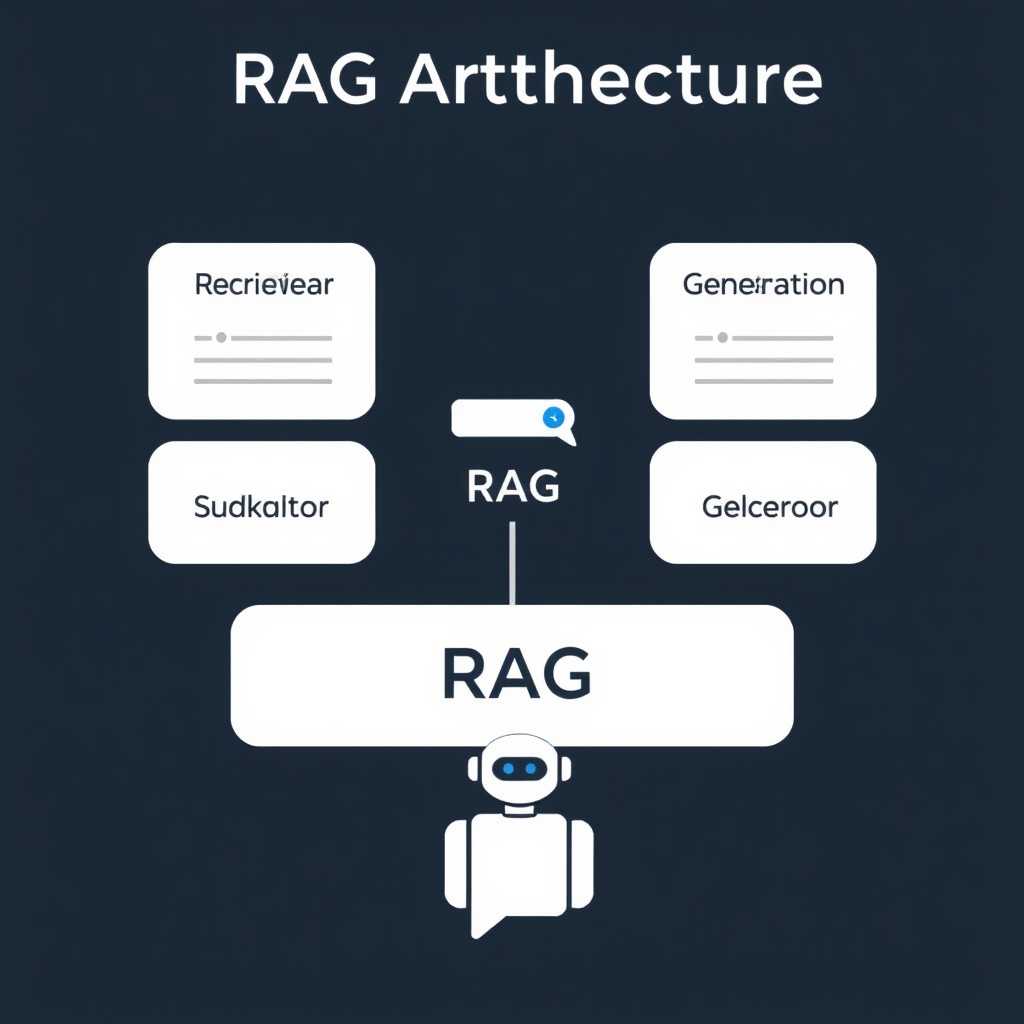
RAG is a type of AI system that integrates two primary components: a retrieval module and a generation module. The retrieval module searches a vast knowledge base, typically a large corpus of text, to retrieve relevant information related to the user's query. This information is then fed into the generation module, which uses this context to generate a response.
The key to RAG's success lies in its ability to combine the strengths of retrieval and generation. By leveraging the retrieval module's ability to quickly scan vast amounts of data, RAG systems can identify relevant information that may not be immediately apparent to traditional generation-only models. This allows RAG to generate more accurate and informative responses, addressing the limitations of traditional AI systems.
RAG vs Traditional Search Engine Results: A Comparative Analysis
Traditional search engine results often rely on keyword matching, providing users with a list of relevant documents or web pages. While this approach can be effective for simple queries, it falls short when dealing with complex or open-ended questions. RAG systems, on the other hand, can provide more comprehensive and accurate responses by leveraging the strengths of retrieval and generation.
A comparative analysis of RAG and traditional search engine results reveals several key differences:
- Accuracy: RAG systems tend to provide more accurate responses, as they can incorporate context and nuances from the retrieved information.
- Contextual understanding: RAG systems demonstrate a better understanding of context, enabling them to generate more relevant and informative responses.
- Scalability: RAG systems can handle complex and open-ended queries, making them more suitable for tasks that require a deeper understanding of the subject matter.
Industry-Specific Applications of RAG: Case Studies and Success Stories
RAG systems have been applied in various industries, including customer support, language translation, and content generation. Here are a few notable case studies and success stories:
- Customer Support: A leading e-commerce company used RAG to power their chatbot, providing customers with accurate and informative responses to their queries.
- Language Translation: A language translation platform employed RAG to improve the accuracy and fluency of their translations, enabling users to communicate more effectively across language barriers.
- Content Generation: A content creation platform used RAG to generate high-quality and engaging content for their clients, reducing the need for manual content creation.
Implementation Example: RAG in Real-World Scenarios
To illustrate the potential of RAG, let's consider a real-world scenario:
Suppose we have a chatbot designed to assist customers with their queries. The chatbot uses RAG to retrieve relevant information from a large corpus of text and generate accurate and informative responses. When a customer asks a question, the RAG system:
- Retrieves: relevant information from the corpus, including context and nuances.
- Generates: an accurate and informative response based on the retrieved information.
Common Mistakes to Avoid in RAG Implementation
While RAG offers numerous benefits, there are several common mistakes to avoid during implementation:
- Insufficient training data: RAG requires a vast amount of high-quality training data to learn from. Insufficient training data can lead to subpar performance.
- Inadequate retrieval mechanism: A poorly designed retrieval mechanism can fail to retrieve relevant information, hindering the effectiveness of the RAG system.
- Overly complex architecture: A RAG system with an overly complex architecture can be difficult to implement and maintain.
Performance and Architecture Considerations for RAG Systems
RAG systems require careful consideration of several performance and architecture factors:
- Scalability: RAG systems must be able to handle large volumes of data and queries.
- Speed: RAG systems must be able to generate responses quickly, even for complex queries.
- Accuracy: RAG systems must be able to provide accurate and informative responses.
FAQ: Frequently Asked Questions about RAG
Here are some frequently asked questions about RAG:
- What is RAG? RAG is a type of AI system that combines retrieval and generation to provide accurate and informative responses.
- How does RAG work? RAG uses a retrieval module to retrieve relevant information from a large corpus of text and a generation module to generate responses based on this information.
- What are the benefits of RAG? RAG offers several benefits, including improved accuracy, contextual understanding, and scalability.
What is the RAG paradigm, and how does it differ from traditional AI approaches?
RAG, or Relational-Agnostic Graph, is a paradigm shift in AI that focuses on graph neural networks, enabling models to learn complex relationships between entities without being limited to specific relational structures. This approach differs from traditional AI methods, which often rely on hand-designed features or predefined relationships.
How does the RAG paradigm improve AI model performance in real-world applications?
RAG enables AI models to capture nuanced relationships between entities, leading to improved performance in tasks such as recommendation systems, knowledge graph completion, and natural language processing. By learning from complex graph structures, RAG models can better understand context and make more accurate predictions.
Can RAG models handle large-scale graph datasets, and what are the implications for scalability?
Yes, RAG models can efficiently handle large-scale graph datasets by leveraging techniques such as graph attention mechanisms and parallel computing. As a result, RAG models can be deployed in real-world applications with vast amounts of data, such as social media platforms and e-commerce websites.
What are the challenges and limitations of implementing RAG models in practice?
Some challenges of implementing RAG models include the need for large amounts of labeled training data, the computational cost of training complex graph neural networks, and the difficulty of interpreting and visualizing model predictions. However, researchers and practitioners are actively working to address these challenges and make RAG models more practical and accessible.
How does the RAG paradigm relate to other emerging AI trends, such as graph neural networks and reinforcement learning?
RAG is closely related to graph neural networks, as it relies on graph neural network architectures to learn from complex relationships. Additionally, RAG models can be combined with reinforcement learning techniques to enable more efficient and effective learning from graph data. This intersection of paradigms is driving innovation in AI research and development.
What are the potential applications of RAG models in industries such as healthcare, finance, and logistics?
RAG models have the potential to transform industries by enabling more accurate predictions, better decision-making, and improved efficiency. For example, RAG models can be applied to medical diagnosis, financial risk assessment, and supply chain optimization, among other areas. The opportunities for RAG models in these industries are vast and rapidly evolving.
What are the next steps for researchers and practitioners looking to explore and apply RAG models?
To explore RAG models, researchers and practitioners can start by reviewing the existing literature, experimenting with publicly available datasets and code repositories, and collaborating with experts in the field. As the RAG paradigm continues to evolve, staying up-to-date with the latest developments and advancements is essential for harnessing its full potential.
Conclusion: Leveraging RAG for AI System Design
RAG offers a paradigm shift in AI system design, providing a more comprehensive and accurate approach to information retrieval and generation. By understanding the principles and applications of RAG, developers can create more effective and efficient AI systems. As the field of AI continues to evolve, RAG will play an increasingly important role in shaping the future of AI system design.
This article has provided an in-depth exploration of RAG, from its fundamentals to its applications and performance considerations. By leveraging the strengths of retrieval and generation, RAG systems can provide users with more accurate and informative responses, addressing the limitations of traditional AI systems.