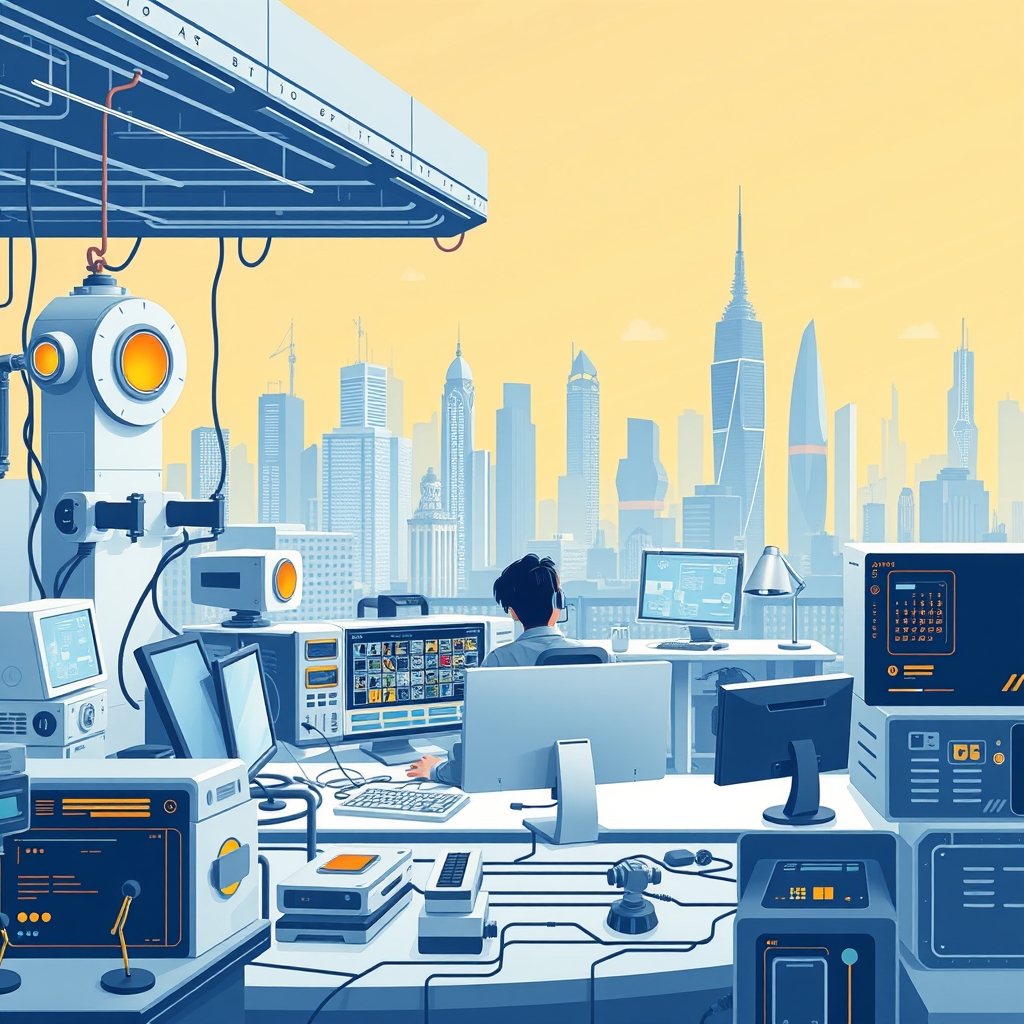
Future of Work with AI: Navigating the Tech Industry Shift
Introduction: Embracing the AI Revolution in the Workplace
The future of work with AI is no longer a distant concept, but a reality that is transforming the way we work and interact with technology. As AI continues to advance and improve, it is essential to understand its impact on job markets and workforces. In this blog post, we will explore the effects of AI on the tech industry, the creation of new job opportunities, and provide expert insights and trends for thriving in the AI-powered tech industry.
The integration of AI in the workplace is not only changing the nature of work but also creating new opportunities for growth and development. With the rise of automation in job markets, it is crucial to develop skills that are complementary to AI and automation. In this article, we will delve into the world of AI-powered tech and explore the tools, trends, and expert insights that can help you navigate this shift.
The Impact of AI on Job Markets and Workforces
The Rise of Automation and Job Displacement
The increasing use of artificial intelligence trends in the workplace has led to concerns about job displacement and automation. While it is true that AI has the potential to automate certain tasks, it also creates new job opportunities in areas such as AI development, deployment, and maintenance. According to a report by the World Economic Forum, by 2022, 75 million jobs may be displaced by automation, but 133 million new roles may emerge that are more adapted to the new division of labor between humans, machines, and algorithms.
The Creation of New Job Opportunities in AI
The future of work with AI is not just about job displacement, but also about the creation of new job opportunities. As AI continues to advance, new roles are emerging in areas such as machine learning jobs, natural language processing, and computer vision. These jobs require skills that are complementary to AI, such as critical thinking, creativity, and problem-solving. With the right skills and training, professionals can thrive in the AI-powered tech industry and take advantage of the new opportunities that are emerging.
The AI-Powered Tech Industry: Tools, Trends, and Expert Insights
The Role of AI in Software Development and Engineering
Software development AI is transforming the way software is developed, tested, and deployed. AI-powered tools such as code completion, code review, and automated testing are improving the efficiency and quality of software development. Additionally, AI is being used in tech industry shift to improve the user experience, personalize products and services, and predict customer behavior.
The Impact of AI on the Startup Ecosystem and Entrepreneurship
The future of work with AI is also having a significant impact on the startup ecosystem and entrepreneurship. AI-powered startups are emerging in areas such as healthcare, finance, and education, and are disrupting traditional industries. With the use of AI, startups can improve their products and services, reduce costs, and increase efficiency. However, the tech layoffs impact of AI on the workforce is also a concern, and startups must be prepared to adapt to the changing job market.
Real-World Examples and Case Studies
AI Adoption in the US and Indian Tech Industries
The adoption of AI in the US and Indian tech industries is on the rise. Companies such as Google, Amazon, and Facebook are using AI to improve their products and services, while Indian companies such as Tata Consultancy Services and Infosys are using AI to improve their software development and deployment processes. The future of work with AI is not just limited to the tech industry, but is also being adopted in other industries such as healthcare, finance, and education.
Machine Learning and AI Development Success Stories
There are many success stories of machine learning jobs and AI development in the tech industry. For example, companies such as Netflix and Amazon are using machine learning to personalize their products and services, while companies such as Google and Facebook are using AI to improve their advertising and marketing efforts. These success stories demonstrate the potential of AI to transform the tech industry and create new opportunities for growth and development.
Best Practices and Actionable Insights for Thriving in the AI-Powered Tech Industry
Skill Development and Up-skilling for AI-Related Roles
To thrive in the future of work with AI, it is essential to develop skills that are complementary to AI and automation. This includes skills such as critical thinking, creativity, and problem-solving, as well as technical skills such as programming, data science, and machine learning. Professionals can develop these skills through online courses, training programs, and certifications.
Business Strategies for Leveraging AI and Automation
Businesses can leverage AI and automation to improve their products and services, reduce costs, and increase efficiency. This includes strategies such as using AI-powered tools for software development, deploying AI-powered chatbots for customer service, and using machine learning for predictive analytics. By adopting these strategies, businesses can stay ahead of the competition and thrive in the AI-powered tech industry.
What are the most significant impacts of AI on the future of work?
The future of work with AI will likely see increased automation, changing job requirements, and new opportunities for workers with skills complementary to AI. As AI assumes routine and repetitive tasks, humans will focus on creative, strategic, and high-value work.
Will AI replace human workers, or will it augment their abilities?
While AI may displace some jobs, it will also create new ones, such as AI developer, data scientist, and AI ethicist. AI will augment human abilities by freeing us from mundane tasks, allowing us to focus on high-value work that requires creativity, empathy, and problem-solving skills.
How will AI change the nature of work and the workforce?
The future of work with AI will be characterized by a shift from traditional 9-to-5 jobs to more flexible, autonomous work arrangements. AI will enable remote work, flexible hours, and a better work-life balance, but also require workers to be adaptable, lifelong learners, and proficient in AI-related skills.
What skills will be most valuable in the future workforce?
As AI assumes routine tasks, skills like creativity, critical thinking, problem-solving, communication, and emotional intelligence will become more valuable. Workers will need to be adaptable, lifelong learners, and proficient in AI-related skills, such as data analysis, programming, and AI ethics.
How can workers prepare themselves for the future of work with AI?
To thrive in the future workforce, workers should focus on developing skills that complement AI, such as creativity, critical thinking, and problem-solving. They should also stay up-to-date with the latest AI technologies and trends, and be willing to continuously learn and upskill throughout their careers.
What are the potential benefits of AI in the workplace?
The benefits of AI in the workplace include increased productivity, improved decision-making, and enhanced customer experiences. AI can also help reduce costs, improve efficiency, and enable remote work, leading to a better work-life balance and improved overall well-being.
What are the potential risks and challenges of AI in the workplace?
The risks and challenges of AI in the workplace include job displacement, bias, and lack of transparency. Workers may also experience anxiety and stress related to AI-driven changes, and organizations may struggle to develop and implement effective AI strategies that prioritize worker well-being and safety.
Conclusion: Preparing for the Future of Work with AI
In conclusion, the future of work with AI is transforming the tech industry and creating new opportunities for growth and development. To thrive in this industry, professionals must develop skills that are complementary to AI and automation, and businesses must adopt strategies that leverage AI and automation. As discussed in our guide to thriving in the AI-powered tech industry, the key to success is to stay ahead of the curve and adapt to the changing job market. By following the best practices and actionable insights outlined in this article, professionals and businesses can prepare for the future of work with AI and take advantage of the new opportunities that are emerging.