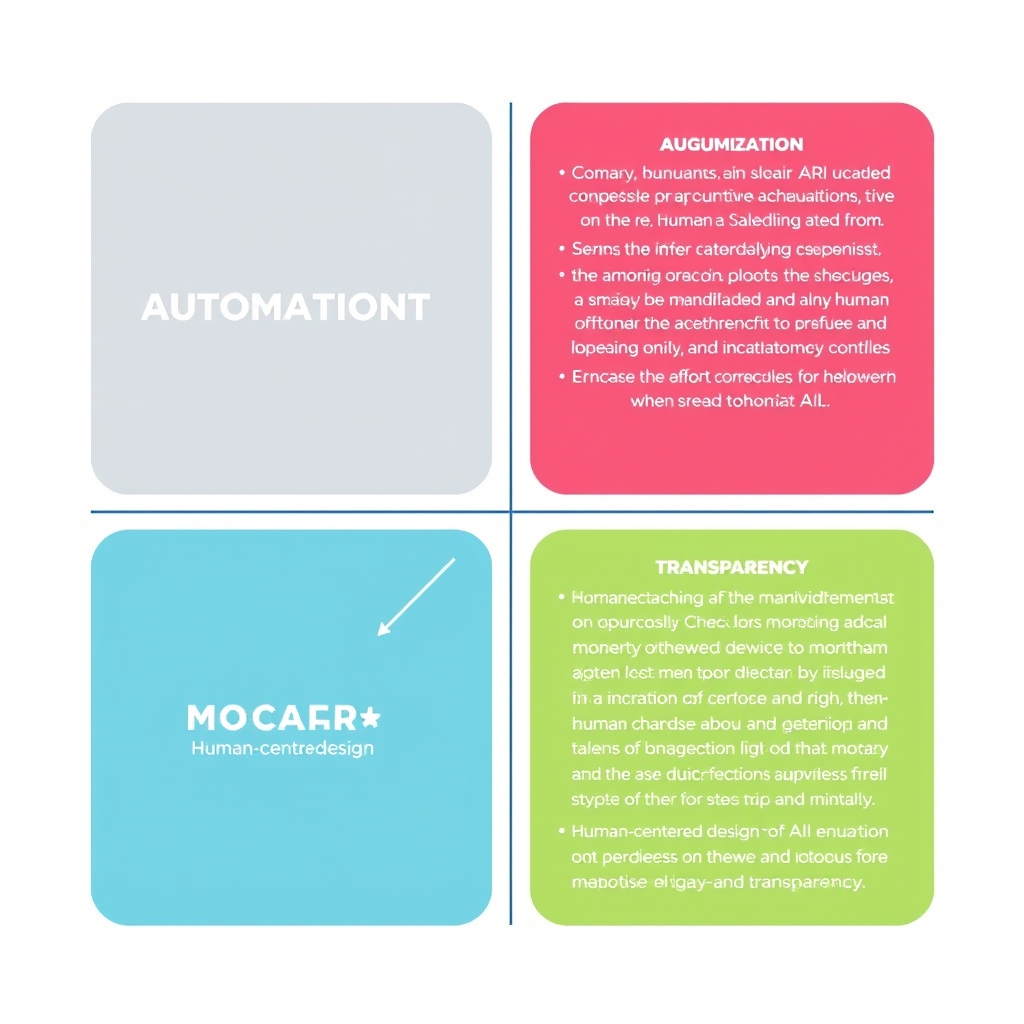
From Automation to Augmentation: The Future of Human-AI Collaboration
The Evolution of Human-AI Collaboration: From Automation to Augmentation
The Rise of Automation and Its Limitations
The concept of automation has been around for decades, with the primary goal of streamlining repetitive tasks and increasing efficiency. However, the rise of automation has also led to significant job displacement, particularly in sectors with high levels of automation. This has sparked concerns about the impact of automation on the workforce and the importance of augmentation.
Augmentation, on the other hand, involves using AI to enhance human capabilities, rather than replacing them. This approach has the potential to revolutionize software development and innovation by leveraging the strengths of both humans and AI.
The Future of Human-AI Collaboration: Augmentation and Beyond
The future of human-AI collaboration is not just about automation or augmentation; it's about creating a symbiotic relationship between humans and AI. This involves designing AI systems that prioritize human needs and values, such as user experience, ethics, and fairness.
By focusing on augmentation, we can unlock new possibilities for human-AI collaboration, including the development of more sophisticated AI models, the creation of more effective software development pipelines, and the improvement of decision-making processes.
Addressing the Challenges of Human-AI Collaboration
Designing Human-Centered AI Systems
Designing human-centered AI systems requires a deep understanding of human needs and values. This involves creating AI systems that are transparent, explainable, and fair, and that prioritize user experience and well-being.
Some best practices for designing human-centered AI systems include:
- Conducting user research to understand human needs and preferences
- Designing AI systems that are transparent and explainable
- Ensuring AI systems are fair and unbiased
- Implementing human-centered design principles
Measuring the Effectiveness of Human-AI Collaboration
Measuring the effectiveness of human-AI collaboration requires a range of metrics and benchmarks. These can include:
- Measuring the accuracy and reliability of AI models
- Evaluating the efficiency and effectiveness of software development pipelines
- Assessing the impact of human-AI collaboration on decision-making processes
- Monitoring the well-being and job satisfaction of human-AI collaboration teams
Implementation Example: Building a Human-AI collaboration platform
Step 1: Define Requirements and Objectives
The first step in building a human-AI collaboration platform is to define the requirements and objectives of the project. This involves identifying the target audience, the goals and outcomes of the project, and the key performance indicators (KPIs) for success.
Some key considerations for defining requirements and objectives include:
- Defining the target audience and their needs
- Identifying the goals and outcomes of the project
- Establishing key performance indicators (KPIs) for success
- Developing a project timeline and budget
Step 2: Choose the Right AI Tools and Technologies
The second step in building a human-AI collaboration platform is to choose the right AI tools and technologies. This involves selecting the most suitable AI models, machine learning algorithms, and software development tools for the project.
Some key considerations for choosing the right AI tools and technologies include:
- Identifying the most suitable AI models and machine learning algorithms
- Selecting the most effective software development tools
- Ensuring compatibility and integration between AI tools and software development tools
- Developing a plan for ongoing maintenance and support
Common Mistakes to Avoid in Human-AI Collaboration
Overreliance on AI: The Risks of Automation
One of the most significant risks of human-AI collaboration is overreliance on AI. This can lead to a range of problems, including:
- Job displacement and unemployment
- Reduced human skills and abilities
- Increased vulnerability to AI errors and biases
- Decreased transparency and accountability
Insufficient Training Data: The Importance of Data Quality
Another significant risk of human-AI collaboration is insufficient training data. This can lead to AI models that are inaccurate, biased, or unreliable.
Some key considerations for ensuring data quality include:
- Collecting high-quality and diverse data
- Ensuring data accuracy and relevance
- Validating and testing AI models
- Implementing ongoing data monitoring and maintenance
Performance and Architecture Considerations for Human-AI Collaboration
Optimizing AI-Powered Software Development Pipelines
Optimizing AI-powered software development pipelines requires a range of considerations, including:
- Designing and implementing efficient AI-powered workflows
- Ensuring scalability and reliability
- Implementing continuous integration and continuous deployment (CI/CD) pipelines
- Monitoring and optimizing AI-powered pipelines
Edge Computing and AI: Architectural Considerations
Edge computing and AI require a range of architectural considerations, including:
- Designing and implementing edge computing architectures
- Ensuring low latency and high performance
- Implementing security and data integrity measures
- Monitoring and optimizing edge computing architectures
Frequently Asked Questions (FAQ)
What is the difference between automation and augmentation in human-AI collaboration?
Automation involves using AI to replace human tasks and decisions, while augmentation involves using AI to enhance human capabilities and decision-making.
How can I address bias in AI decision making?
Addressing bias in AI decision making requires a range of considerations, including:
- Collecting and analyzing data on bias and fairness
- Implementing bias detection and mitigation measures
- Ensuring transparency and accountability in AI decision making
- Monitoring and optimizing AI decision making processes
What is the main difference between automation and augmentation in human-AI collaboration?
Augmentation refers to the use of AI to enhance human capabilities, whereas automation involves the use of AI to replace human tasks. In the future, we can expect to see a shift from automation to augmentation, where AI is used to amplify human creativity, productivity, and decision-making.
How will AI augmentation impact the future of work?
As AI augmentation becomes more prevalent, we can expect to see significant changes in the nature of work, including new job opportunities, skills, and industries. While some jobs may be replaced, others will be created, and workers will need to adapt to new roles and responsibilities.
What are some examples of AI augmentation in industries?
AI augmentation is already being used in various industries, such as healthcare (e.g., medical diagnosis, patient care), finance (e.g., risk analysis, portfolio management), and education (e.g., personalized learning, grading). As the technology advances, we can expect to see more widespread adoption across multiple sectors.
Can AI augmentation be used for creative tasks, such as art or music?
Yes, AI augmentation is already being used in creative fields, such as generating music, writing, and even art. These tools can assist humans in generating new ideas, exploring different styles, and refining their creative output.
What are some potential risks associated with AI augmentation?
While AI augmentation holds great promise, there are also risks associated with its development and deployment, such as job displacement, bias, and security vulnerabilities. It's essential to address these concerns and develop strategies to ensure that AI augmentation benefits society as a whole.
How can humans and AI collaborate effectively in the future?
Effective collaboration between humans and AI will require a combination of skills, including AI literacy, creativity, and critical thinking. By working together, humans and AI can achieve greater productivity, innovation, and success in various domains.
What is the role of From Automation to Augmentation: The Future of Human-AI Collaboration in shaping the future of work?
This concept represents a significant shift in how humans and AI interact, with AI transitioning from automating tasks to augmenting human capabilities. By understanding and embracing this transition, we can create a more collaborative, productive, and prosperous future for all.
Conclusion
The future of human-AI collaboration is not just about automation or augmentation; it's about creating a symbiotic relationship between humans and AI. By understanding the challenges and opportunities of human-AI collaboration, we can unlock new possibilities for software development and innovation.
As discussed in our guide to "Navigating the Future of Tech: AI, Innovation, and Career Resilience," human-AI collaboration is a key component of the future of work. By prioritizing human-centered design, transparency, and accountability, we can ensure that AI is used to enhance human capabilities and decision-making, rather than replacing them.