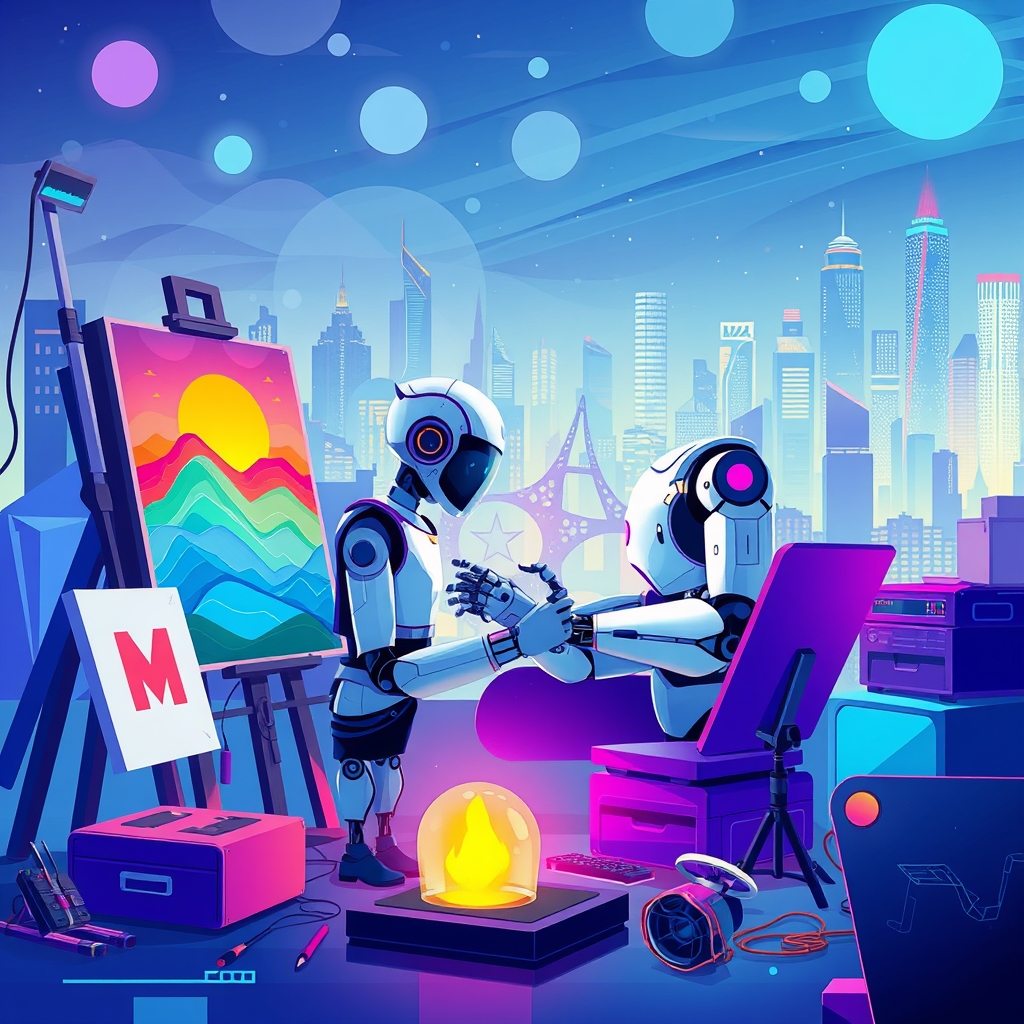
Embracing AI-Augmented Creativity in Art Music and Design
Introduction: The Rise of AI-Augmented Creativity in Art, Music, and Design
As we navigate the ever-evolving landscape OpenAI AI models of technology and creativity, it's becoming increasingly clear that AI-augmented creativity is revolutionizing the way we approach art, music, and design. By embracing AI-augmented creativity in art music and design, we can unlock new levels of innovation and expression. In this article, we'll delve into the world of AI-augmented creativity, exploring its benefits, challenges, and best practices, with a focus on Embracing AI-Augmented Creativity in Art Music and Design.
Understanding the Impact of AI on Creativity
Benefits of AI-Augmented Creativity
The integration of AI in art, music, and design has numerous benefits. For instance, AI music generation tools can assist musicians in creating new and innovative sounds. AI design tools can help designers streamline their workflow and explore new ideas. Moreover, AI in art can enable artists to create complex and detailed pieces that would be difficult or impossible to achieve manually. By leveraging AI for creativity, we can augment our abilities and push the boundaries of what's possible.
Challenges and Limitations of AI-Augmented Creativity
While AI-augmented creativity offers many advantages, it also presents challenges and limitations. One of the primary concerns is the potential loss of human touch and emotional depth in creative works. Additionally, the reliance on AI tools can lead to a lack of understanding of the underlying creative processes. It's essential to address these challenges and find ways to effectively collaborate with AI systems, using Artificial Intelligence in Design and Machine Learning in Art to enhance our creative capabilities.
AI Tools for Art, Music, and Design
Overview of AI Tools for Artists
There are numerous AI tools available for artists, designers, and musicians. For example, AI-powered painting tools can generate stunning artworks based on user input. AI music composition tools can create complex musical pieces, leveraging AI Music Generation and AI-Powered Music Composition. AI design tools can assist in creating innovative and functional designs, utilizing AI Design Tools and AI for Creativity.
AI-Powered Music Composition Tools
AI-powered music composition tools are revolutionizing the music industry. These tools can generate musical pieces based on user input, such as genre, mood, and tempo. For instance, Amper Music is an AI music composition tool that enables users to create custom music tracks in minutes. By embracing Embracing AI-Augmented Creativity in Art Music and Design, musicians can explore new sounds and styles, and create music that was previously impossible to produce.
Real-World Examples and Case Studies
AI-Generated Art and Design
AI-generated art and design are becoming increasingly popular. For example, the AI-generated portrait Edmond de Belamy sold for $432,500 at Christie's auction house in 2018. AI-generated design is also being used in various industries, such as fashion and architecture. By leveraging AI in Art and AI Design Tools, artists and designers can create innovative and unique pieces that showcase the potential of AI-augmented creativity.
AI-Powered Music Composition in Popular Culture
AI-powered music composition is being used in popular culture, with many artists and musicians experimenting with AI-generated music. For instance, the musician Grimes has used AI music composition tools to create music for her albums. By embracing AI-Augmented Creativity in Art Music and Design, artists can push the boundaries of what's possible and create new and innovative sounds.
Best Practices for Embracing AI-Augmented Creativity
Tips for Artists and Designers
To effectively embrace AI-augmented creativity, artists and designers should start by experimenting with AI tools and exploring their capabilities. It's essential to understand the limitations and potential biases of AI systems and to use them as a collaborative tool, rather than a replacement for human creativity. By leveraging AI for Creativity and Artificial Intelligence in Design, artists and designers can augment their abilities and create innovative and unique pieces.
Strategies for Effective AI-Augmented Collaboration
Effective collaboration between humans and AI systems is crucial for achieving the full potential of AI-augmented creativity. This can be achieved by setting clear goals and objectives, providing high-quality input data, and continuously evaluating and refining the AI system's output. By embracing Embracing AI-Augmented Creativity in Art Music and Design and using AI Design Tools and AI Music Generation, we can create innovative and groundbreaking works that showcase the potential of human-AI collaboration.
The Future of AI-Augmented Creativity
Emerging Trends and Technologies
The future of AI-augmented creativity holds much promise, with emerging trends and technologies such as Machine Learning in Art and AI-Powered Music Composition expected to play a significant role. As AI systems become more advanced and sophisticated, we can expect to see even more innovative and groundbreaking works of art, music, and design. By embracing Embracing AI-Augmented Creativity in Art Music and Design, we can stay at the forefront of this revolution and create a brighter future for creativity and innovation.
Implications for the Creative Industry
The implications of AI-augmented creativity for the creative industry are far-reaching. As AI systems become more prevalent, we can expect to see a shift in the way creative work is produced, consumed, and valued. It's essential for artists, designers, and musicians to adapt to these changes and find ways to effectively collaborate with AI systems, using AI in Art and AI Design Tools to enhance their creative capabilities. By doing so, we can ensure that the creative industry continues AI-Augmented Career Opportunities to thrive and evolve in the age of AI-augmented creativity, as discussed in our guide to Thriving in the AI-Powered Tech Industry: Tools, Trends, and Expert Insights.
What is AI-augmented creativity in art, music, and design?
AI-augmented creativity refers to the collaboration between human artists and AI algorithms to generate new and innovative works in art, music, and design. This approach allows for the amplification of human creativity through AI's ability to analyze and process vast amounts of data. By embracing AI-augmented creativity, artists can unlock new possibilities and push the boundaries of their craft.
How does AI enhance the creative process in art, music, and design?
AI can enhance the creative process by providing artists with new ideas, inspiration, and tools to explore. For example, AI-generated music can serve as a starting point for human composers, while AI-powered design software can assist in generating novel and complex patterns. By integrating AI into their workflow, artists can streamline their process and focus on high-level creative decisions.
What are the benefits of embracing AI-augmented creativity in art, music, and design?
The benefits of embracing AI-augmented creativity include increased efficiency, improved accuracy, and enhanced innovation. By leveraging AI, artists can produce high-quality work more quickly and with greater precision, while also exploring new and uncharted territories of creativity. This approach can also lead to the development of new art forms and styles that were previously unimaginable.
Will AI replace human artists and creatives in art, music, and design?
No, AI is not intended to replace human artists and creatives, but rather to augment and amplify their abilities. AI can assist in generating ideas, automating repetitive tasks, and providing new sources of inspiration, but ultimately, human creativity and judgment are essential in shaping the final product. By embracing AI-augmented creativity, artists can focus on the high-level creative decisions and leave the mundane tasks to AI.
What are some potential applications of AI-augmented creativity in real-world industries?
AI-augmented creativity has a wide range of potential applications in industries such as advertising, fashion, product design, and entertainment. For example, AI-powered design software can be used to generate novel and complex patterns for fashion and home decor, while AI-generated music can be used to create immersive experiences for film and video games. By embracing AI-augmented creativity, businesses can develop innovative and engaging products that capture the attention of their audience.
How can I get started with AI-augmented creativity in art, music, and design?
To get started with AI-augmented creativity, you can explore various AI-powered tools and software that are available in the market. These tools can range from AI-generated music and art software to AI-powered design and writing assistants. You can also experiment with online courses and tutorials to learn more about AI-augmented creativity and its applications. By embracing AI-augmented creativity, you can unlock new possibilities and push the boundaries of your craft.
Will AI-augmented creativity lead to a homogenization of art, music, and design?
No, AI-augmented creativity is unlikely to lead to a homogenization of art, music, and design. While AI can generate similar patterns and styles, human artists and creatives can always add their unique touch and perspective to the final product. Moreover, AI-augmented creativity can also lead to the discovery of new and uncharted territories of creativity, resulting in a diverse and vibrant art scene. By embracing AI-augmented creativity, artists can explore new possibilities and push the boundaries of their craft.
Conclusion: Embracing AI-Augmented Creativity for a Brighter Future
In conclusion, embracing AI-augmented creativity in art music and design is essential for staying at the forefront of innovation and creativity. By understanding the benefits and challenges of AI-augmented creativity, experimenting with AI tools, and collaborating effectively with AI systems, we can unlock new levels of innovation and expression. As we continue to navigate the ever-evolving landscape of technology and creativity, it's clear that Embracing AI-Augmented Creativity in Art Music and Design is the key to a brighter future for artists, designers, and musicians. This builds on our previous discussions on Thriving in the AI-Powered Tech Industry: Tools, Trends, and Expert Insights, highlighting the importance of embracing AI-augmented creativity in the creative industry.