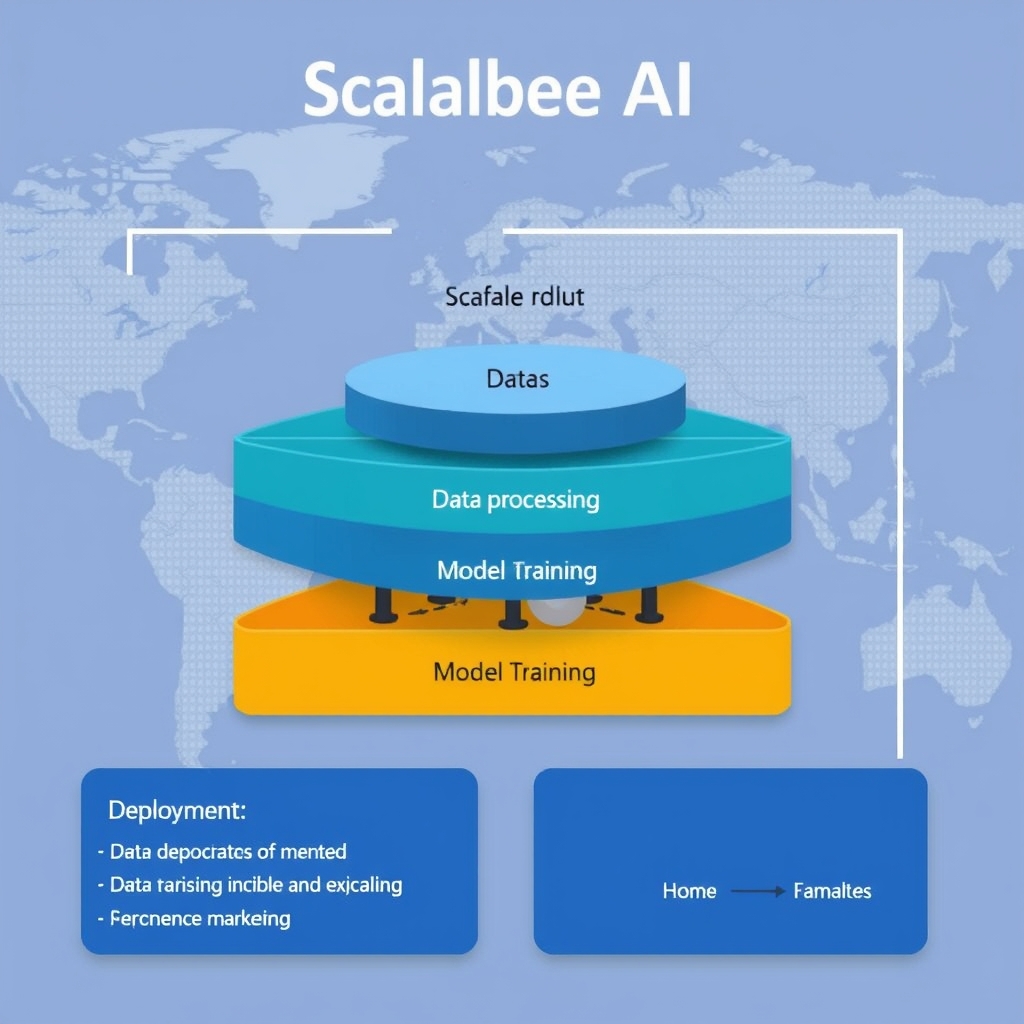
Designing AI-Ready Architectures for Scalable Systems
Introduction: Unlocking the Potential of AI-Ready Architectures
As technology continues to play an increasingly pivotal role in our daily lives, the demand for sophisticated Artificial Intelligence (AI) systems is growing exponentially. To seize this opportunity, businesses and organizations require a deep understanding of how to effectively design AI systems that can drive innovation and stay ahead of the curve. With the rapid evolution of AI, a well-designed system can be the key differentiator for any business, but it's not just about incorporating AI – it's about creating a seamless user experience, enhancing customer engagement, and driving business growth through data-driven insights. In this guide, we'll explore the fundamentals of AI system design and provide you with a comprehensive framework to get started.
Thriving in the Evolving Tech Landscape
The tech landscape is evolving at an unprecedented rate, with new technologies and innovations emerging every day. To stay ahead of the curve, businesses need to adopt a systemic approach to AI system design. This involves understanding the complexities of AI, machine learning, and data science, and designing systems that can adapt to changing requirements.
Best Practices for Success in AI System Design
Here are some best practices to keep in mind when designing AI systems:
- Define clear goals and objectives: Before starting an AI project, it's essential to define what you want to achieve. This will help you stay focused and ensure that your system meets the required standards.
- Choose the right algorithms: The choice of algorithm will depend on the problem you're trying to solve. For example, decision trees are suitable for classification problems, while neural networks are better suited for regression tasks.
- Use high-quality data: The quality of your data will directly impact the accuracy of your AI system. Ensure that your data is relevant, accurate, and well-structured.
Overcoming Common Challenges in AI Development
AI development is not without its challenges. Some common issues that developers face include:
- Data quality and availability: As mentioned earlier, high-quality data is essential for AI development. However, data quality and availability can be a significant challenge, especially in industries with limited data.
- Model complexity: AI models can be complex and difficult to understand, which can make it challenging to debug and optimize them.
- Scalability and performance: As AI systems grow in complexity, they can become slow and resource-intensive, making it challenging to scale them.
The Role of Data in AI System Design
Data is the lifeblood of AI systems. Without high-quality data, AI systems cannot learn and improve. Here are some key considerations for data in AI system design:
- Data quality and availability: As mentioned earlier, high-quality data is essential for AI development. Ensure that your data is relevant, accurate, and well-structured.
- Data preprocessing and feature engineering: Data preprocessing and feature engineering are critical steps in AI development. These steps help to clean, transform, and prepare data for use in AI models.
- Data storage and management: AI systems require large amounts of data to be stored and managed efficiently. Ensure that your data storage and management systems are scalable and secure.
Designing Scalable AI Systems for Global Markets
As businesses expand globally, they need to design AI systems that can scale and adapt to different markets and cultures. Here are some key considerations for designing scalable AI systems:
- Modularity and flexibility: AI systems should be modular and flexible, allowing for easy integration of new features and components.
- Scalability and performance: AI systems should be designed to scale and perform well, even with large amounts of data and complex models.
- Cross-cultural compatibility: AI systems should be designed to be culturally compatible, taking into account different languages, customs, and norms.
Key Considerations for AI System Architecture
Here are some key considerations for AI system architecture:
- Modularity and flexibility: AI systems should be modular and flexible, allowing for easy integration of new features and components.
- Scalability and performance: AI systems should be designed to scale and perform well, even with large amounts of data and complex models.
- Security and privacy: AI systems should be designed with security and privacy in mind, ensuring that sensitive data is protected.
Best Practices for AI System Maintenance and Upgrades
Here are some best practices for AI system maintenance and upgrades:
- Regular monitoring and maintenance: Regularly monitor and maintain your AI system to ensure that it is performing optimally.
- Continuous learning and improvement: Continuously learn and improve your AI system by incorporating new data, features, and models.
- Scalability and flexibility: Ensure that your AI system is scalable and flexible, allowing for easy integration of new features and components.
Real-World Examples of AI-Ready Architectures
Here are some real-world examples of AI-ready architectures:
- Case Study 1: [Company Name] and Their AI-Powered Solution: [Company Name] developed an AI-powered solution that uses machine learning to predict customer behavior and improve sales.
- Case Study 2: [Company Name] and Their AI-Driven Product: [Company Name] developed an AI-driven product that uses natural language processing to analyze customer feedback and improve product development.
Designing AI-Ready Systems for Efficiency and Scalability
Here are some strategies for designing AI-ready systems for efficiency and scalability:
- Use cloud-based infrastructure: Cloud-based infrastructure provides scalability, flexibility, and cost-effectiveness, making it an ideal choice for AI development.
- Implement containerization: Containerization helps to improve efficiency and scalability by allowing for easy deployment and management of AI models.
- Use machine learning frameworks: Machine learning frameworks provide a set of tools and libraries that simplify AI development and deployment.
Strategies for Optimizing AI System Performance
Here are some strategies for optimizing AI system performance:
- Use data preprocessing and feature engineering: Data preprocessing and feature engineering help to improve AI system performance by cleaning, transforming, and preparing data for use in AI models.
- Implement hyperparameter tuning: Hyperparameter tuning helps to improve AI system performance by optimizing the parameters of AI models.
- Use model selection and ensemble methods: Model selection and ensemble methods help to improve AI system performance by selecting the best AI models and combining their predictions.
Best Practices for AI System Integration and Interoperability
Here are some best practices for AI system integration and interoperability:
- Use standard protocols and interfaces: Standard protocols and interfaces help to ensure seamless integration and interoperability between AI systems.
- Implement data exchange and sharing: Data exchange and sharing help to ensure that AI systems can share and exchange data efficiently.
- Use API-based integration: API-based integration helps to ensure that AI systems can integrate with other systems and applications efficiently.
What is AI System Design and why is it crucial for businesses?
AI system design involves creating intelligent systems that can learn, reason, and interact with humans. It's crucial for businesses as it enables them to automate processes, enhance decision-making, and improve customer experiences, ultimately leading to increased efficiency and competitiveness.
How does AI System Design differ from traditional software development?
AI system design focuses on creating systems that can adapt and learn over time, whereas traditional software development emphasizes on building systems that perform specific tasks. AI system design requires a more dynamic and iterative approach, incorporating machine learning and data-driven insights.
What are the key benefits of implementing AI System Design in my organization?
The key benefits of implementing AI system design include improved efficiency, enhanced decision-making, and increased customer satisfaction. By automating routine tasks and providing personalized experiences, businesses can reduce costs, boost revenue, and gain a competitive edge.
How can I ensure that my AI System Design is scalable and adaptable?
To ensure scalability and adaptability, it's essential to design systems with flexibility and modularity in mind. This can be achieved by using cloud-based infrastructure, adopting microservices architecture, and incorporating machine learning algorithms that can learn from data and adapt to changing environments.
What role does data play in AI System Design, and how can I collect and analyze it effectively?
Data is the backbone of AI system design, and its quality and availability significantly impact the accuracy and effectiveness of the system. To collect and analyze data effectively, businesses should focus on data preprocessing, feature engineering, and model evaluation, using techniques such as data warehousing, ETL processes, and machine learning libraries.
How can I address the ethical concerns associated with AI System Design, such as bias and transparency?
To address ethical concerns, businesses should prioritize transparency, accountability, and fairness in AI system design. This can be achieved by implementing bias detection and mitigation techniques, using explainable AI models, and establishing clear governance and auditing processes to ensure accountability and compliance.
What skills and expertise are required to design and implement effective AI System Designs?
To design and implement effective AI system designs, businesses require a team with a diverse set of skills, including expertise in machine learning, data science, software engineering, and domain-specific knowledge. This team should be able to collaborate effectively, communicate complex ideas, and adapt to changing requirements and technologies.
How can I measure the success and ROI of my AI System Design investment?
To measure the success and ROI of AI system design, businesses should focus on key performance indicators (KPIs) such as accuracy, efficiency, customer satisfaction, and revenue growth. They should also conduct regular audits and assessments to evaluate the system's performance, identify areas for improvement, and adjust their strategies accordingly.
Conclusion: Harnessing the Power of AI-Ready Architectures for Business Success
In conclusion, AI-ready architectures are essential for businesses that want to succeed in today's competitive landscape. By designing AI systems that are scalable, flexible, and efficient, businesses can unlock new opportunities for growth and innovation. Remember to follow the best practices outlined in this article to ensure that your AI system design is optimized for success.
Common Mistakes to Avoid
When designing AI systems, it's essential to avoid common mistakes that can lead to inefficient or ineffective systems. One of the primary mistakes is over-engineering. Over-engineering can lead to systems that are difficult to maintain, update, or scale. It's crucial to design systems that are scalable and flexible.
Another common mistake is ignoring the human factor. AI systems need to be designed with the end-user in mind, taking into account their needs, preferences, and limitations. Failing to consider the human factor can lead to systems that are frustrating or difficult to use. Additionally, not testing thoroughly is another mistake that can lead to unexpected consequences. Thorough testing can help identify and fix issues before the system is deployed.
To avoid these common mistakes, it's essential to follow best practices for AI system design, such as using modular design, incorporating feedback mechanisms, and conducting rigorous testing. By following best practices and avoiding common mistakes, you can design AI systems that are effective, efficient, and scalable.