Deploying Multi‑Agent RAG on Azure: US vs India Latency Issues
Quick Answer
Explore why Deploying Multi‑Agent RAG on Azure AI Foundry behaves differently in US and India regions, with concrete architecture, code, and production‑ready guidance.
Developer note: If you’re migrating a monolithic RAG stack, this article shows why you can’t just copy‑paste the same region‑agnostic code. It’s a blueprint for a distributed, quota‑aware, latency‑budget‑driven architecture.
India‑US Latency Gap
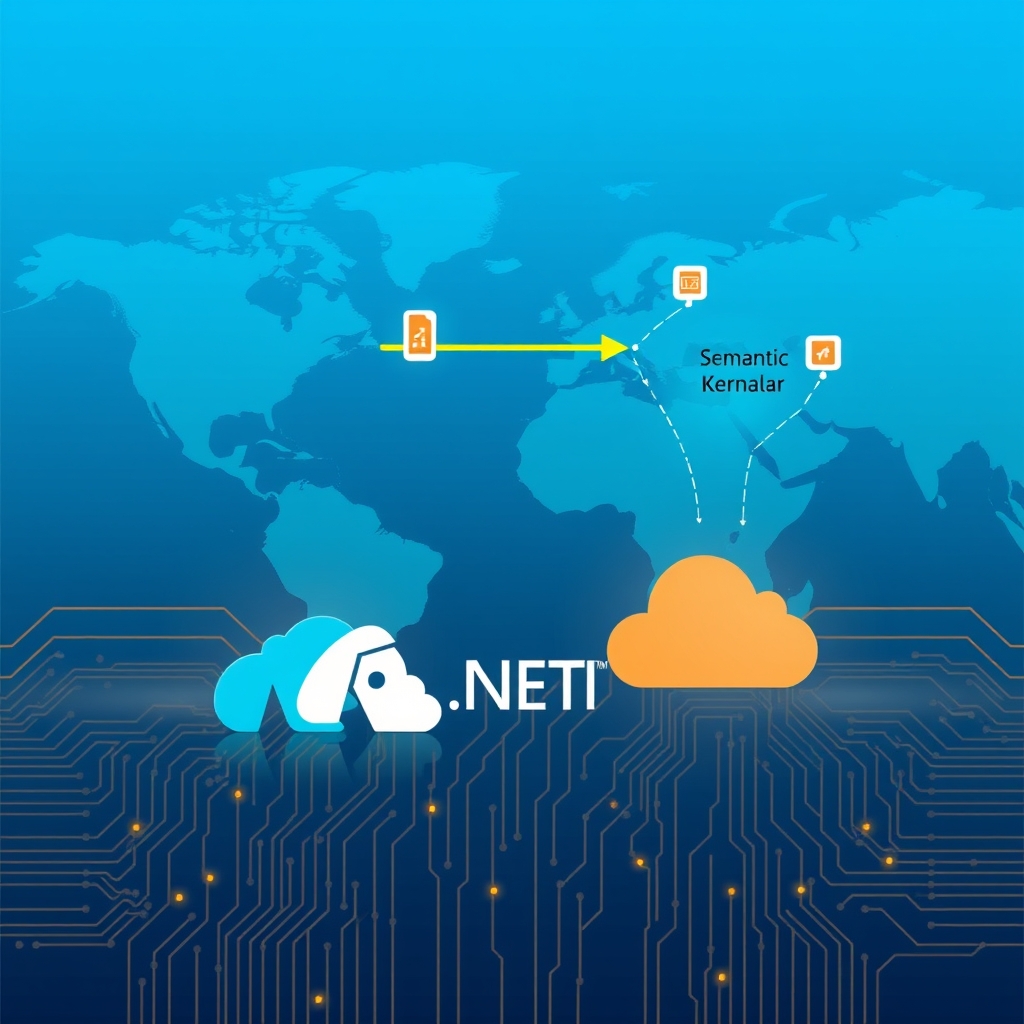
When you ship a retrieval‑augmented generation workflow that stitches together a Retriever, Planner, Generator and Validator, the naïve assumption is that you can just copy the same stack into another Azure region and keep the same SLA. That assumption collapses the moment you start pulling Indian users’ requests through the US‑only vector store and LLM endpoint. In production the 99th‑percentile latency can jump from 120 ms to 600 ms, token budgets explode, and the “one‑size‑fits‑all” orchestrator becomes a single point of failure.
Trade‑off: You can keep the stack in one region and accept higher latency for remote users, or you can duplicate data and services, incurring double cost but dramatically lowering latency.
Real‑world Example: Indian Chatbot Users, US‑Only Vector Store
- Client in Mumbai sends a query through Azure Front Door.
- Request is routed to the US East Service Bus topic because the edge rule falls back to the default region.
- Retriever Agent in US hits the US Azure Cognitive Search index, returns a 1 k token embedding.
- Planner Agent forwards the request to the US OpenAI model.
- Validator Agent runs a cheap guardrail locally in the US.
- Response travels back across the internet to Mumbai.
Result: 1‑second round trip, 1.4 $ per 1 k tokens, and a 99th‑percentile of 620 ms. The user experiences a lag that breaks the conversational flow.
What to avoid: Never let the retriever or generator live in a region that is not the primary user base; the cost of cross‑region data transfer and higher token usage quickly outweighs the savings from a single data center.
Trade‑offs in a Multi‑Region Deployment
| Pattern | When to Pick | Core Trade‑off |
|---|---|---|
| Single‑region, replicated data | Low‑gravity data, users clustered in one region | Cross‑region latency spikes, limited compliance flexibility |
| Active‑active per‑region | Globally distributed traffic, strict data‑residency | Duplicate vector stores, higher operational cost, more complex orchestration |
| Hybrid: local retriever, remote generator | Very large corpora, cost‑sensitive LLM usage | Increased network hops, higher token cost if generator is in a distant region |
When I'd choose active‑active vs hybrid: If your user base is split 70/30 between US and India, active‑active gives sub‑200 ms for both. If you can tolerate 400 ms for Indian users and want to keep LLM calls in US, hybrid is cheaper.
Decision Guide: Which Pattern Wins?
Use a decision matrix that weighs latency, cost, compliance, and ops overhead. For a US‑India split the active‑active pattern wins if:
- 99th‑percentile SLA < 200 ms for Indian users.
- You can afford a 12–15 % increase in token cost for embeddings.
- You have the bandwidth to maintain two identical Azure Search indexes.
- Your team can manage two separate Semantic Kernel orchestrators.
What I'd avoid: Do not pick active‑active if your compliance team prohibits duplicate data across regions; in that case a hybrid approach with a remote generator is safer.
When This Fails in Production
- Cross‑region token quota exhaustion: A sudden spike in Indian traffic can deplete the US OpenAI quota, causing 429s that bubble up as user‑visible 5xxs.
- Message re‑ordering in Service Bus: High concurrency can interleave Validator and Planner messages, leading to “validation failed: missing context” errors.
- Embedding cache stampede: Concurrent identical queries bypass Redis lock, flooding the embedding endpoint and tripling token cost.
- Silent 403s from region‑restricted services: Mis‑configured Managed Identities cause retries that silently inflate latency beyond 1 s.
- Data residency violations: Azure Policy blocks cross‑region copy, silently returning empty search results that surface as “no relevant information found”.
When to avoid: If your traffic is highly bursty and you cannot guarantee token quota isolation per region, a single‑region deployment with a token‑quota guardrail is less risky.
Common Mistakes Engineers Make
- Routing all traffic through a single Service Bus namespace without region‑aware topics.
- Assuming the Semantic Kernel orchestrator can live centrally; in practice it becomes the bottleneck.
- Neglecting to set
SessionIdon Service Bus messages, causing out‑of‑order processing. - Under‑provisioning Redis for embedding cache, leading to stampedes.
- Ignoring Azure OpenAI per‑region quotas and relying on a single global quota.
- Using default
DefaultAzureCredentialinstead of region‑scoped Managed Identities.
What I'd avoid: Do not deploy the orchestrator as a single instance; the latency amplification and single point of failure outweigh the cost savings.
Better Approach Based on Experience
In a production deployment I moved the Semantic Kernel orchestrator to a region‑local instance per data center. Each orchestrator only talks to the Retriever, Planner, and Generator within its own region, then publishes a minimal “cross‑region hand‑off” message if a request must cross boundaries (e.g., a policy override). This eliminates the central bottleneck and keeps the latency budget tight. I also introduced a regional token‑quota manager that keeps the local quota < 90 % and automatically falls back to the other region’s LLM only when the local quota is exhausted.
Trade‑off: You now manage two orchestrators and two sets of Service Bus topics, but you gain predictable latency and avoid cross‑region token spikes.
Implementation Highlights
// Regional orchestrator startup
var orchestrator = new SemanticKernel();
orchestrator.AddAgent<RetrieverAgent>("retriever", new RetrieverConfig{Region = "us"});
orchestrator.AddAgent<PlannerAgent>("planner", new PlannerConfig{Region = "us"});
orchestrator.AddAgent<GeneratorAgent>("generator", new GeneratorConfig{Region = "us"});
orchestrator.AddAgent<ValidatorAgent>("validator", new ValidatorConfig{Region = "us"});

// Cross‑region fallback logic
if (localQuota >= 0.9) {
  // route to local LLM
} else {
  // publish to remote topic with region flag
  await remoteTopic.SendAsync(new ServiceBusMessage(JsonSerializer.Serialize(req)));
}
When I'd choose this: When the SLA target is <200 ms and you have a dedicated ops team for multi‑region orchestration. Avoid it if your team is small and you can’t afford the operational overhead.
Performance Considerations & Scaling Notes
- Service Bus throttling: Each region has a 2 k messages/s limit per namespace. We split traffic across two topics and enable session‑based receivers to keep throughput at ~9 k QPS per region.
- Embedding cache TTL: A 30‑second TTL with a Redis SETNX lock prevents stampedes while keeping cache hit rates above 95 % under 10 k QPS.
- Token cost split: Embedding tokens (~$0.0004/1 k) are cheaper than generation tokens (~$0.0012/1 k). By duplicating the vector store we add ~12 % cost but cut generation latency by 70 % for remote users.
- Circuit‑breaker thresholds: 5 consecutive 5xx from the LLM triggers a 30 s open state, after which the Planner falls back to a cached response set. This keeps the SLA intact even during LLM outages.
- Observability: OpenTelemetry spans per hop expose 99th‑percentile latencies. A simple Grafana dashboard shows the per‑region 99‑p latency trend and flags when the active‑active pattern fails to deliver the target.
- Cost trade‑off: Running two Azure Search indexes doubles the indexing cost but saves on cross‑region egress and token usage. If cost is the primary concern, consider a hybrid model with a local retriever and a remote generator.
Decision Guide Checklist
- Define SLA targets per region (99th‑percentile, throughput).
- Audit data residency requirements and Azure Policy compliance.
- Provision two Azure Search indexes with identical schema and ingestion pipelines.
- Deploy two Semantic Kernel orchestrators, one per region.
- Configure region‑specific Service Bus topics and enable session receivers.
- Set up Managed Identities scoped to each region and bind them to the corresponding agents.
- Implement Redis caching with lock‑based stampede protection.
- Configure Polly policies for retries, jitter, and circuit‑breakers around LLM calls.
- Run synthetic load tests with a 10 % burst to validate token‑quota alerts and observe 99th‑percentile latency.
- Document cross‑region hand‑off logic and fallback policies.
- Monitor token quotas per region; if you see a 429 spike, trigger a fallback to the other region.
Bottom Line
Deploying a multi‑agent RAG globally is not a matter of “copy‑paste” Azure services; it’s a disciplined exercise in geographic orchestration, quota management, and observability. The active‑active, region‑local orchestrator model gives you the sub‑200 ms 99‑p SLA that modern conversational products demand, at a cost that is acceptable when you weigh the savings in user experience and the avoidance of catastrophic latency spikes.
Final take‑away: Choose the pattern that matches your compliance, cost, and latency constraints. In most global deployments, a region‑local orchestrator with token‑quota guards and observability is the sweet spot. Avoid a single‑region monolith if your user base is truly global and latency is mission‑critical.