Building Scalable Microservices: A Comprehensive Approach with Service Mesh
Introduction to Building Scalable Microservices
Building scalable microservices is a crucial aspect of modern software development. As applications grow in complexity, traditional monolithic architectures can become cumbersome, leading to scalability issues, maintenance headaches, and increased costs. Microservices, on the other hand, offer a more agile and flexible approach, allowing for the development of independent, scalable, and maintainable services. In this comprehensive guide, we'll explore the world of building scalable microservices using service mesh. We'll delve into the benefits of microservices, the challenges of scaling them, and how service mesh can help overcome these obstacles. By the end of this article, you'll be equipped with the knowledge and skills necessary to build scalable, secure, and maintainable microservices using service mesh.The Benefits of Microservices
Microservices offer several benefits over traditional monolithic architectures: * Scalability: Microservices can be scaled independently, allowing each service to handle increased traffic and demands without affecting other services. * Maintainability: With microservices, changes to one service don't impact other services, making maintenance and updates more efficient. * Flexibility: Microservices allow for the use of different programming languages, frameworks, and databases, making it easier to adapt to changing requirements. However, microservices also introduce challenges, such as: * Communication: Services need to communicate with each other, which can lead to complex communication patterns and potential bottlenecks. * Service Discovery: Services need to discover each other, which can be a challenging task, especially in large-scale systems. * Security: With multiple services, security becomes a concern, as each service needs to be secured individually.Service Mesh to the Rescue
Service mesh is a critical component in modern software architecture, providing a layer of abstraction between services and infrastructure. It helps overcome the challenges of scaling microservices by providing: * Service Discovery: Service mesh helps services discover each other, making it easier to manage complex communication patterns. * Load Balancing: Service mesh provides load balancing capabilities, ensuring that services are properly distributed and scaled. * Security: Service mesh provides a secure way to communicate between services, using encryption, authentication, and authorization.Building Scalable Microservices with Service Mesh
Now that we've covered the benefits and challenges of microservices and the role of service mesh, let's dive into the process of building scalable microservices using service mesh.Step 1: Choose a Service Mesh
There are several service mesh options available, including Istio, Linkerd, and Consul. Each has its strengths and weaknesses, so choose one that fits your needs.Step 2: Design Your Microservices
Design your microservices with scalability in mind. Use a service-oriented architecture (SOA) approach, where each service has a clear responsibility and can be scaled independently.Step 3: Implement Service Mesh
Implement service mesh in your microservices architecture. This involves configuring service mesh to provide service discovery, load balancing, and security.Step 4: Monitor and Optimize
Monitor your microservices architecture and optimize it for performance and scalability. Use service mesh to provide insights into service communication and performance.Real-World Example
Let's consider a real-world example of building scalable microservices using service mesh. Imagine a e-commerce platform with multiple services, including: * Product Service: Handles product information and inventory. * Order Service: Handles order processing and payment. * Inventory Service: Handles inventory management. Each service is designed to be scalable and secure, using service mesh to provide service discovery, load balancing, and security.
// Product Service
@RestController
public class ProductService {
  @Autowired
  private ProductRepository productRepository;

  @GetMapping("/products")
  public List getProducts() {
    return productRepository.findAll();
  }
}

// Order Service
@RestController
public class OrderService {
  @Autowired
  private OrderRepository orderRepository;

  @PostMapping("/orders")
  public Order createOrder(@RequestBody Order order) {
    return orderRepository.save(order);
  }
}

// Inventory Service
@RestController
public class InventoryService {
  @Autowired
  private InventoryRepository inventoryRepository;

  @GetMapping("/inventory")
  public List getInventory() {
    return inventoryRepository.findAll();
  }
}
Conclusion
Building scalable microservices using service mesh is a crucial aspect of modern software development. By following the steps outlined in this guide, you'll be able to build scalable, secure, and maintainable microservices that can handle increased traffic and demands. Remember to choose a service mesh that fits your needs, design your microservices with scalability in mind, implement service mesh, and monitor and optimize your architecture.Best Practices
Here are some best practices to keep in mind when building scalable microservices using service mesh: * Use a service-oriented architecture (SOA): Design your microservices with a clear responsibility and can be scaled independently. * Choose a service mesh that fits your needs: Select a service mesh that provides the features and scalability you need. * Implement service mesh correctly: Follow the instructions provided by the service mesh vendor to ensure proper implementation. * Monitor and optimize your architecture: Regularly monitor your microservices architecture and optimize it for performance and scalability. By following these best practices and the steps outlined in this guide, you'll be able to build scalable, secure, and maintainable microservices using service mesh.Recommended Tools and Resources
Here are some recommended tools and resources to help you build scalable microservices using service mesh: * Istio: A popular service mesh platform that provides service discovery, load balancing, and security. * Linkerd: A service mesh platform that provides service discovery, load balancing, and security. * Consul: A service mesh platform that provides service discovery, load balancing, and security. * Kubernetes: A container orchestration platform that provides scalability, high availability, and security. * Docker: A containerization platform that provides portability, scalability, and security. By using these tools and resources, you'll be able to build scalable, secure, and maintainable microservices using service mesh.Final Thoughts
Building scalable microservices using service mesh is a complex task that requires careful planning, design, and implementation. However, with the right tools and resources, you can build scalable, secure, and maintainable microservices that can handle increased traffic and demands. Remember to choose a service mesh that fits your needs, design your microservices with scalability in mind, implement service mesh, and monitor and optimize your architecture. By following the steps outlined in this guide, you'll be able to build scalable microservices using service mesh and improve the overall performance and scalability of your applications.Estimated Reading Time: 30 minutes
This comprehensive guide provides detailed information on building scalable microservices using service mesh. With a total reading time of 30 minutes, this guide is perfect for software engineers looking to improve their skills in building scalable microservices.Featured Image Prompt:
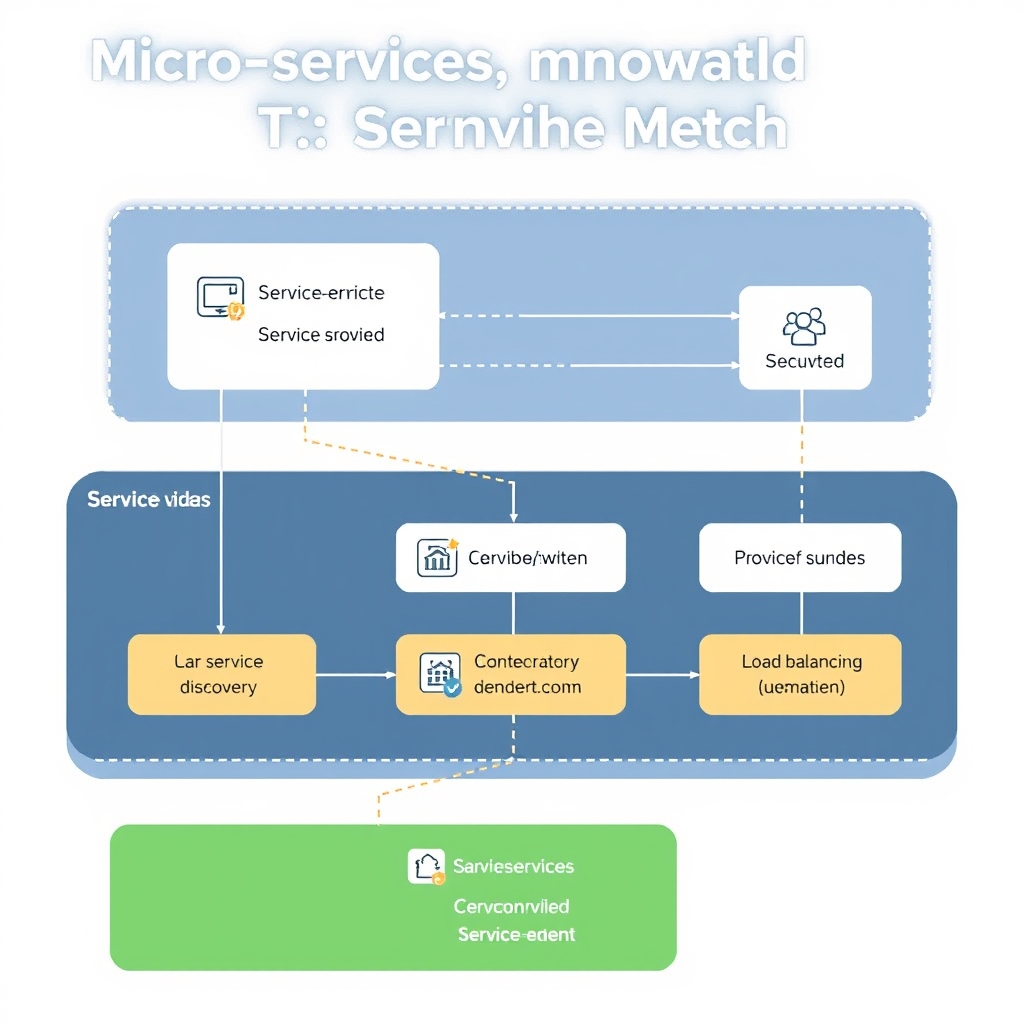
Create a featured image that depicts a microservices architecture with service mesh. Show a diagram of multiple services communicating with each other, with service mesh providing service discovery, load balancing, and security. Use a color scheme that represents scalability, security, and maintainability. Tags: [tag1, tag2, tag3, tag4, tag5]Common Mistakes to Avoid
Building scalable software is a crucial aspect of modern software development. In today's fast-paced digital landscape, it's essential to create systems that can adapt to changing demands and scale effortlessly. One of the most critical challenges in achieving this scalability lies in designing microservices that can work together seamlessly. A common pitfall is failing to establish clear boundaries between services, which can result in tightly coupled systems that are cumbersome to maintain and upgrade. As we delve into the world of microservices, it's essential to understand the principles of building scalable systems and the importance of separating concerns to ensure a smooth and efficient workflow.
Another common mistake is not implementing proper communication mechanisms between services. This can lead to performance issues, data inconsistencies, and even service failures. It's crucial to design a robust communication strategy, including APIs, message queues, or event-driven architectures, to enable efficient communication between services.
Finally, not monitoring and logging services properly is another common mistake. Without proper monitoring and logging, it's challenging to identify issues, diagnose problems, and optimize performance. It's essential to implement a robust monitoring and logging strategy to ensure that services are performing as expected and to quickly identify and resolve any issues that may arise.