Building Resilient Microservices: The Circuit Breaker Approach
Introduction
Building resilient microservices is crucial in today's fast-paced digital landscape. With the rise of microservices architecture, developers face new challenges in ensuring reliability, scalability, and fault tolerance. One effective approach to achieving this is by implementing circuit breakers. In this article, we will delve into the concept of circuit breakers and how they can be used to build resilient microservices.
Understanding Circuit Breakers
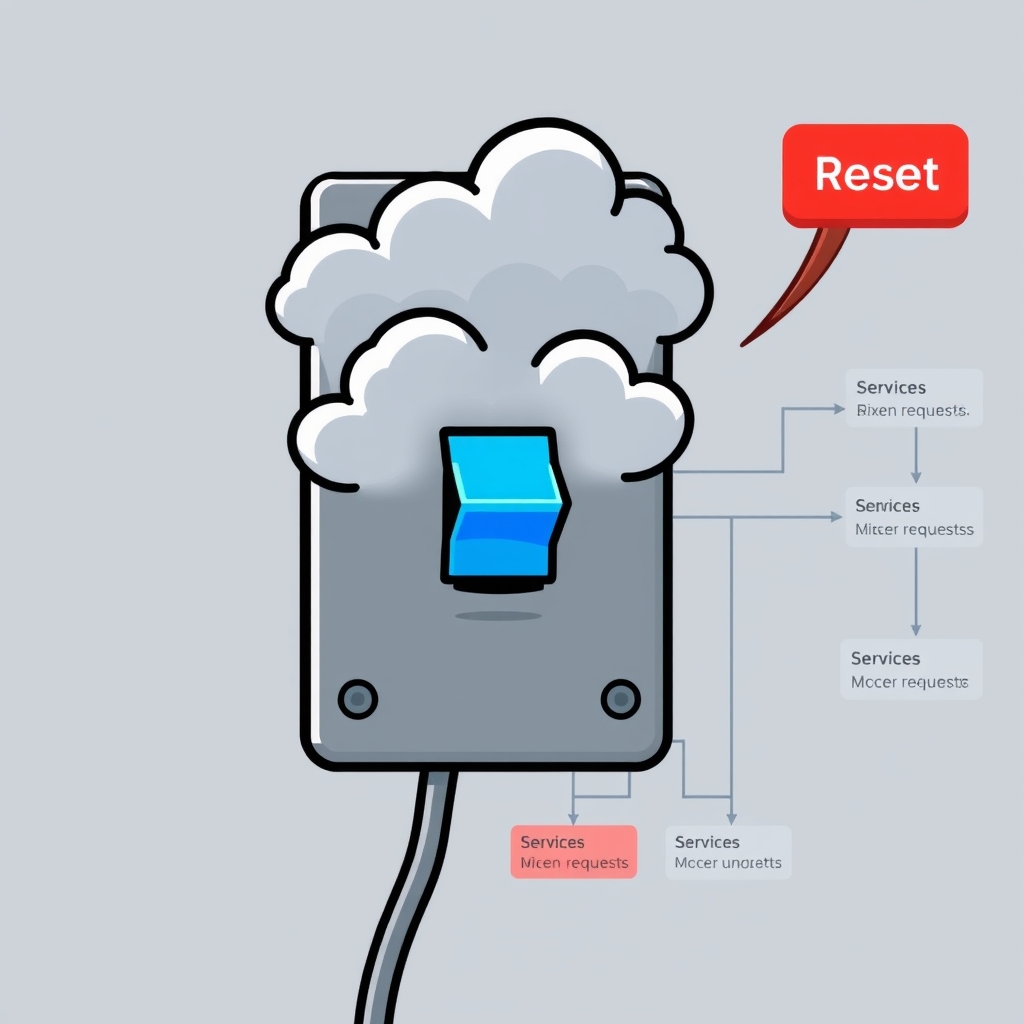
A circuit breaker is a design pattern that helps to prevent cascading failures in distributed systems by detecting and isolating faulty services. It works by monitoring the communication between services and automatically shutting down the circuit (or service) when it detects a failure. This prevents the failure from propagating and causing a chain reaction of errors throughout the system.
Building Resilient Microservices with Circuit Breakers
Let's take a closer look at how circuit breakers can be used to build resilient microservices. The basic idea is to wrap the communication between services with a circuit breaker that monitors the latency and failure rate of the service. When the failure rate exceeds a certain threshold, the circuit breaker trips and prevents further communication with the service, thereby preventing cascading failures.
Key Components of a Circuit Breaker
- Request Tracker: This component tracks the number of failed requests to the service.
- Fault Threshold: This is the maximum number of failed requests allowed before the circuit breaker trips.
- Timeout: This is the amount of time the circuit breaker waits before tripping.
- Half-Open Timeout: This is the amount of time the circuit breaker waits before allowing new requests to the service after a failure.
Implementing a Circuit Breaker in Java
public class CircuitBreaker {
  private final RequestTracker requestTracker;
  private final FaultThreshold faultThreshold;
  private final Timeout timeout;
  private final HalfOpenTimeout halfOpenTimeout;

  public CircuitBreaker(RequestTracker requestTracker,
    FaultThreshold faultThreshold, Timeout timeout,
    HalfOpenTimeout halfOpenTimeout) {
    this.requestTracker = requestTracker;
    this.faultThreshold = faultThreshold;
    this.timeout = timeout;
    this.halfOpenTimeout = halfOpenTimeout;
  }

  public boolean isCircuitOpen() {
    return requestTracker.getFailedRequests() >= faultThreshold.getThreshold();
  }

  public void sendRequest() {
    if (isCircuitOpen()) {
      // do not send request
    } else {
      // send request
    }
  }
}
Real-World Use Cases
Circuit breakers can be applied in various real-world scenarios. For example:
- Error Handling: Use circuit breakers to handle errors effectively in e-commerce systems, where a failed payment gateway can lead to a cascade of errors throughout the system.
- Service Discovery: Use circuit breakers to handle service discovery issues in containerized environments, where container failure can lead to a cascade of errors throughout the system.
- API Gateway: Use circuit breakers to handle API gateway failures in microservices architecture, where a failed API gateway can lead to a cascade of errors throughout the system.
Best Practices
When implementing circuit breakers, keep the following best practices in mind:
- Monitor and Analyze: Monitor and analyze the circuit breaker's performance to ensure it is working as expected.
- Configure Thresholds: Configure the fault threshold and timeout values carefully to ensure the circuit breaker does not trip unnecessarily.
- Implement Half-Open Timeout: Implement a half-open timeout to allow the circuit breaker to recover from failures.
Conclusion
In this article, we explored the concept of circuit breakers and how they can be used to build resilient microservices. By implementing circuit breakers, developers can prevent cascading failures and improve the overall reliability of their microservices architecture. Remember to monitor and analyze the circuit breaker's performance, configure thresholds carefully, and implement a half-open timeout to ensure optimal performance.
Takeaways
- Circuit breakers can be used to prevent cascading failures in distributed systems.
- A circuit breaker monitors the communication between services and automatically shuts down the circuit when it detects a failure.
- Key components of a circuit breaker include request tracker, fault threshold, timeout, and half-open timeout.
References
For further reading, check out the following resources:
- Circuit Breaker Pattern: https://martinfowler.com/bliki/CircuitBreaker.html
- Circuit Breaker in Java: https://dzone.com/articles/circuit-breaker-pattern-in-java