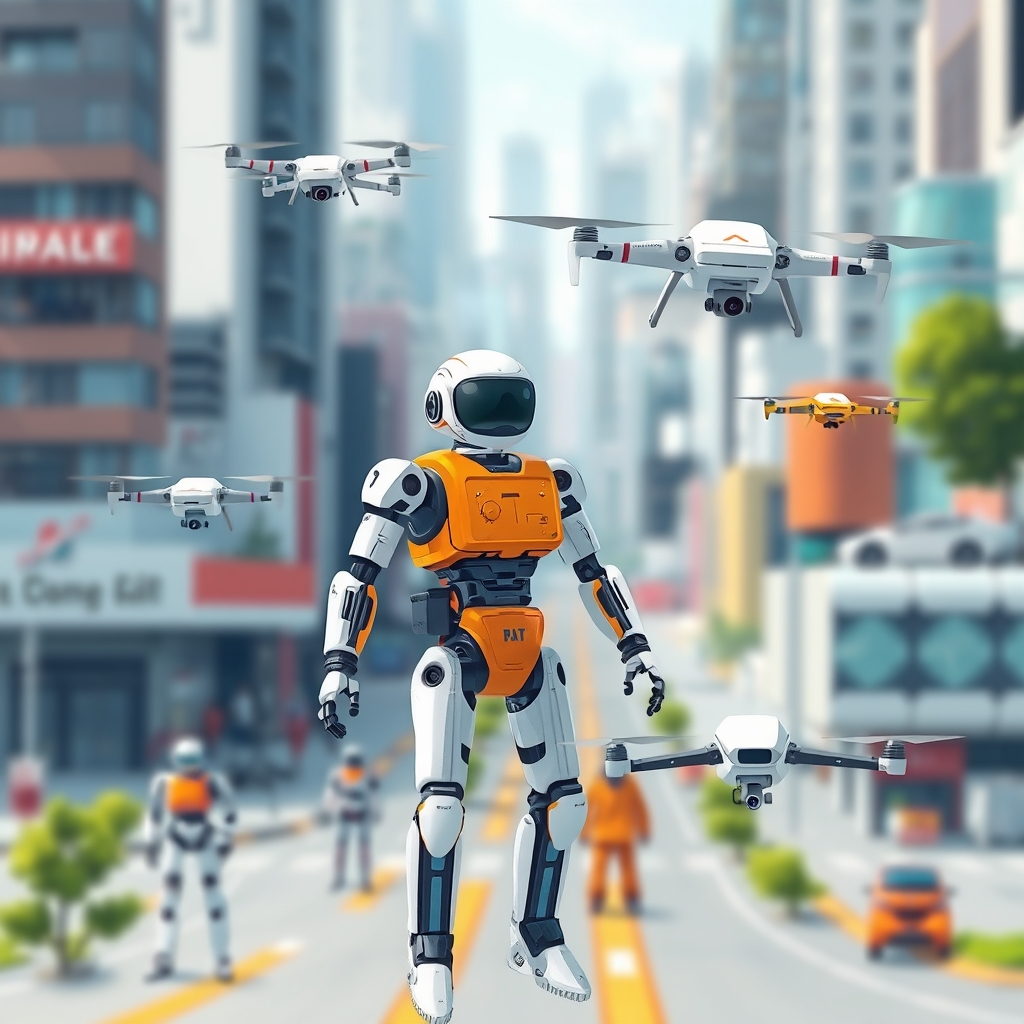
AI for Social Good Applications: Revolutionizing Industries
Introduction: Exploring AI's Potential for Social Impact and What Readers Will Learn
Artificial Intelligence (AI) OpenAI platform has been a buzzword in recent years, with its applications ranging from simple chatbots to complex machine learning algorithms. However, one area that has garnered significant attention is the use of AI for social good. AI for Social Good Applications has the potential to revolutionize various industries and improve the lives of millions. In this blog post, we will delve into the real-world applications and success stories of AI in healthcare, education, environmental conservation, disaster response, and accessibility.
AI in Healthcare - Revolutionizing Patient Care and Outcomes
The healthcare industry has seen a significant transformation with the integration of AI. From AI-powered diagnostics to personalized medicine, AI has improved patient care and outcomes. For instance, AI-powered algorithms can analyze medical images to detect diseases such as cancer, diabetes, and cardiovascular disease.
AI-Powered Diagnostics and Personalized Medicine
Machine learning algorithms can analyze large amounts of medical data to identify patterns and predict patient outcomes. This enables healthcare professionals to provide personalized treatment plans tailored to individual patient needs. Additionally, AI-powered chatbots can assist patients with medication adherence, appointment scheduling, and medical queries.
AI-Assisted Surgical Procedures and Robotic Surgery
AI-assisted surgical procedures have improved the accuracy and precision of surgeries. Robotic surgery, in particular, has become increasingly popular, with AI-powered robots assisting surgeons during complex procedures. This has reduced recovery time, minimized scarring, and improved patient outcomes.
AI in Education - Enhancing Learning Outcomes and Accessibility
The education sector has also seen a significant impact of AI. From AI-driven adaptive learning systems to intelligent tutoring, AI has improved learning outcomes and accessibility. For instance, AI-powered algorithms can analyze student performance data to identify knowledge gaps and provide personalized learning recommendations.
AI-Driven Adaptive Learning Systems and Intelligent Tutoring
AI tools can help teachers create customized lesson plans tailored to individual student needs. Additionally, AI-powered virtual assistants can provide real-time feedback, guidance, and support to students, enhancing their learning experience.
AI-Powered Virtual Assistants and Accessibility Tools
AI-powered virtual assistants can assist students with disabilities, such as visual or hearing impairments. AI-powered accessibility tools can also help students with learning disabilities, such as dyslexia, by providing text-to-speech functionality, font size adjustment, and other accommodations.
AI in Environmental Conservation - Monitoring and Mitigating Climate Change
The environmental conservation sector has seen a significant impact of AI. From AI-driven climate modeling to predictive analytics, AI has improved our understanding of climate change and its mitigation strategies. For instance, AI-powered algorithms can analyze satellite data to track deforestation, ocean pollution, and wildlife migration patterns.
AI-Driven Climate Modeling and Predictive Analytics
Machine learning algorithms can analyze large amounts of climate data to predict weather patterns, sea-level rise, and extreme weather events. This enables policymakers and conservationists to develop effective strategies for mitigating climate change.
AI-Assisted Conservation Efforts and Wildlife Monitoring
AI-powered sensors can monitor wildlife populations, tracking their migration patterns, habitats, and behavior. This information can help conservationists develop effective conservation strategies, such as habitat preservation and species protection.
AI in Disaster Response and Recovery - Saving Lives and Reducing Damage
The disaster response and recovery sector has seen a significant impact of AI. From AI-powered emergency response systems to predictive analytics, AI has improved disaster response and recovery efforts. For instance, AI-powered algorithms can analyze satellite data to track disaster damage, identify areas of need, and optimize resource allocation.
AI-Powered Emergency Response Systems and Predictive Analytics
AI tools can help emergency responders analyze disaster data, predict damage, and develop effective response strategies. Additionally, AI-powered chatbots can assist disaster victims with information, support, and resources.
AI-Assisted Damage Assessment and Recovery Efforts
AI-powered drones can assess disaster damage, providing critical information for recovery efforts. AI-powered algorithms can also analyze data to identify areas of need, optimize resource allocation, and develop effective recovery strategies.
AI in Accessibility and Inclusion - Breaking Down Barriers and Fostering Inclusion
The accessibility and inclusion sector has seen a significant impact of AI. From AI-driven accessibility tools to inclusive hiring practices, AI has improved the lives of people with disabilities. For instance, AI-powered algorithms can analyze job postings to identify bias, providing insights for inclusive hiring practices.
AI-Driven Accessibility Tools and Assistive Technologies
AI-powered virtual assistants can assist people with disabilities, such as visual or hearing impairments. AI-powered accessibility tools can also provide text-to-speech functionality, font size adjustment, and other accommodations.
AI-Powered Inclusive Hiring Practices and Diversity Initiatives
AI tools can help organizations develop inclusive hiring practices, such as bias detection in job postings and candidate screening. Additionally, AI-powered algorithms can analyze diversity data to identify areas of improvement, providing insights for diversity initiatives.
What are some real-world applications of AI for social good?
AI has been applied in various fields for social good, such as healthcare, education, and disaster response. For instance, AI-powered chatbots can provide mental health support and assistance to people in need. Additionally, AI can help analyze large amounts of medical data to identify potential health risks and develop personalized treatments.
How can AI be used to address social issues like poverty and inequality?
AI-powered systems can help identify high-risk individuals and communities, enabling targeted interventions to reduce poverty and inequality. For example, AI can analyze data on poverty rates, education levels, and employment opportunities to inform policy decisions and resource allocation.
What are some successful examples of AI for social good applications?
Some notable examples include IBM's Watson for Cancer Research, which uses AI to analyze genetic data and identify potential cancer treatments, and the AI-powered chatbot, Replika, which provides emotional support and companionship to lonely individuals.
Can AI be used to promote environmental sustainability?
Yes, AI can be used to monitor and analyze environmental data, such as air and water quality, to identify areas of concern and develop targeted solutions. For example, AI-powered sensors can detect early signs of pollution and alert authorities to take action.
What are the benefits of using AI for social good applications?
The benefits of using AI for social good applications include increased efficiency, accuracy, and scalability. AI can also help reduce costs and improve outcomes in various fields, such as healthcare and education.
What are the challenges of implementing AI for social good applications?
Some challenges include ensuring data quality and availability, addressing bias and fairness in AI systems, and building public trust and awareness about the benefits and risks of AI.
How can individuals and organizations get started with AI for social good applications?
Individuals and organizations can start by identifying a specific social issue they want to address and researching existing AI-powered solutions. They can also explore partnerships with AI researchers, developers, and implementers to develop and deploy AI for social good applications.
Conclusion: Summarizing AI's Potential for Social Good and Next Steps for Readers
In conclusion, AI for Social Good Applications has the potential to revolutionize various industries and improve the lives of millions. As discussed in our guide to thriving in the AI-driven tech landscape, AI has become an essential tool for driving social impact. By leveraging AI, organizations can develop effective strategies for mitigating climate change, improving healthcare outcomes, and enhancing education accessibility. As a software engineer, you can play a critical role in developing AI-powered solutions for social good. We encourage you to explore the various applications of AI in social good and develop innovative solutions that can drive positive change.